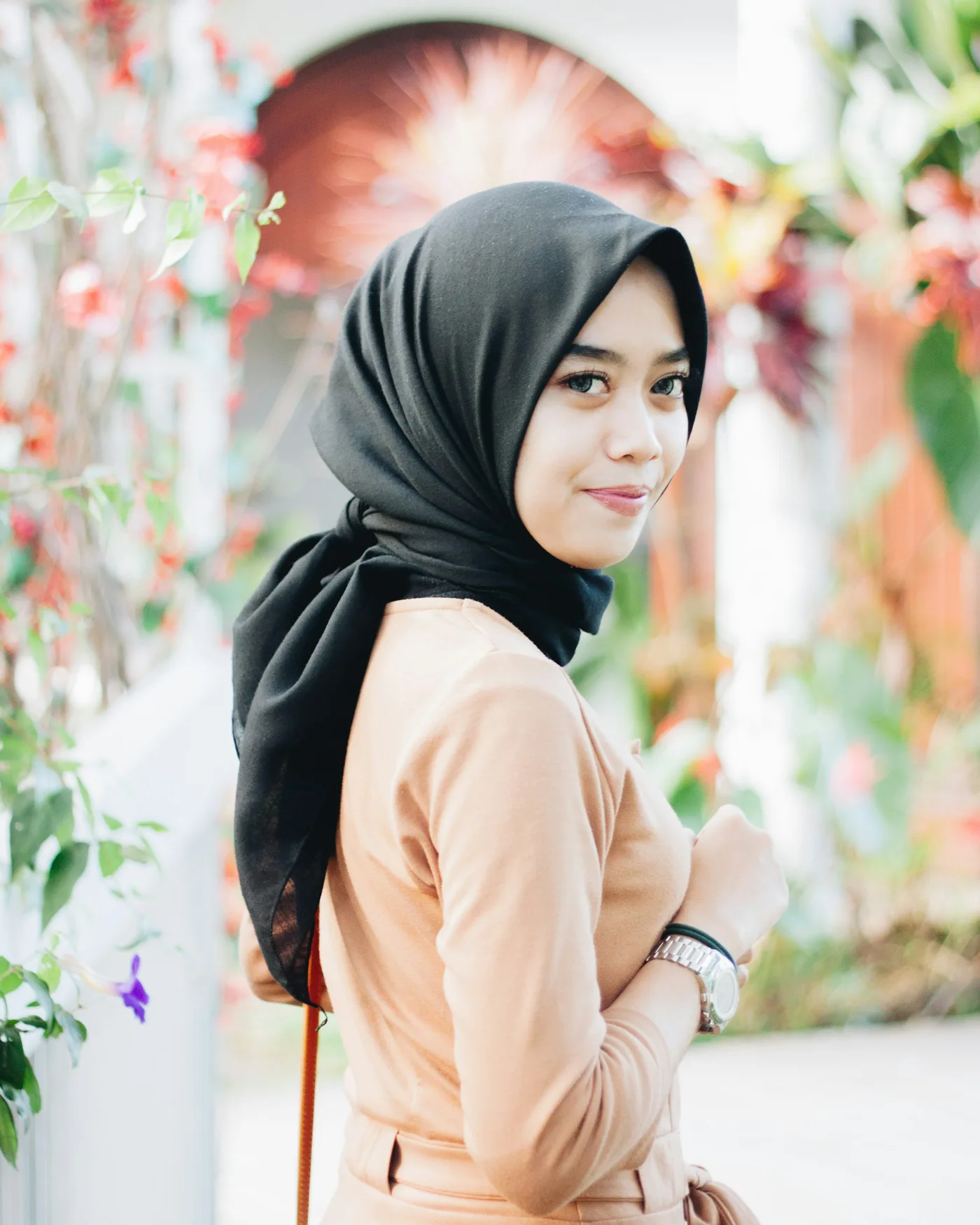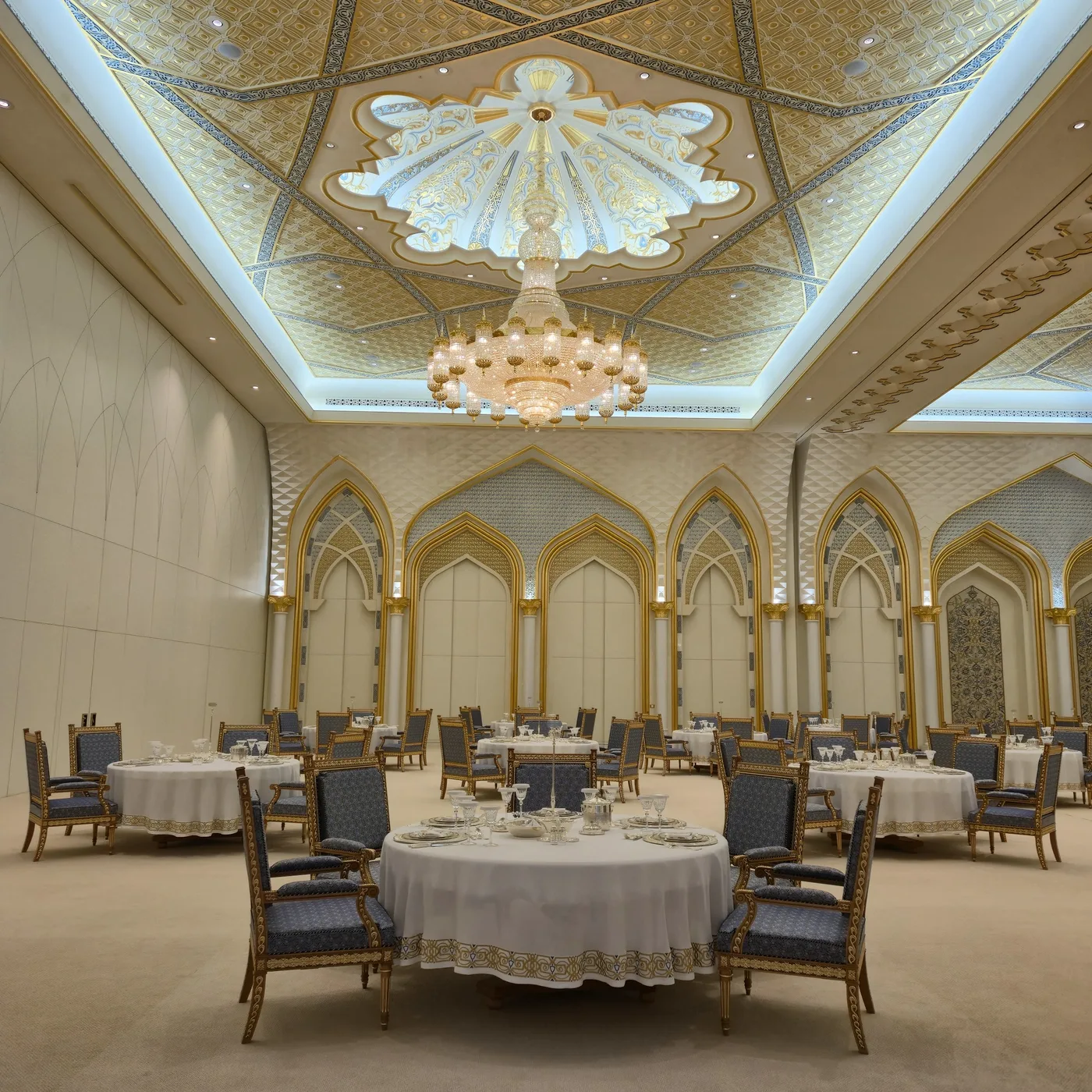
In the Gulf, "the engagement" can mean three different occasions: the khutba, when the families meet and the proposal is made; the milcha (also called milka or malja), when the marriage contract is signed; and a modern engagement party. For all three, guests dress one step below the wedding: an elegant midi or long dress, a refined kaftan or a simple evening gown, with modest sleeves and lighter embellishment. Close family dress up more. Here is how each occasion works and what to wear.
What is the difference between the khutba, the milcha and an engagement party?
The names vary by country, and so does the order, but most Gulf families move through three stages.
- Khutba (proposal): the families meet and the proposal is made. Gulf News describes how, in Emirati custom, the groom first tells his mother, who approaches the bride's mother. Al Yaum, writing about old customs in Saudi Arabia's Eastern Province, describes women visiting first to sound out the bride's family before the men make the formal request.
- Milcha, milka or malja (marriage contract): the contract is signed in front of witnesses and a religious official. The National notes that in the UAE the couple usually exchange rings at this small ceremony. In Kuwait, according to a KUNA report carried by Al Jarida, the malja was traditionally held on a Thursday night at the groom's diwan or at the mosque after evening prayer.
- Engagement party: a newer celebration, closer to a Western or Levantine engagement, sometimes mixed, held at home, a hotel or a restaurant.
The important point for guests is that, legally, the milcha is the marriage. As a writer for The National explains, most Emirati couples are already married by the time the big wedding parties happen.
What do you wear to a khutba visit?
The khutba is a family meeting, not a party. It usually happens in the bride's family home, with coffee, dates and sweets, and the conversation matters more than the clothes. Dress as you would to visit an older relative you want to impress.
- Abaya: if you wear one, a smart, well-cut abaya over a neat dress is ideal.
- Under it: a long or midi dress, a tailored jalabiya or an elegant kaftan. Day fabrics such as crepe and soft satin, not sequins.
- Sleeves and neckline: long or three-quarter sleeves and a modest neckline, because men of the family may be present at some point.
- Jewellery: refined rather than dramatic. A good watch, earrings and perhaps a bracelet.
- Colour: soft or mid tones such as dusty rose, champagne, sage, navy or mocha.
If you are from the groom's side, you are making a first impression on your future in-laws. Polished and understated is the safest message.
Who attends the milcha, and is it women-only?
The signing itself is traditionally a men's occasion. Gulf News describes the Emirati melcha as a signing at the groom's home, officiated by a sheikh and attended by the fathers, brothers, uncles and cousins of both sides. Another Gulf News report lists the bride and groom, their fathers, two male witnesses and the court registrar.
Around the signing, though, there is often a celebration. A writer for The National describes the melcha as an intimate dinner party, with men and women seated separately, while a sheikh from the courts draws up the contract. How much celebration surrounds the signing varies a great deal from family to family.
So as a woman guest, you are most likely invited to the women's side: smaller than a wedding, still private, and still a place where phones should stay in your bag.
What do guests wear to a milcha?
Think evening elegance at a smaller scale. The milcha is a real celebration and the bride is the focus, but it is more intimate than the wedding night, so a full ball gown can feel like too much.
- Length: midi or long. A floor-length dress is never wrong; a short dress usually is.
- Shape: a softer silhouette than you would wear to the wedding, such as a draped dress, a fitted kaftan or a gown with a gentle skirt rather than a huge tulle one.
- Embellishment: some beading or embroidery, but not the heaviest piece in your wardrobe.
- Sleeves: sheer or long sleeves are a safe choice, especially as older relatives are always present.
- Colour: avoid white and ivory unless the family asks, since the bride may wear a pale dress. Pastels, champagne, lilac and dusty pink suit the mood.
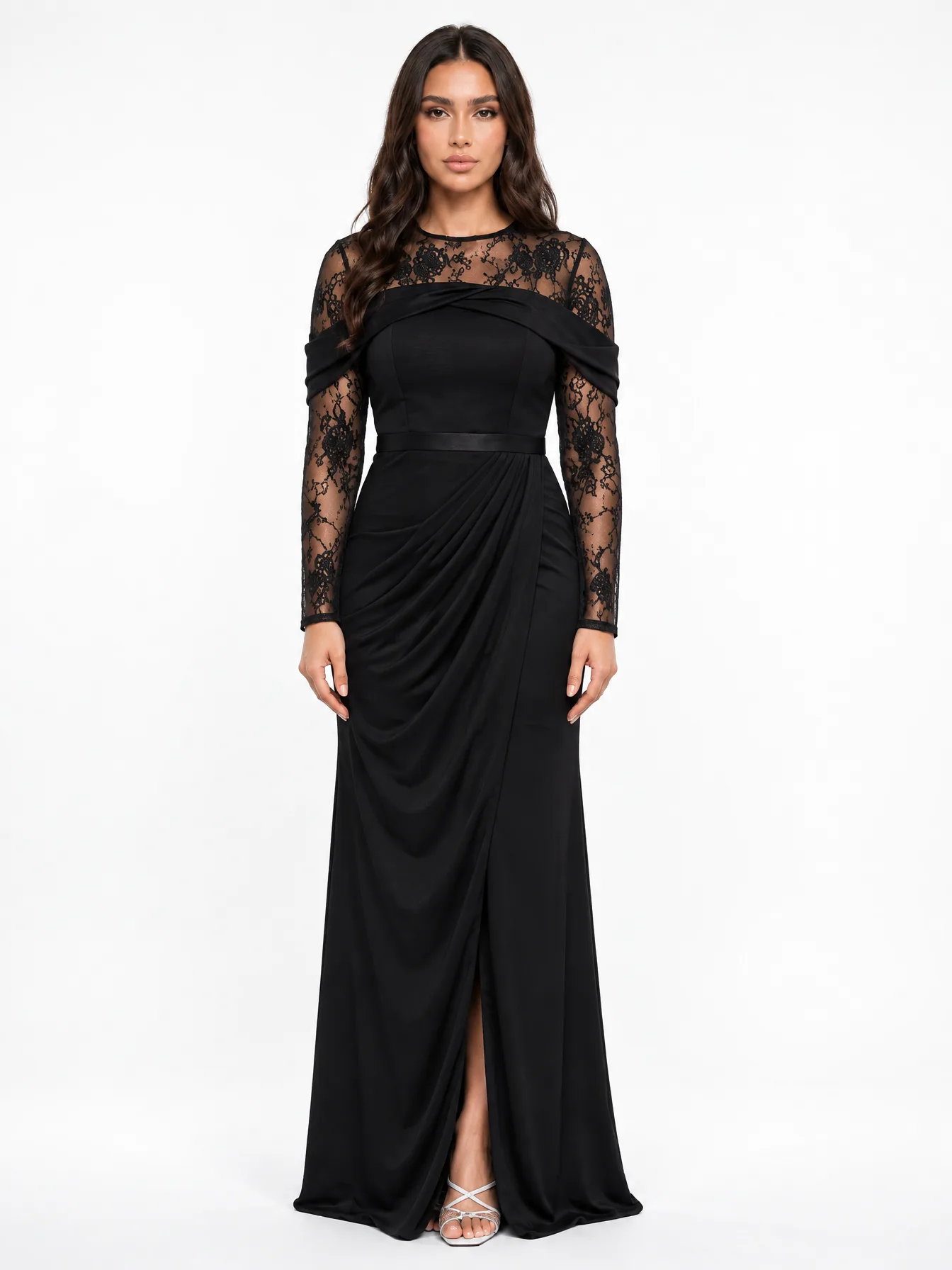
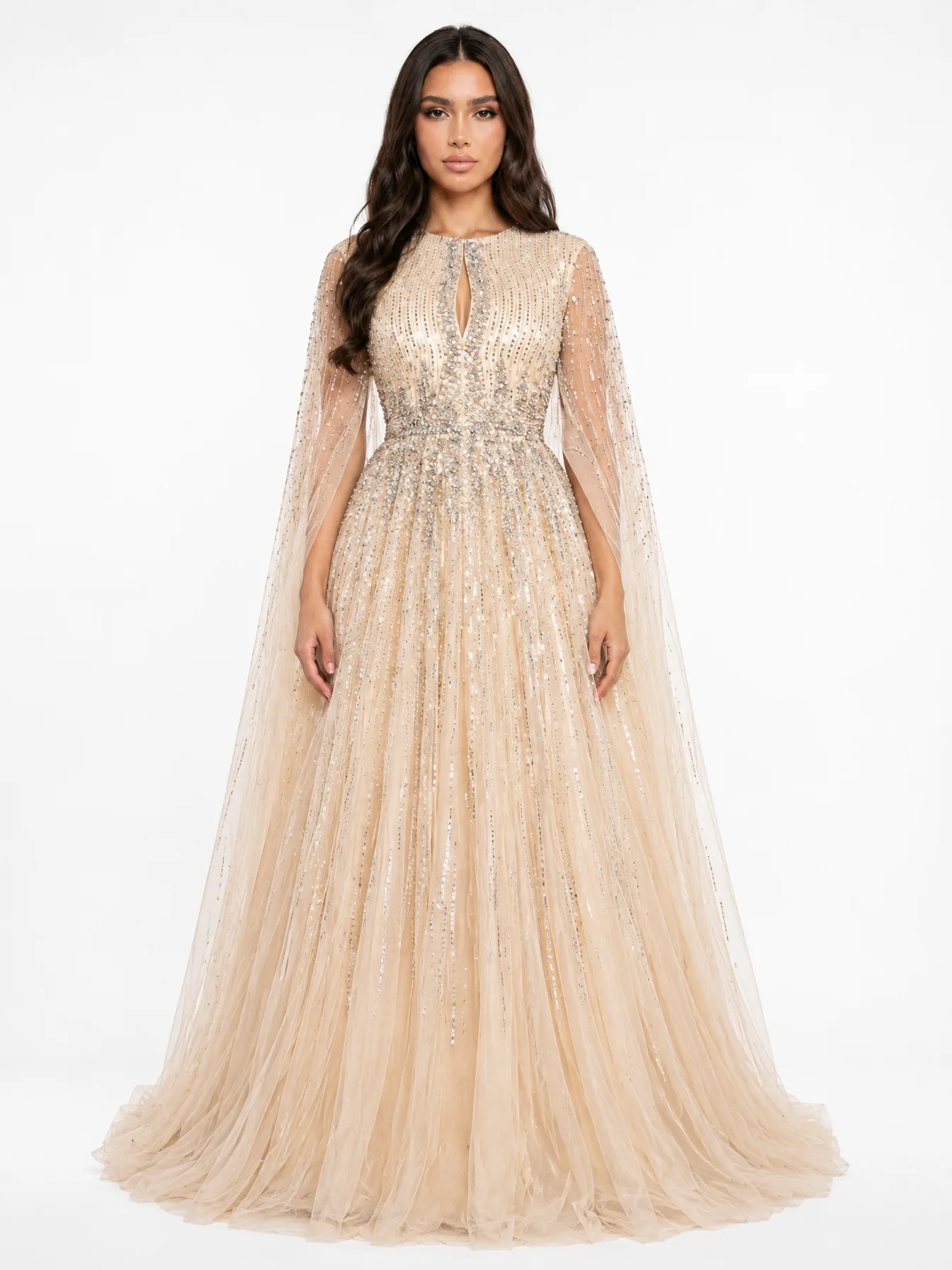
A sleeved dress such as the sheer-sleeve draped dress, or a softer gown like the crystal and pearl cloche gown in lilac or champagne, hits the right level.
What do you wear to a modern engagement party?
Modern engagement parties range from a family dinner to a hotel event with a DJ, and many are mixed. Read the invitation and dress for the venue.
- At home or a restaurant: a smart midi dress, an elegant jumpsuit or a dressy kaftan.
- At a hotel in the evening: cocktail to evening wear; a midi or a simple long gown with some shine.
- Mixed guest list: think about your neckline, back and slits as you would for any mixed evening, and carry a wrap.
- Women-only: you can dress up more inside, but arrive covered, as you would for a wedding.
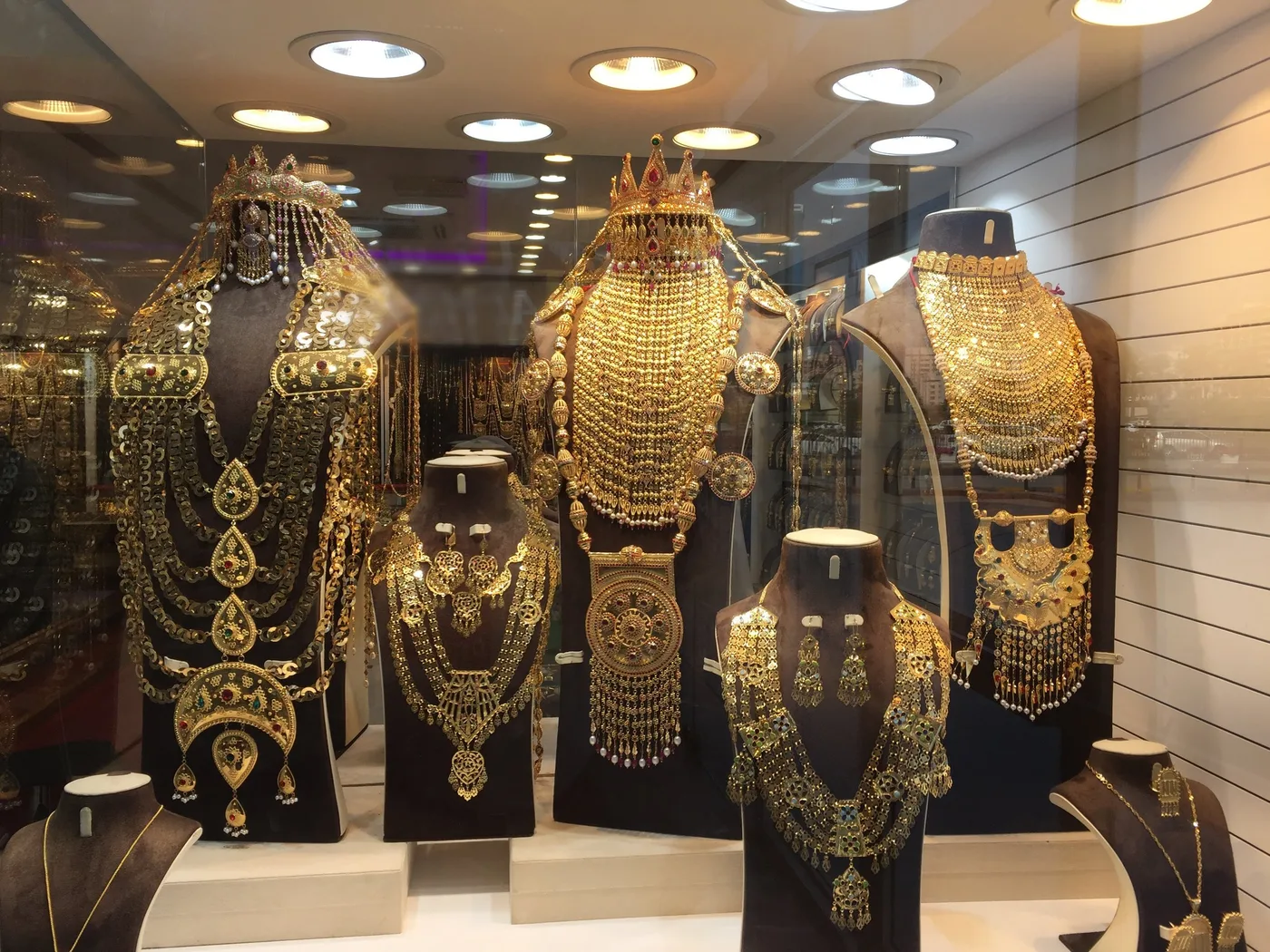
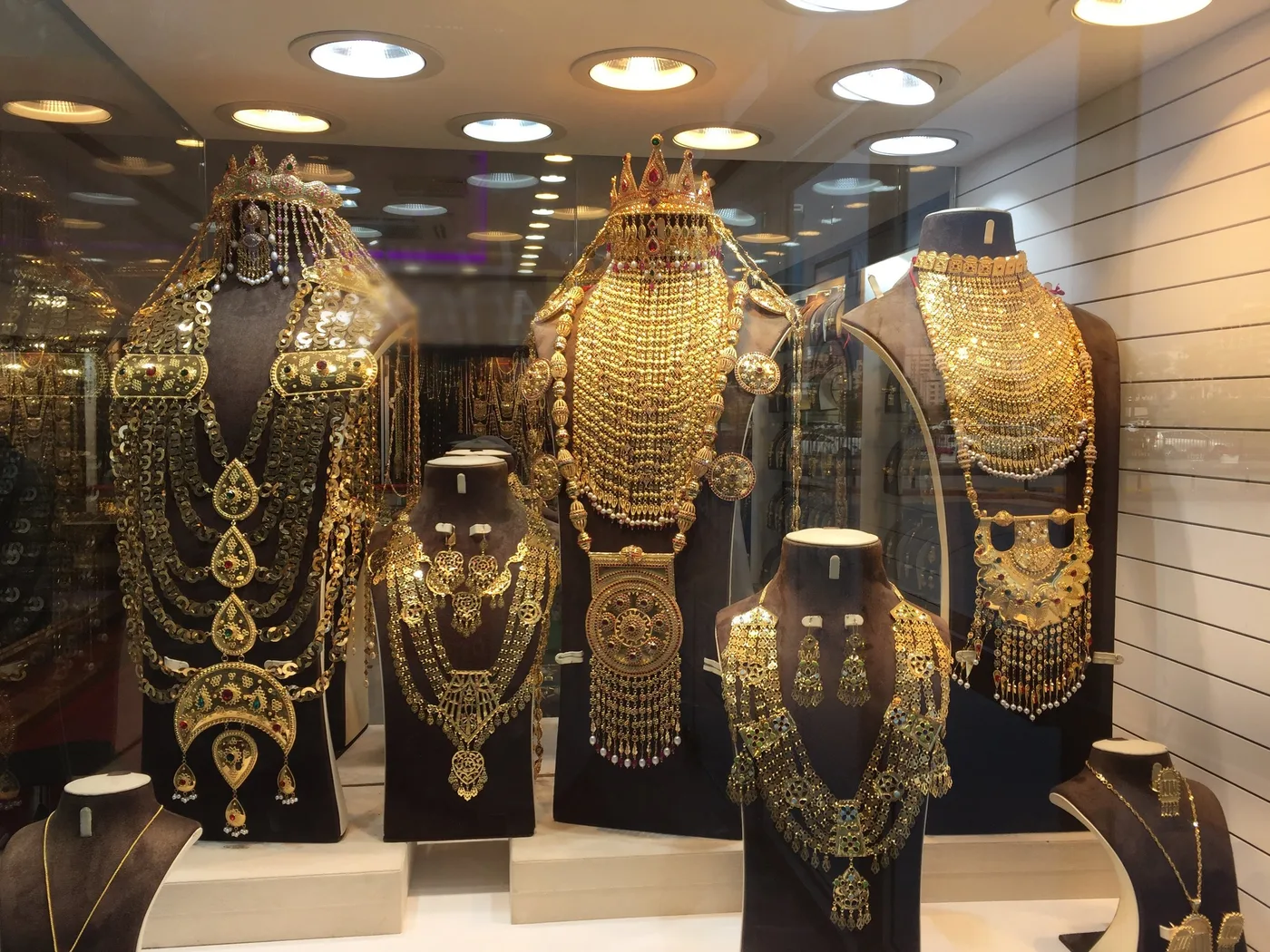
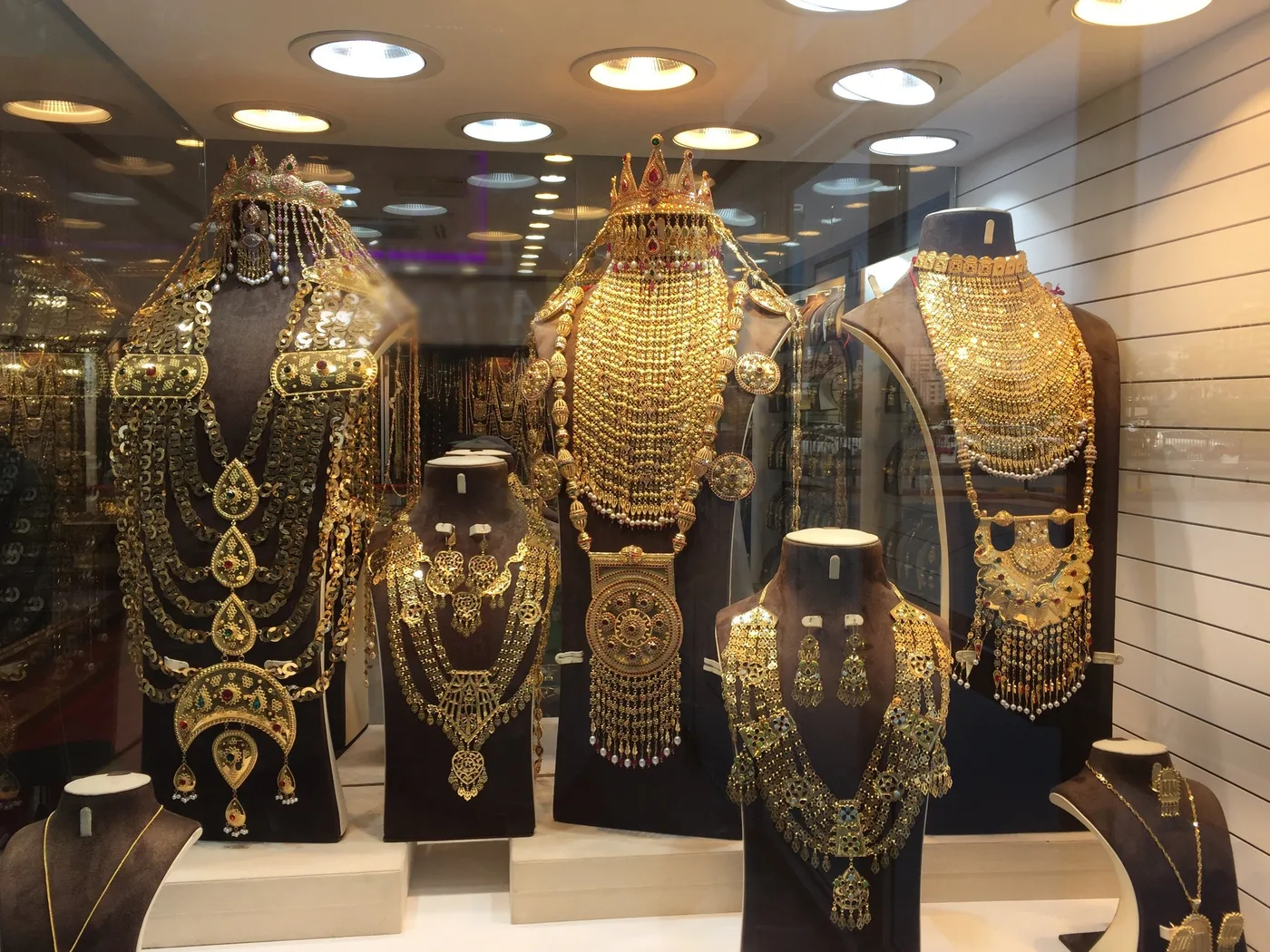
Engagement occasions are also when the shabka often appears, the jewellery gift from the groom. In Najdi custom, Arab News reports, the groom gives gold or other jewellery to the bride's mother as part of a wider set of gifts. Expect the room to be looking at the bride's jewellery, not yours, so keep your own pieces understated.
What should the bride's and groom's families wear?
Close family dress a level above other guests, because they are hosting and they will be in every photograph the family keeps.
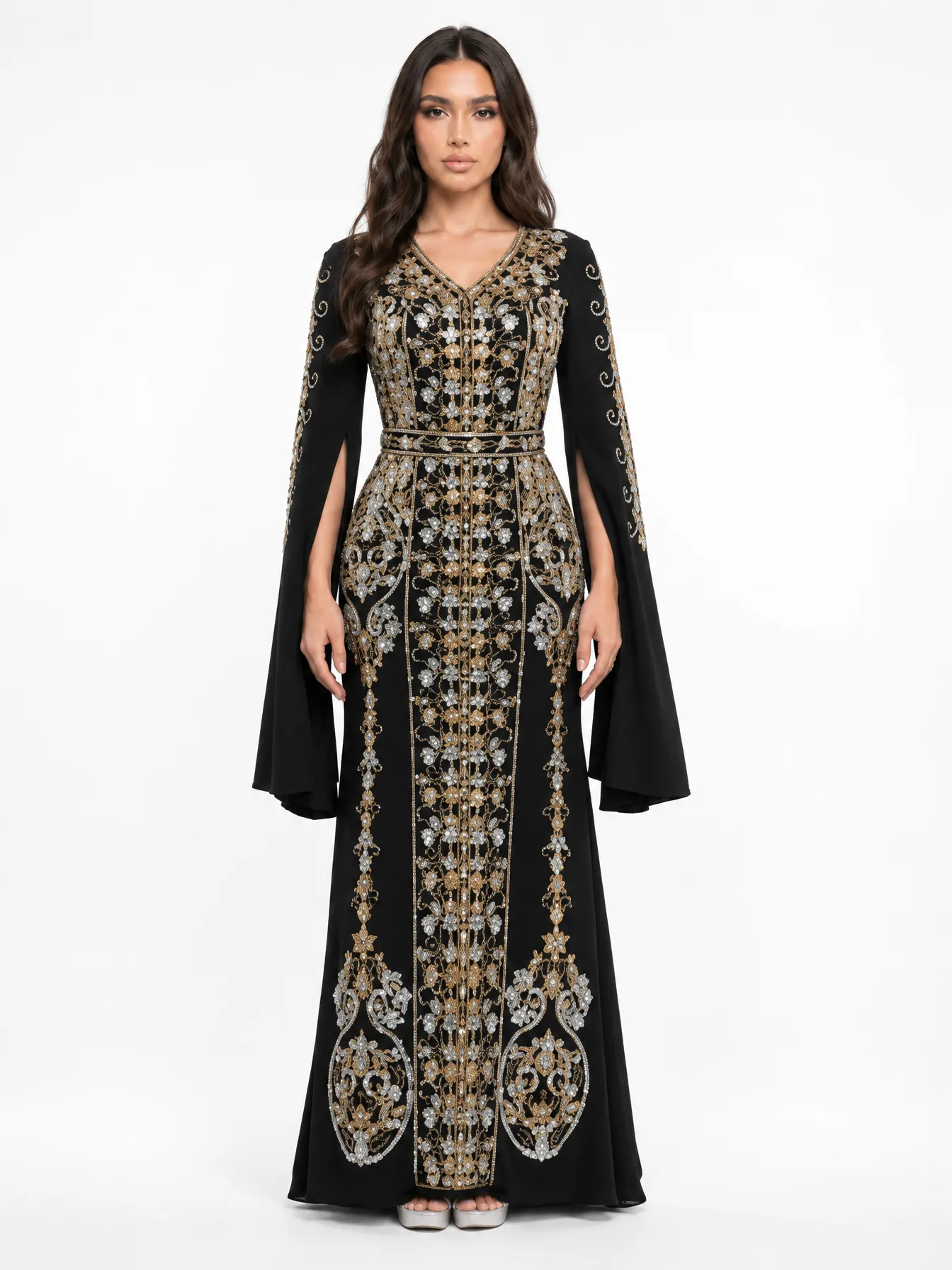
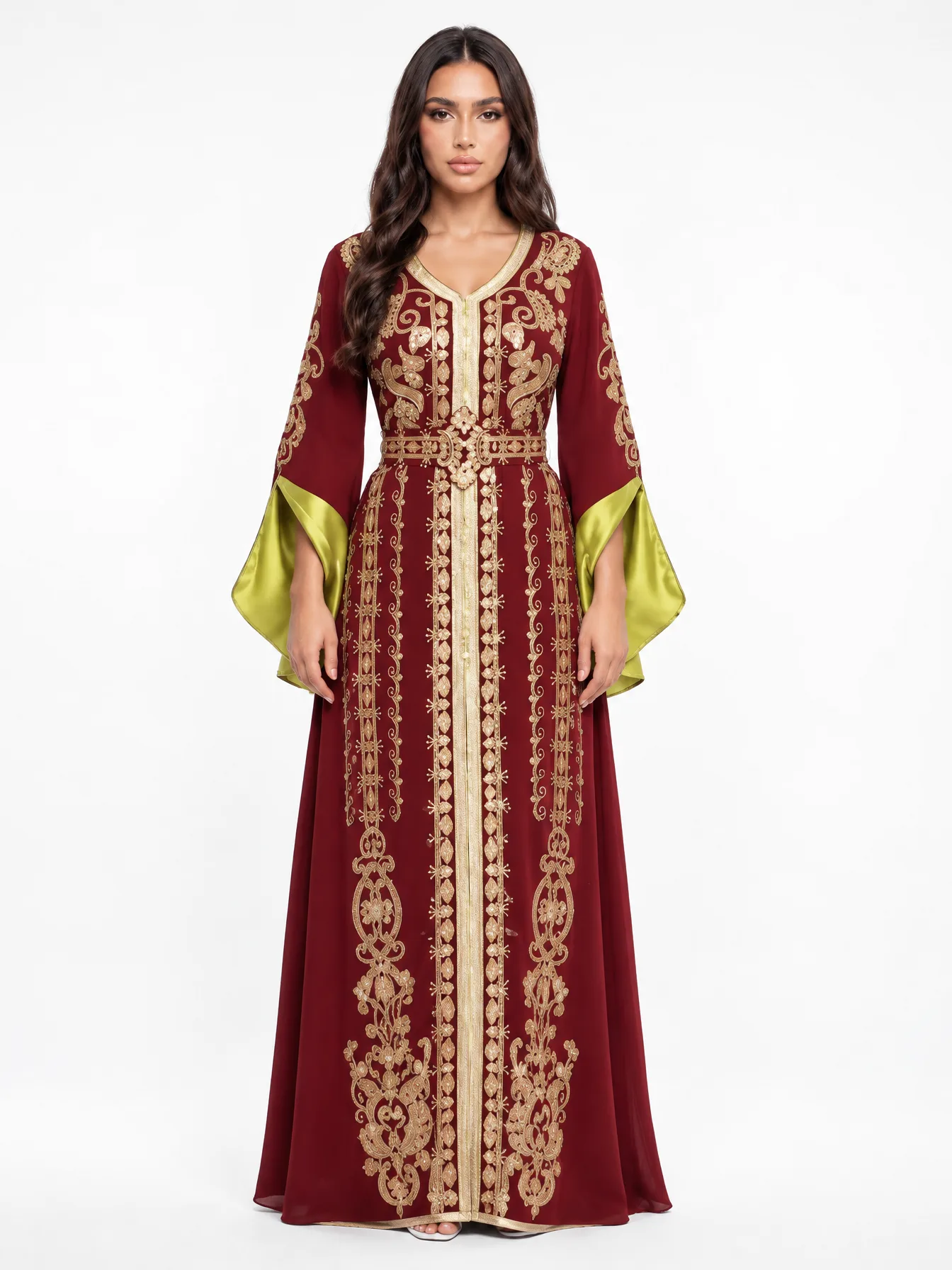
- Mothers: a long, elegant gown or a richly embroidered kaftan with sleeves. A hand-beaded kaftan is an easy way to look dressed up while staying comfortable as a host.
- Sisters and close cousins: a long evening dress, often coordinated with each other in colour. Ask the bride early if she has a palette in mind.
- Grandmothers and older aunts: a traditional thobe, jalabiya or kaftan in a rich colour, with a matching shayla.
For the mother of the bride, something like the hand-beaded evening kaftan or the embroidered Arabic kaftan gives presence without competing with the bride.
How is an engagement outfit different from a wedding outfit?
The short answer is scale. Everything is one notch down.
- Occasion: the wedding is the biggest night, often with hundreds of guests; the khutba and milcha are usually family-sized.
- Length: wedding guests wear floor-length; at an engagement, a midi or simple long dress is fine.
- Embellishment: full crystal and sequins for the wedding; lighter beading or embroidery for the engagement.
- Silhouette: ball gowns and mermaid gowns for the wedding; draped dresses, kaftans and softer gowns for the engagement.
- Covering: the same rules apply. Arrive covered to a women's party and keep a shayla near.
- Photos: equally private. Do not photograph other women.
If you are attending both, buy them as a pair: a softer, paler look for the engagement and a richer, more dramatic one for the wedding. Our guide to what to wear to an Emirati wedding covers the big night.
When should you order your engagement outfit?
Engagement invitations can come at short notice, so it helps to know your timings. Gulf News notes that most Emirati couples leave at least a month between the milcha and the wedding, which means you may need two outfits within a few weeks.
- 1. Order the engagement outfit as soon as you have a date. Lianora, for example, delivers across the UAE and the GCC in 10 to 15 days from confirmation, and confirms availability within 24 hours.
- 2. Order the wedding gown at the same time if you can, so you can compare colours side by side.
- 3. Check the size guide and the delivery and returns page before you order: exchanges within 7 days of delivery for unworn pieces in their original packaging, and no refunds.
You can browse long and midi styles in the evening dresses section.
Questions
Is the couple married after the milcha?
Yes. The milcha is the signing of the marriage contract, so the couple are legally married from that point, even though the wedding party and moving in together usually come later. Gulf News notes that most couples allow at least a month between the two.
Can a guest wear white to a Gulf engagement?
It is best avoided. The bride may wear white or a pale shade, and a guest in white can look as if she is competing. Pastels, champagne and jewel tones are safer unless the family has set a white dress code.
What is the shabka?
The shabka is the jewellery the groom gives as part of the engagement gifts. In Najdi custom, Arab News reports, it includes gold or other jewellery given to the bride's mother. Customs and amounts vary widely between families and countries.
Should I bring a gift to a milcha or engagement?
It is a kind gesture but rarely expected of ordinary guests, as the main gifts pass between the two families. Flowers, sweets or perfume for the bride are thoughtful choices; ask a close friend what is usual in that family.
Sources
- Gulf News: All you need to know about an Emirati wedding (2019)
- Gulf News: Traditional weddings a time of camaraderie (2019)
- The National: What happens at an Emirati wedding? A guide to local traditions (2022)
- The National: My Life – Fatima Al Shamsi on wedding plans (2012)
- Al Jarida (KUNA): Dazza, malja and zuwara – wedding traditions of old Kuwait (2016, Arabic)
- Al Yaum: Bayt Al Khair introduces visitors to old Eastern Province wedding customs (2019, Arabic)
- Arab News: Jordanian, Saudi wedding traditions to look out for at the royal celebrations (2023)