
A Turkish evening dress, or abiye in Turkish, is a formal gown made by Turkey's ready-to-wear industry, which is centred on Istanbul. They are known for rich embellishment, often hand-sewn beading and crystals, for silhouettes ranging from mermaid gowns to full ball gowns, and for many modest options with long sleeves and high necks. That mix, along with variety and shared tastes, explains why Turkish occasion wear sells so well in Saudi Arabia and the wider Gulf.
What is a Turkish evening dress?
In Turkey, evening and occasion wear is called abiye, the word used, for example, in the name of the Istanbul trade fair for evening, bridal and groom's wear. In the Gulf, "Turkish dress" has come to mean a particular kind of gown: structured, generously embellished, made for weddings, engagements and formal evenings, and usually available in many colours.
Typical features include:
- Beading, crystals, pearls and sequins concentrated on the bodice, collar and sleeves.
- Built-in structure, often with boning, corsetry and linings.
- Long sheer sleeves, high collars and capes, so a modest version of most designs exists.
- The same design offered in a run of colours, from champagne and silver to emerald and burgundy.
Turkish production spans a very wide range of quality and price, from fast wholesale pieces to couture work. "Turkish" tells you where a dress was made, not how well.
Where in Istanbul are evening dresses made and sold?
Three districts come up again and again in the evening-wear trade:
- Laleli: a historic wholesale quarter near the old city, known for its large textile wholesaling business. It grew on the "suitcase trade", with buyers from the former Soviet Union and elsewhere carrying stock home to sell in their own boutiques.
- Osmanbey: a ready-to-wear and textile district north of Taksim. Its business association, OTİAD, co-organised the Fashionist evening-wear and bridal fair, and in 2018 its chairman said the district exported around $1.5 billion a year, with 36% of the district's 2017 exports going to the Middle East, according to Anadolu Agency.
- Merter: near Zeytinburnu, a wholesale area that also has small production sites such as textile plants and factories, according to istanbul.com.
These districts mostly serve trade buyers: boutique owners and distributors who order by the series, meaning one design in a run of sizes. Shoppers usually meet Turkish evening wear through a boutique or online retailer that has bought from them.
How big is Turkey's clothing industry?
Large. Figures from Turkey's Ministry of Trade, published by the Istanbul Apparel Exporters' Association (İHKİB), put Turkish apparel exports at about $19.7 billion in 2024, down from about $20.6 billion in 2023. The European Union took just over half. Middle Eastern countries took about $1.3 billion, or 6.8%.
Evening wear is a small, specialised part of that total, but it shares the same advantages: an experienced workforce, local fabric and trim suppliers, and the ability to produce the same design in many sizes and colours. Bridal wear, the closest category to evening gowns, is tracked separately. Turkish Statistical Institute figures reported by Hürriyet Daily News show Turkey exported more than 23,300 wedding gowns in 2023, worth $3.7 million, up 35.7% on the year before.
Why are Turkish evening dresses popular in the Gulf?
Several reasons reinforce each other:
- Taste: Turkish occasion wear is built around the things Gulf weddings call for, such as embellishment, structure, long sleeves and full skirts. Turkish fashion figures interviewed by Arab News in 2018 credited shared religious and cultural values for their following among Arab women, and one Saudi follower named Turkish television as an influence.
- Demand that shows up in the data: Saudi Arabia was the second-largest buyer of Turkish wedding gowns by number in 2023, a little over 2,000, behind only Germany, according to TurkStat figures reported by Hürriyet Daily News.
- Trade focus: the organisers of Fashionist, the evening-wear and bridal section of Istanbul's IFCO fair, list Saudi Arabia and the United Arab Emirates among its main target countries, and the Middle East has the largest share in the market figures they publish.
- Variety: the head of the Istanbul Wedding Dress Manufacturers and Exporters Association told Hürriyet that buyers choose Turkish gowns partly because they offer more variety than European competitors.
For guests, the practical result is plenty of choice in modest, embellished styles at a range of prices.

What does hand-beaded mean on an evening dress?
Hand-beaded means beads, sequins, pearls or crystals were attached by hand with thread, not glued on or applied by machine. There are two main methods:
- Needle beading: each bead or small group is stitched on with a needle. It is slow, secure and allows raised, three-dimensional patterns.
- Tambour beading: worked with a fine hook in chain stitch. This is the technique associated with Lunéville in France, where embroiderers began adding beads and sequins to chain-stitch work in the 1860s, according to the Textile Research Centre in Leiden, and the method is still associated with couture beading.
How to tell, in person or from close-up photos:
- Look at the inside. Sewn work shows thread or a backing fabric behind the beaded area; glued stones show a clean reverse.
- Run your hand lightly over it. Sewn beads move slightly; glued stones are rigid.
- Feel the weight. Heavily hand-beaded bodices are noticeably heavy, which is why they need a firm lining and careful storage.
Glued embellishment is not automatically bad, but it is more vulnerable to heat, steaming and cleaning.

Which silhouettes are typical of Turkish evening wear?
You will see the same families of shape again and again, each with a modest and a less covered version:
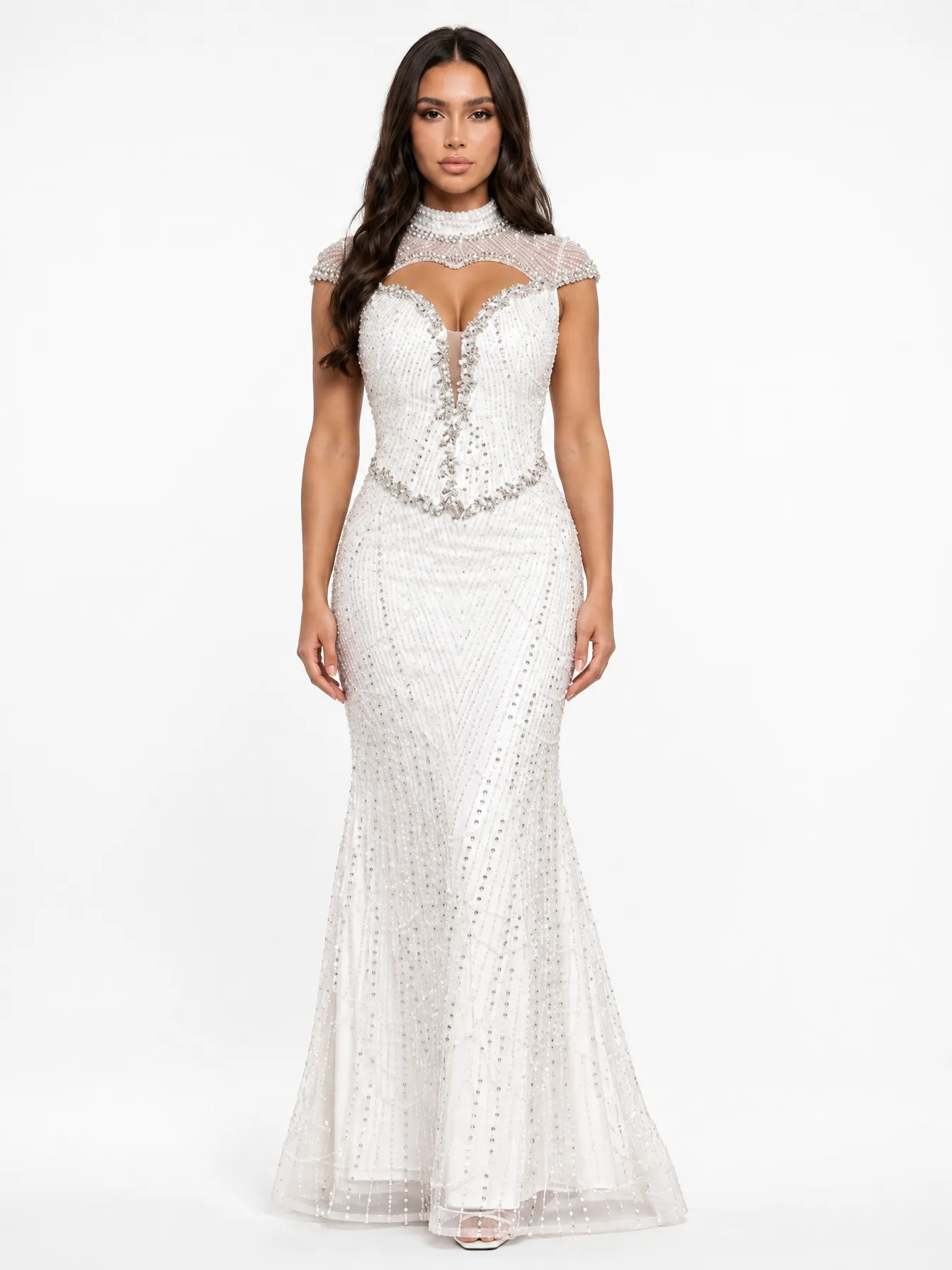
- Mermaid or fishtail: fitted to the knee, then flaring, often sequinned or beaded all over, like the hand-beaded crystal collar gown.
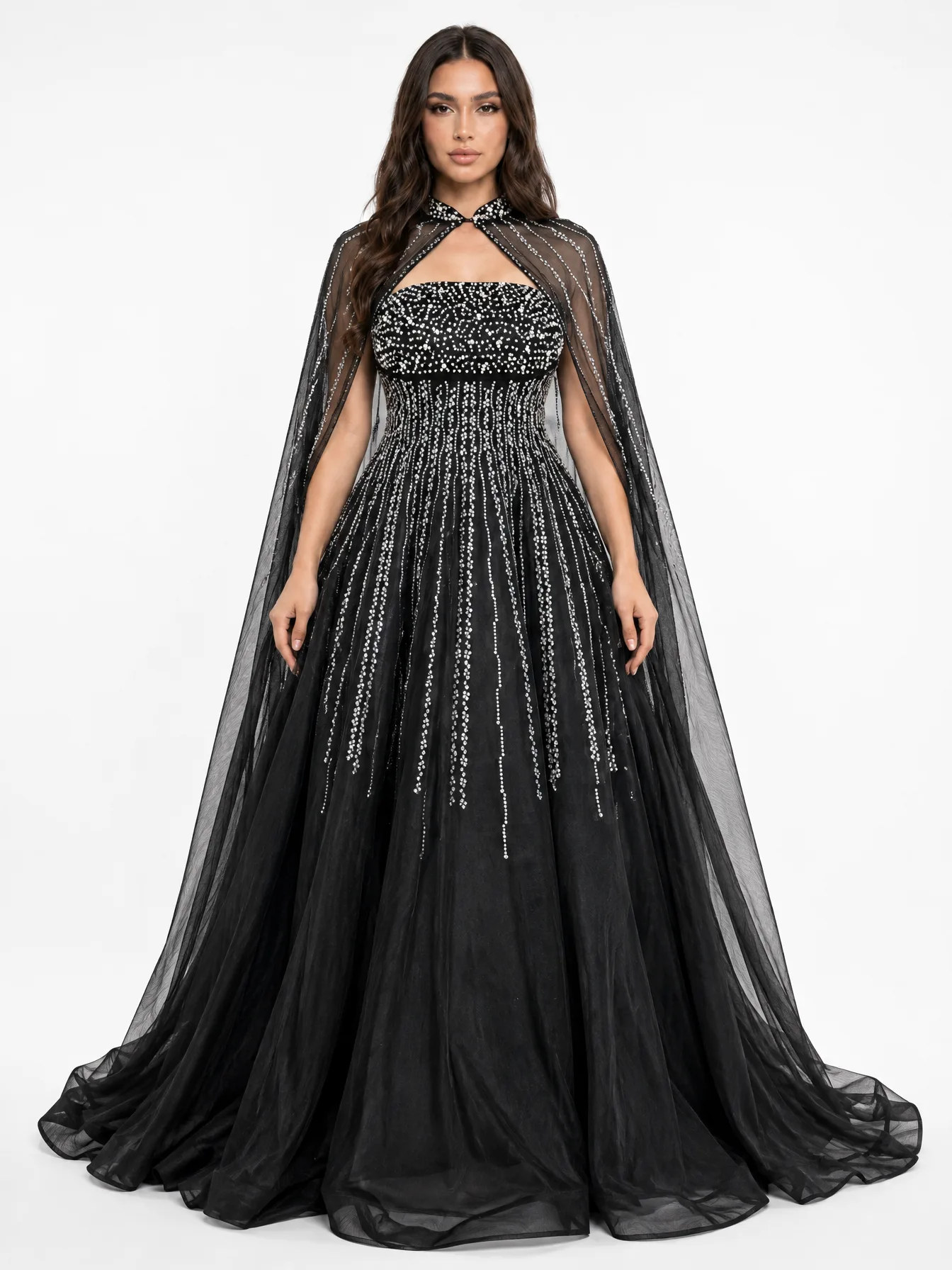
- Ball gown and cloche: a structured bodice over a very full tulle or satin skirt, sometimes with a separate cape, as in the pearl-beaded ball gown with cape.
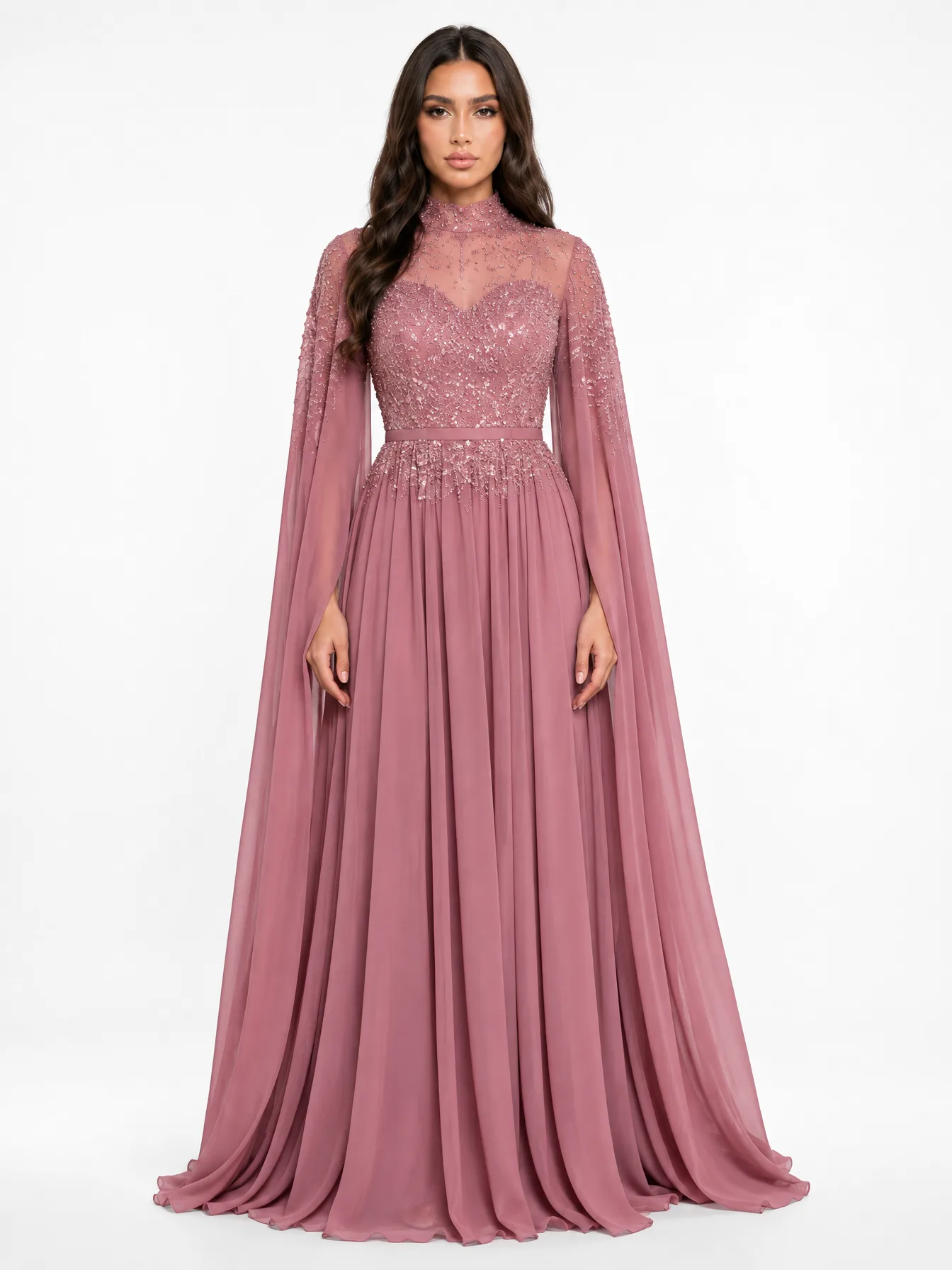
- Flowing chiffon: a beaded bodice and soft layered skirt, often with cape sleeves, cooler to wear in summer.
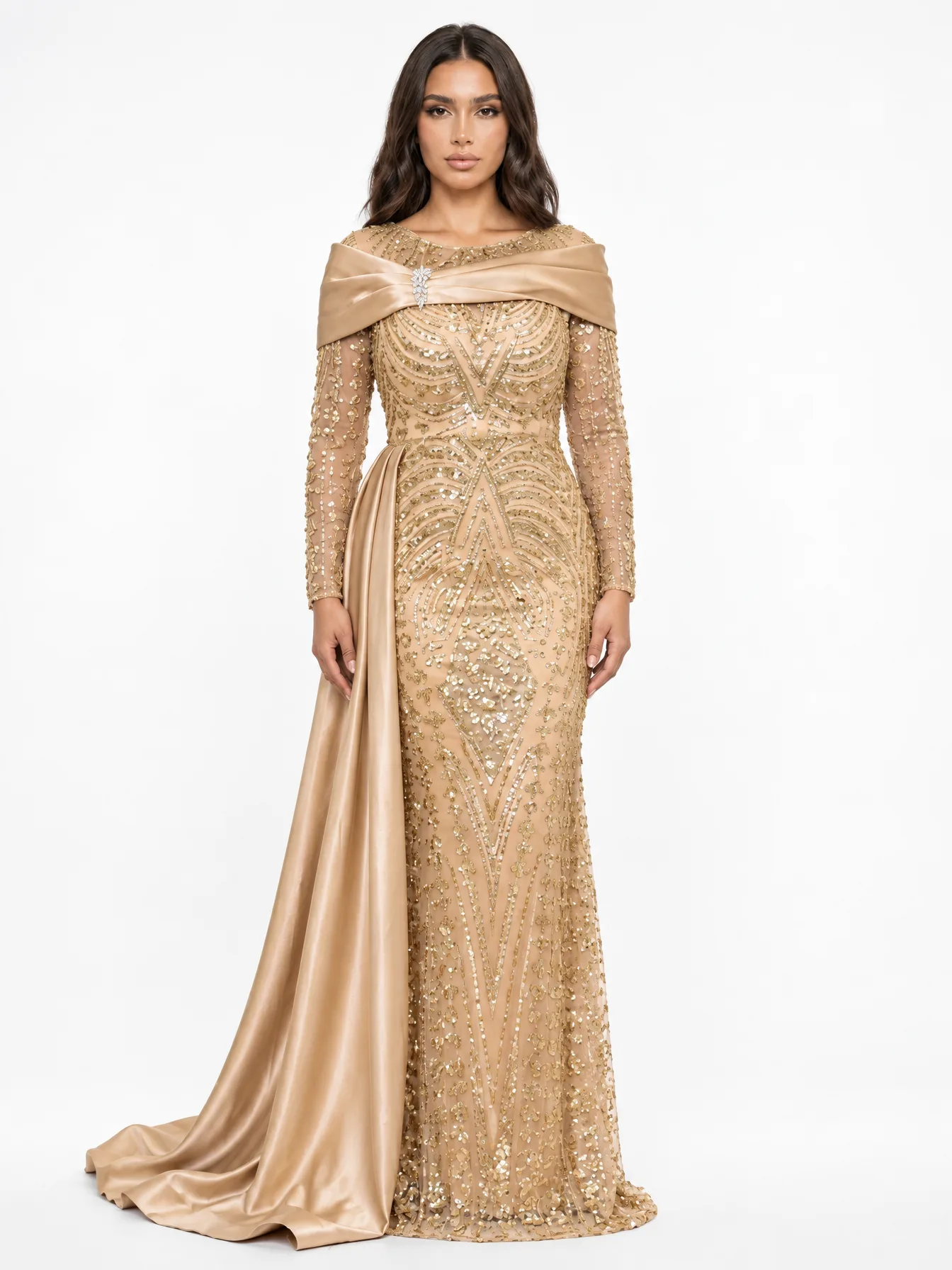
- Draped and one-shoulder: pleated sashes or wraps falling into a train.
- Kaftan-inspired: straight or belted shapes with heavy embroidery, popular for henna nights and Eid.
Fitted shapes such as the mermaid leave little room for error in sizing, so check your measurements first; the sizes and fit page explains how.
What does "made by a Turkish atelier" actually mean?
Atelier simply means workshop. In Turkish evening wear it can describe anything from a small team of embroiderers to a large manufacturer producing for its own label and for others. The word on its own tells you little, so ask the seller:
- Who produced the dress, and is the seller the maker, a distributor or a reseller?
- Is the beading sewn by hand, and on which parts of the dress?
- Is the dress fully lined, and what is the lining made of?
- Was the finished piece checked before dispatch, and by whom?
An honest seller answers plainly. Lianora, for instance, is a supplier and distributor rather than a designer: its pieces are produced by established Turkish ateliers under leading international designers, and a veteran Turkish designer checks the finished garments. You can read more on the about page, or browse the evening dresses.
Questions
Are Turkish evening dresses good quality?
They can be excellent, but quality varies widely because Turkey produces at every price level. Judge each dress on its own: full lining, secure sewn beading, neat inside seams and a sturdy zip are better signs than the country on the label.
What does abiye mean?
Abiye is the Turkish word for evening or formal occasion wear. You will see it on Turkish shop signs, trade fairs and wholesale catalogues, often alongside gelinlik, the word for a wedding dress.
Can you buy a single Turkish evening dress, or only wholesale?
Istanbul's wholesale districts mainly serve trade buyers, but boutiques and online retailers sell single pieces. Lianora sells single pieces to shoppers and also supplies boutiques across the Gulf, with no minimum order.
Are Turkish evening dresses modest?
Many are, and most designs come in a covered version with long sleeves, a high neck and a full skirt. Check sheer sleeves and yokes against a dark background to see how see-through they are, and ask whether they are lined before you order.
Sources
- İHKİB: 2024 annual apparel export report
- Hürriyet Daily News: Turkish wedding gowns garner attention with surge in export (July 2024)
- Anadolu Agency via Mynet: Fashionist evening wear and bridal fair (May 2018, Turkish)
- IFCO: Fashionist, the evening wear and bridal area
- istanbul.com: Istanbul wholesale markets
- Wikipedia: Laleli, Fatih
- Arab News: Turkey's fashion bloggers reach out to Arab world (April 2018)
- Textile Research Centre Leiden: Lunéville embroidery