The best evening dress for your body shape is the silhouette that puts the emphasis where you want it and feels good for a long night. As a rough guide, an A-line suits almost everyone, a mermaid shows off a defined waist and hips, a ball gown balances a fuller lower half, a column lengthens, an empire line skims the middle and a kaftan covers while still moving beautifully. Below is what each shape actually does, with notes for petite and tall women and for modest dressing.
What does dressing for your body shape really mean?
It is not about hiding anything. Labels such as hourglass, pear or apple are only shorthand for where you carry your width: shoulders, bust, waist or hips. A silhouette simply decides where the eye lands first, so the useful question is what you would like people to notice, and what you would rather the dress skimmed past.
Comfort matters just as much. A Gulf wedding or gala can run late, with dinner, dancing and plenty of photographs, and you will look more at ease in a dress you can sit, walk and breathe in than in one that technically flatters but pinches all night. Start with the occasion and how you want to feel, then choose the shape.
What does each evening dress silhouette do?
These are the six shapes you will meet most often. The definitions follow a US eveningwear label's silhouette guide, listed in the sources.
- A-line: fitted through the bodice, then widening gently from the waist like the letter A. It flatters almost every figure and works for weddings and black-tie evenings alike.
- Mermaid and trumpet: fitted through the bodice and hips, then flaring. A mermaid flares at or below the knee; a trumpet flares higher, at mid-thigh, which is easier to walk in.
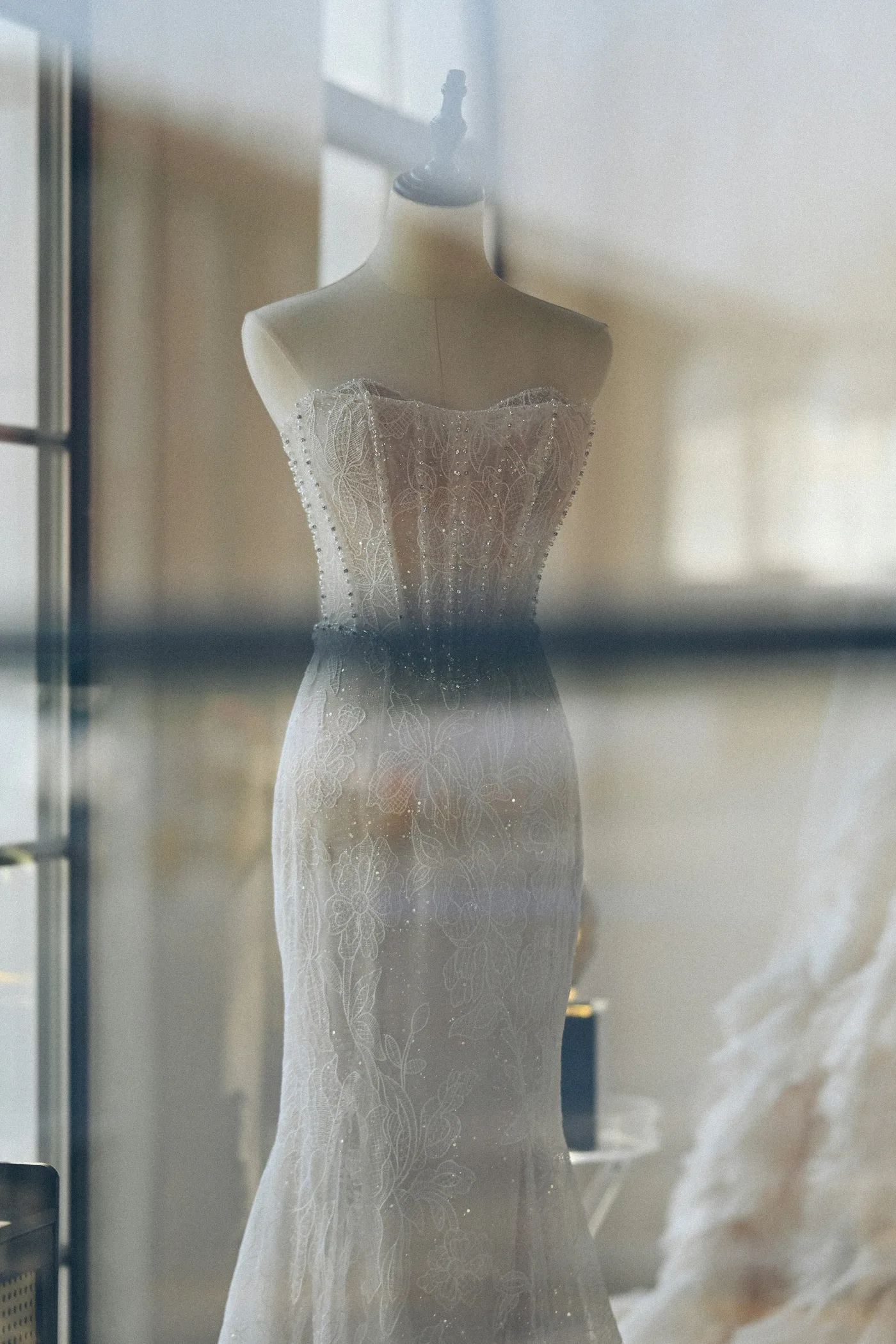
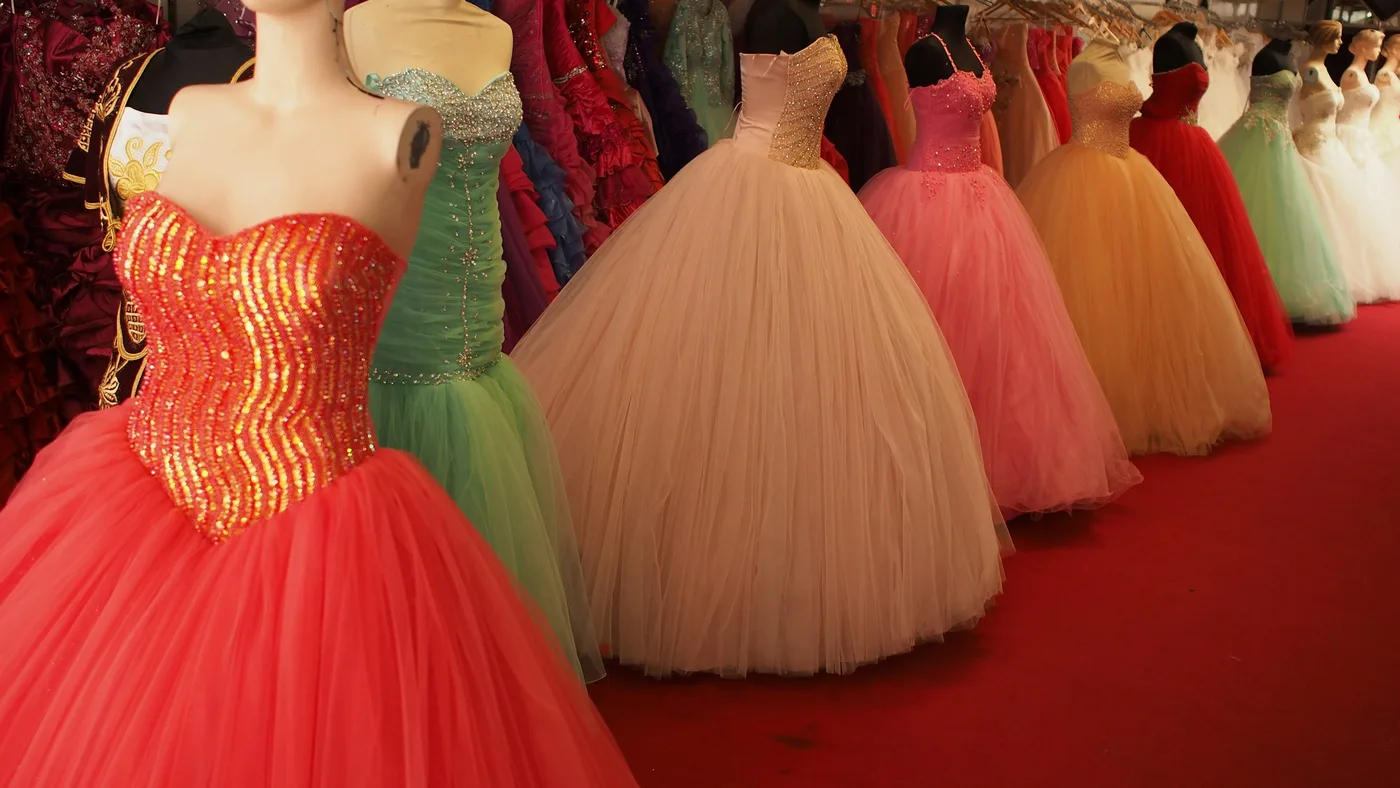
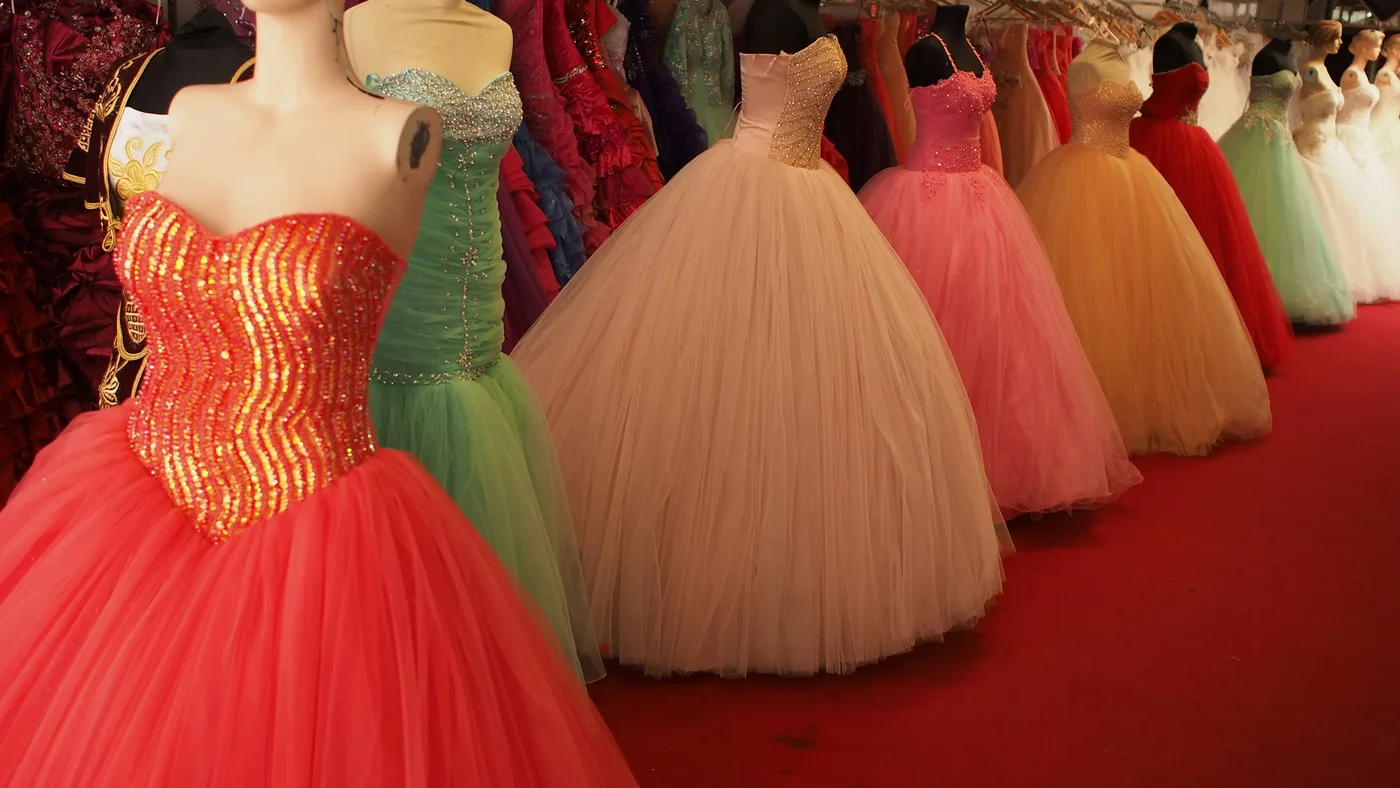
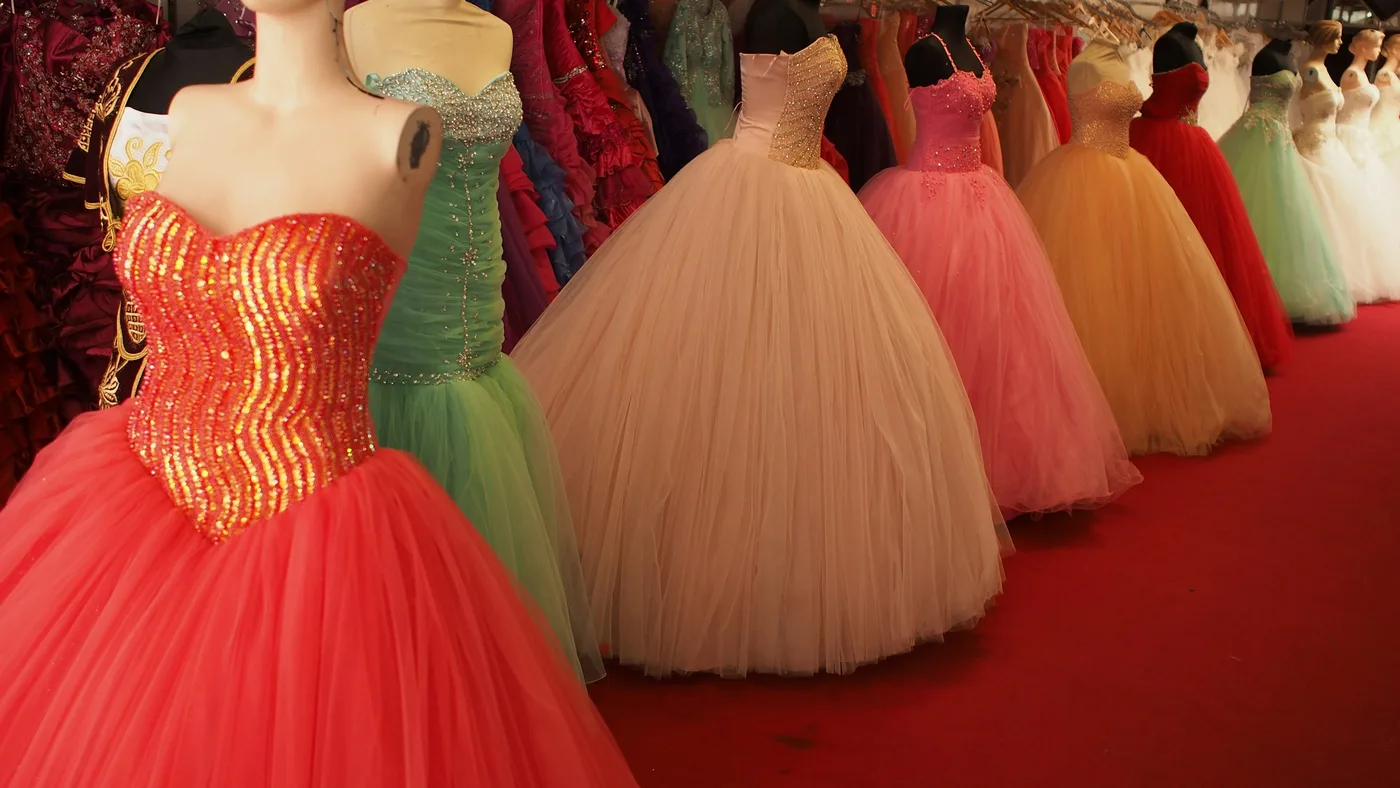
- Ball gown: a fitted bodice over a very full skirt, often built up with tulle. It creates a dramatic waist and a formal presence.
- Column or sheath: a long, fairly straight line with little flare. A sheath follows the waist and hips more closely; a column falls straighter.
- Empire: the waistline sits just under the bust and the skirt falls from there, so it skims rather than defines the middle.
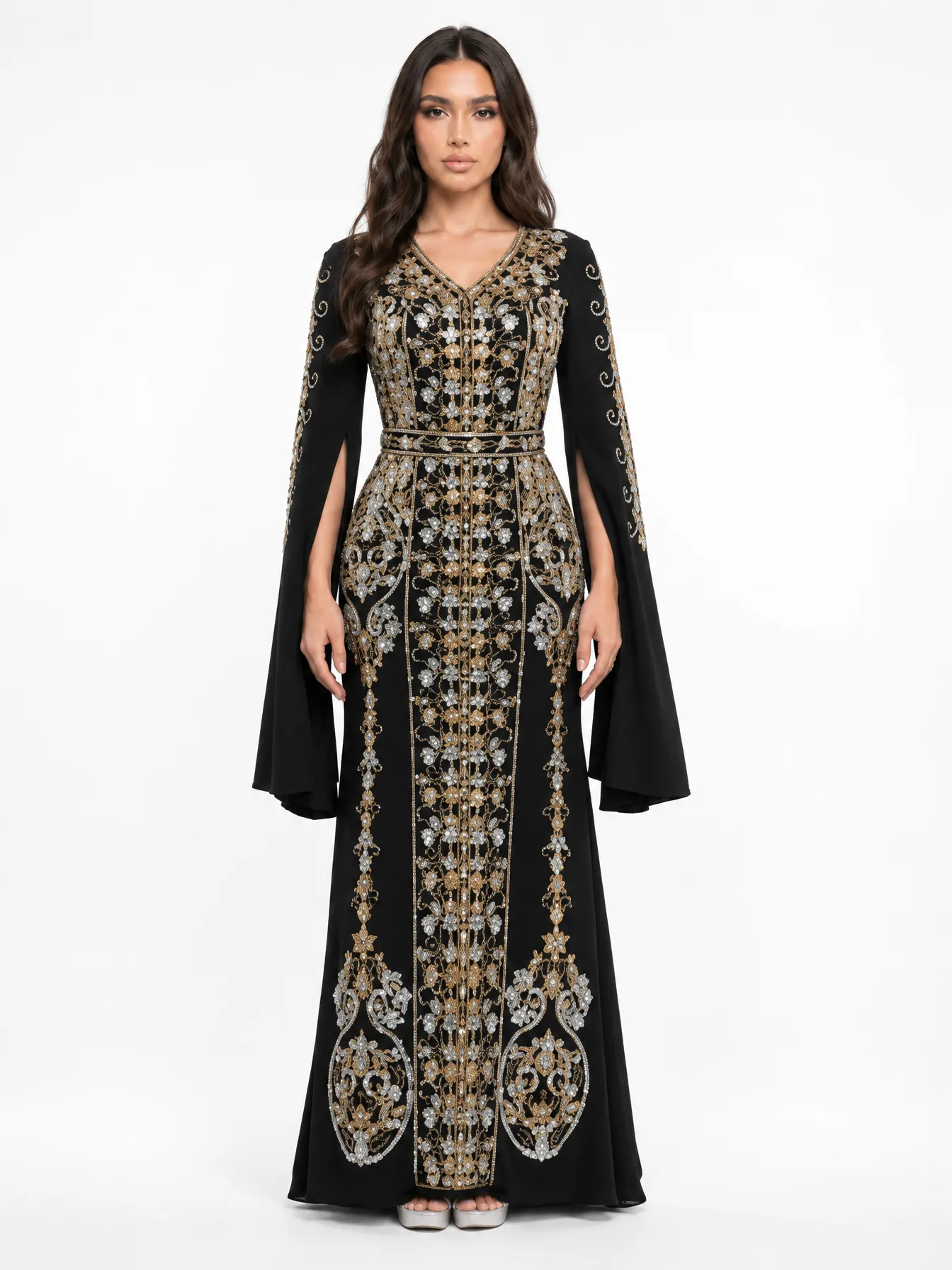
- Kaftan: a long, loose robe with sleeves, often belted or embellished, which originated in West Asia and spread across the Middle East and North Africa. It covers fully and moves easily.
Which evening dress suits a curvy or hourglass figure?
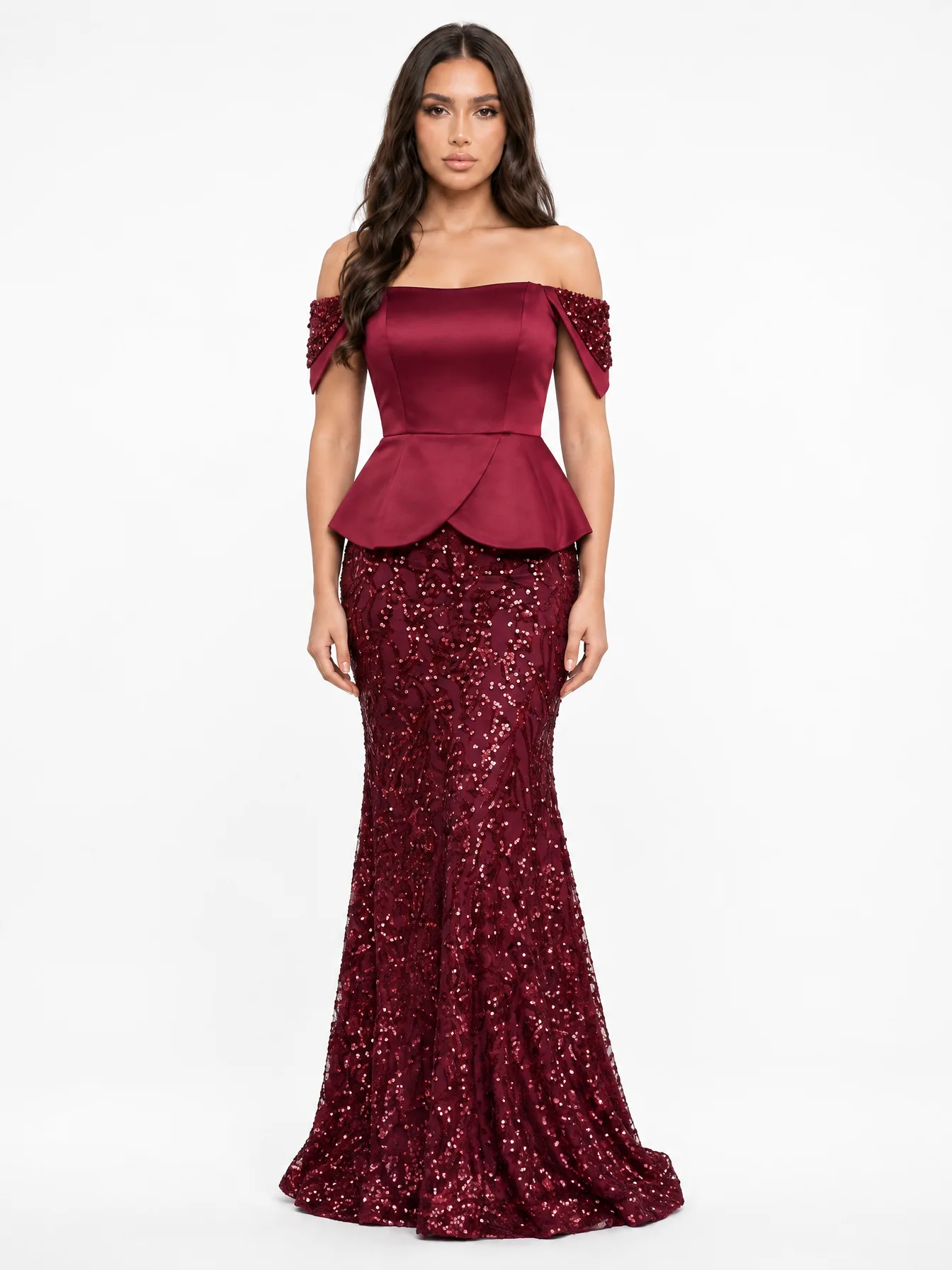
If your bust and hips are roughly balanced with a defined waist, most silhouettes will work, so choose the one that shows off what you like. A mermaid or trumpet follows the curve from waist to hip; a corset or boned bodice holds the shape without squeezing; a belt or peplum marks the waist on a straighter skirt.
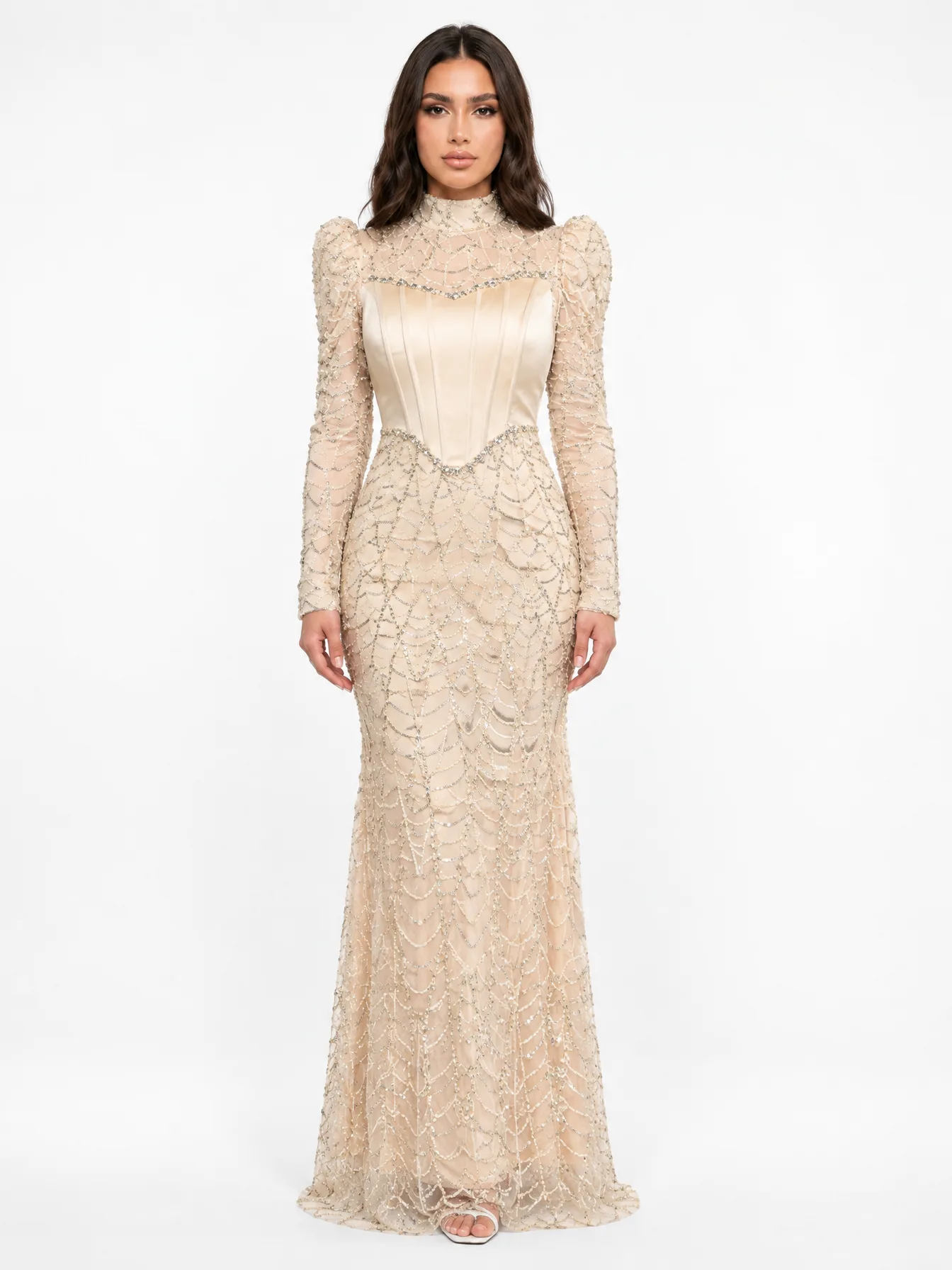
The main thing to watch is fabric. Thin, clingy fabric on a fitted cut shows every seam and line beneath it, while structured satin, crepe or a well-lined sequinned skirt holds its own shape. Pieces such as the satin corset collar gown, with a boned bodice and a mermaid skirt, or the peplum sequin gown show how structure at the waist does the work.
What should you wear if you carry more weight at the hips or the middle?
If your hips are fuller than your shoulders, an A-line or a ball gown lets the skirt fall away from the hip, and a detailed neckline, beading at the bodice or a wide or off-shoulder line draws the eye upwards and balances the frame. An empire line, with its waist raised just under the bust, is another option if you want less focus on the waist.
If you carry more through the middle, look for an empire waist, a wrap or draped bodice, or a V or keyhole neckline that creates a vertical line. A belted kaftan defines the waist only as much as you choose. Fitted columns in thin fabric are the least forgiving here; the same cut in heavier crepe, or with draping across the body, behaves very differently.
Which evening dress styles suit petite women?
If you are petite, the aim is an unbroken vertical line. The same silhouette guide points to columns, sheaths and fit-and-flare shapes for elongating the body, and to A-lines with balanced volume. An empire waist also helps, because a raised waistline makes the legs read longer.
- Volume: a very full ball gown can overwhelm a small frame, so some guides advise against it. If you love the shape, choose a softer skirt with fewer layers.
- Hem: length is everything. A floor-length hem that just clears your shoes looks far longer than one pooling on the floor, so plan for a hem alteration.
- Colour: one colour from neckline to hem, with shoes in a matching or skin tone, keeps the line long.
- Detail: keep embellishment above the waist or running vertically, rather than in wide horizontal bands.
What should tall women look for in an evening dress?
Tall frames carry volume and length well, so this is where a dramatic ball gown, a long column or a sweeping train comes into its own. The silhouette guide's advice is to balance proportion: pair a dramatic silhouette with refined accessories, and a minimal one with a bolder piece of jewellery.
The practical issue is length. Check the measurement from shoulder to hem against your own height in heels, and look at sleeve length if you are choosing long sleeves, since a sleeve that stops above the wrist looks like a mistake rather than a choice. A slightly higher waistline on a tall body can also look short-waisted, so a natural or dropped waist often sits better.
Can a modest evening dress still flatter your shape?
Yes. Every silhouette above comes with long sleeves and a high neck, and coverage often makes the line cleaner rather than hiding it. A few ways modest pieces shape the body:
- Belted kaftans give a waist while keeping the fabric loose, as on the hand-beaded evening kaftan with its belted waist and cape sleeves.
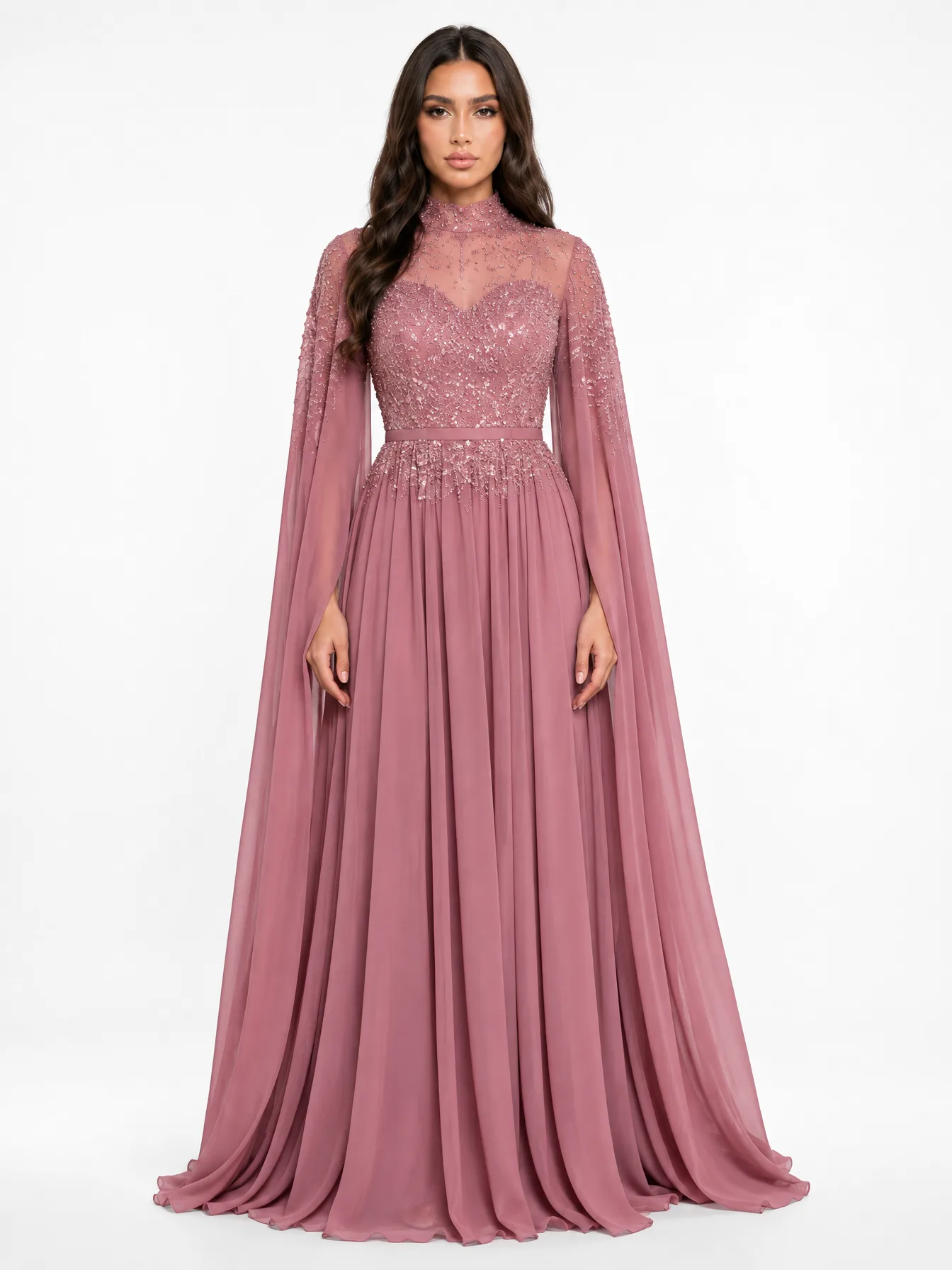
- Cape and sheer sleeves add movement and cover the arms without adding bulk.
- High necklines with a keyhole or beaded yoke lift the eye towards the face, as on the beaded chiffon cape gown.
- A full A-line or chiffon skirt keeps a fitted bodice modest below the waist.
For more on choosing coverage, see our guide to modest evening dresses.
How do you check the fit when you buy an evening dress online?
Measure rather than guess. With a soft tape measure, take your bust at the fullest point, your natural waist at the narrowest point and your hips at the widest, and compare all three with the size chart rather than relying on the size you usually buy. Lianora uses standard international sizing, and the sizes and fit page explains how to read it.
- Fitted styles such as mermaids: the size that fits your largest measurement is usually the safer choice, because taking a seam in is easier than letting one out.
- Flowing styles such as A-lines and kaftans: the bust and shoulders matter most.
- Try it on as soon as it arrives: exchanges at Lianora are accepted within 7 days of delivery for unworn pieces in their original packaging, and altered pieces cannot be exchanged, so check the size before you take it to a tailor.
Questions
What is the most flattering evening dress silhouette?
The A-line is the one most guides call flattering on almost every figure, because it fits the bodice and then skims the hips. It is a safe choice if you are unsure, and it works for both weddings and black-tie events.
Can you wear a mermaid dress if you are petite?
Yes, as long as the flare sits at the right height for your legs. A trumpet, which flares a little higher, often looks longer on a petite frame, and a hem that just clears your shoes keeps the line unbroken.
Which dress shape is best for a fuller tummy?
An empire waist, a wrap or draped bodice, or a belted kaftan are the usual choices, because they skim the middle instead of fitting tightly over it. A V or keyhole neckline adds a vertical line that draws the eye upwards.
Should I size up or down for a fitted evening gown?
Choose the size that fits your largest measurement, then have a tailor take in the other areas. Letting a fitted seam out is often impossible, while taking one in is routine; just remember to confirm the size before altering, since altered pieces usually cannot be exchanged.