An Emirati wedding is not one event but a sequence: a proposal led by the two mothers, a marriage contract called the milcha, gifts from the groom's family, a women's henna night, and finally the wedding celebration, held in separate halls for women and men. Families differ, and many modern weddings simplify the steps, but the shape is widely shared. Here is what happens at each stage, with the details guests most often ask about.
How does an Emirati marriage begin?
Traditionally, through the mothers. Gulf News's guide to Emirati weddings describes the groom telling his mother first, and his mother then approaching the bride's mother to ask for her hand. If the families agree, the women of both sides discuss sensitive matters such as the dowry, while the bride's father makes his own enquiries about the groom through male relatives, majlis gatherings and the local mosque.
The National's guide adds that the mothers arrange a first meeting for the couple, at which the bride usually wears little or no make-up and may remove her niqab if she wears one. Many families today give the couple more say and more time to get to know each other, but the mothers' role at the start remains central.
What is the milcha?
The milcha (also spelled melcha) is the signing of the marriage contract, and it is the moment the couple are legally married. The National describes the contract being signed in front of two male witnesses, often at the bride's father's house or a court, with rings usually exchanged at a small ceremony. Gulf News describes it as a men's gathering of fathers, brothers, uncles and cousins from both sides, with a sheikh officiating.
The dowry (mahr) agreed between the families is written into the contract. In 2019, The National reported that it might be around Dh5,000, and that by law it cannot exceed Dh20,000. Between the milcha and the wedding, which can be days or months, the families meet through dinners and visits, and the couple come to know each other's households.
If you are invited to a women's celebration around the milcha, our guide to engagement party outfits in the Gulf covers what to wear.
What are Al Zahba, the miksar and the dazza?
These are the gifts and trousseau that pass from the groom's side to the bride.
- Al Zahba: gifts from the groom's family, such as silk, jewellery and perfume, or a single sum of money. A wedding planner quoted by The National said it can cost more than Dh80,000.
- The miksar: the display of these purchases, usually at the bride's father's home around the time of the contract.
- The dazza: Gulf News describes it as the bride's hope chest, prepared by the groom's female relatives, holding jewellery, perfumes, a prayer mat, a Quran, the mahr and an elaborate trousseau.
For guests, these are mostly family occasions. If you are a close friend of the bride, you may be invited to see the display; it is a chance to admire, not to bring a gift.
What happens at the henna night?
A few days before the wedding, the bride celebrates with the women of her family and her friends. Gulf News describes a women-only party at which the bride is given gifts and a henna artist decorates her hands with intricate designs, often with a DJ and dancing late into the night. The National calls it almost essential, and notes that some brides now paint their own henna.
Henna is more than decoration in the region. In December 2024, UNESCO inscribed "Henna: rituals, aesthetic and social practices" on its list of the intangible cultural heritage of humanity, in a joint nomination from 16 Arab states including the UAE, Saudi Arabia, Bahrain, Kuwait, Oman and Qatar. UNESCO describes it as a symbol of joy used at births, weddings and other celebrations.
The henna night is usually more colourful and relaxed than the wedding. Our guide to what to wear to a henna night covers the dress code.
What happens on the wedding night?
The celebration is held in two separate spaces, often adjacent halls, one for women and one for men. Gulf News describes guest lists that can reach 500 to 1,000 people, and The National puts the bride's ceremony at about three to four hours.
- The women's hall is the grand event. Women dress in their finest evening wear, and there is music and dancing with the bride. The National notes that photography is usually not allowed, though close friends may take pictures that are not shared publicly.
- The men's celebration is simpler. Most men wear the kandura, and Gulf News describes traditional cane dancing and live music. The ayyala, a performance of chanted poetry, drums and dance that simulates a battle scene, is performed at weddings and other celebrations; UNESCO inscribed it in 2014 as a shared heritage of Oman and the UAE.
- Food is generous: Arabic coffee, dates and sweets on arrival, and dishes such as ouzi, biryani and salona, with luqaimat for dessert. Both guides note that running short of food is considered shameful, so hosts prepare far more than needed.
What is the groom's entrance, and what should guests do?
Later in the night, the groom comes into the women's hall, usually with close male relatives. Gulf News describes the MC announcing it and the music changing, with women putting on shaylas and greeting the entrance with ululation. At some weddings the couple dance before taking their seats on the kosha, the raised, decorated stage facing the guests. The National notes that the groom may stay only a short time.
For guests, the practical points are simple:
- Keep a shayla or wrap with you if you would want to cover when men enter the hall.
- Put your phone away unless the family has said photographs are welcome.
- Stay for the entrance and the kosha if you can: it is the high point of the night.
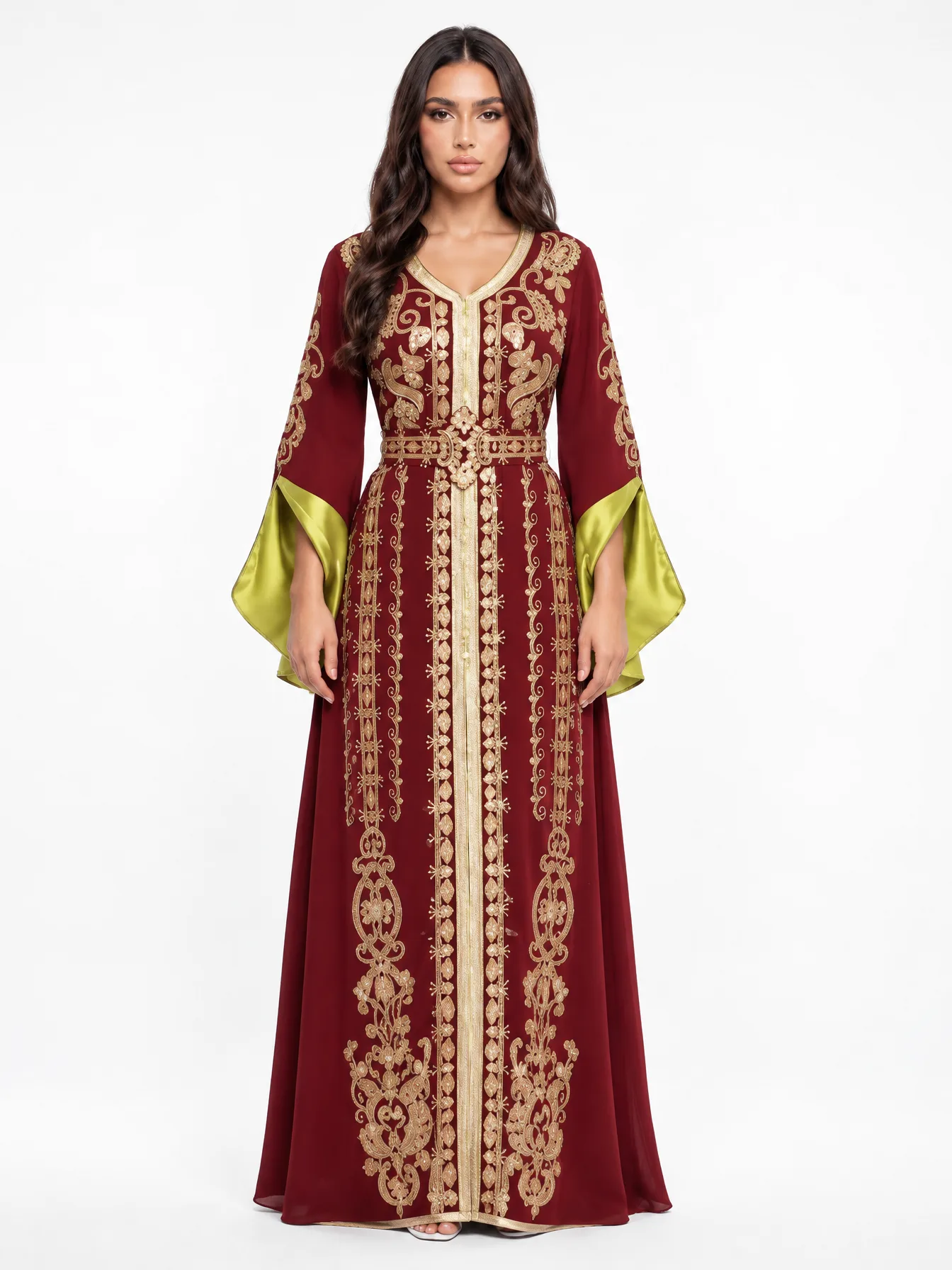
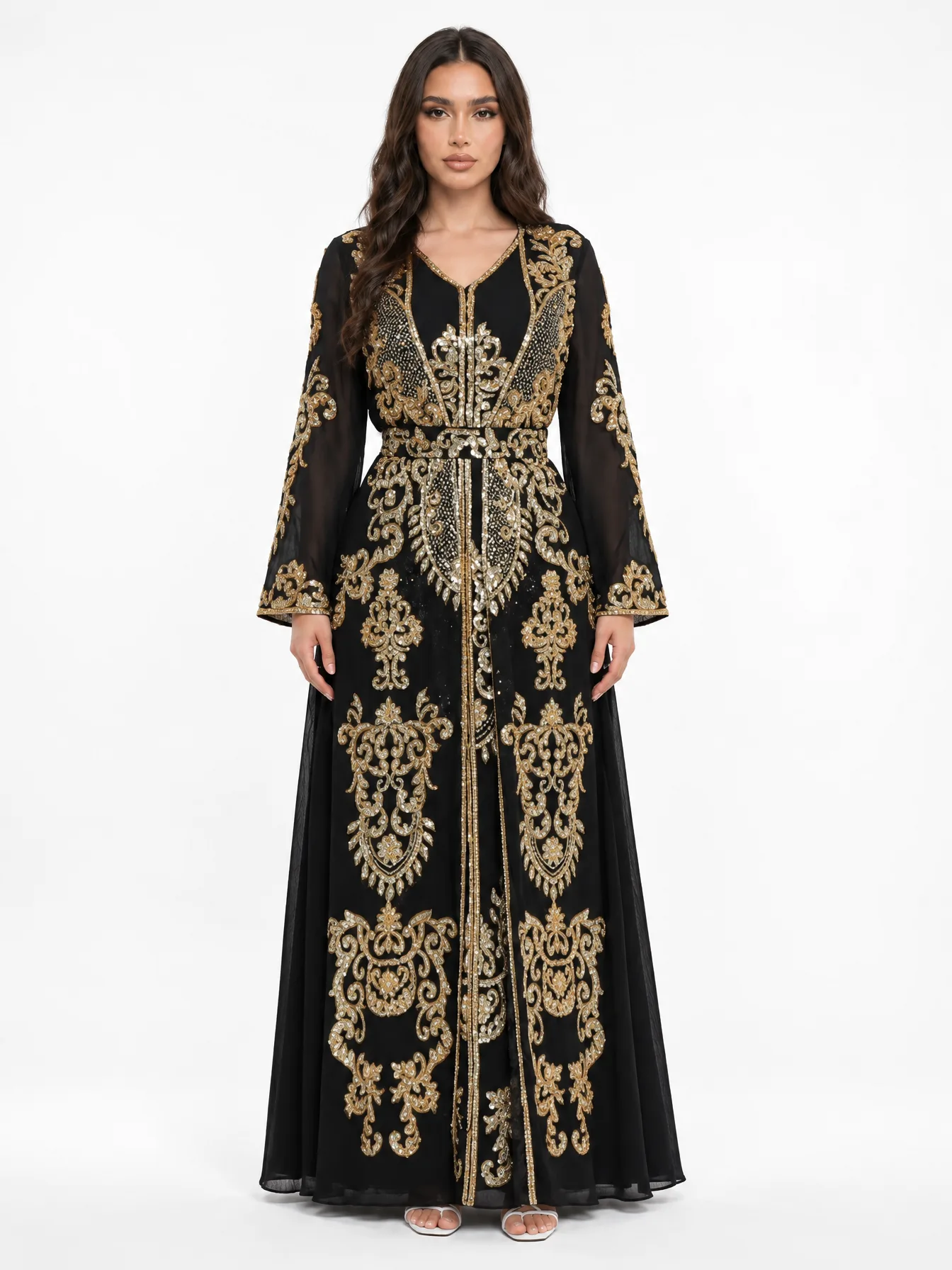
Our guide to what to wear to an Emirati wedding covers arriving in an abaya, sleeves and colours.
Are Emirati weddings changing?
Yes, in both directions. Some weddings have grown larger and more elaborate; others are deliberately simpler. In 2024, Abu Dhabi's Department of Community Development launched the Medeem Model for Women's Weddings, which lets several Emirati families share one hall and its equipment over several days, each couple adding simple décor of their own and splitting the cost. Gulf News reported on a related service to help couples avoid extravagant weddings, and a Sharjah government department has begun surveying couples about wedding spending.
For guests, this mostly means more variety: a small women's gathering at home and a 1,000-guest ballroom are both Emirati weddings. When in doubt, ask the bride or her family how formal the evening will be.
Where Lianora fits
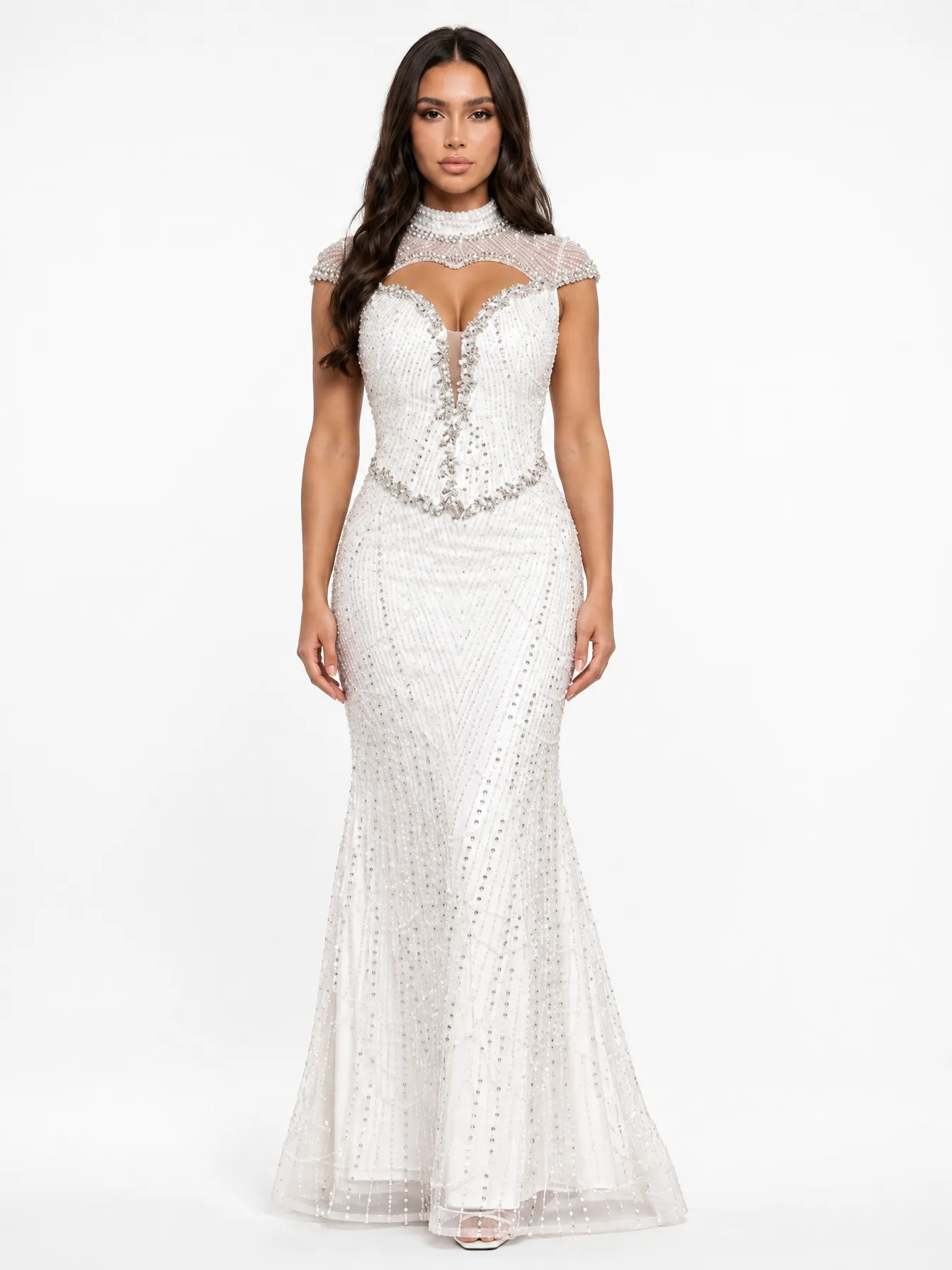
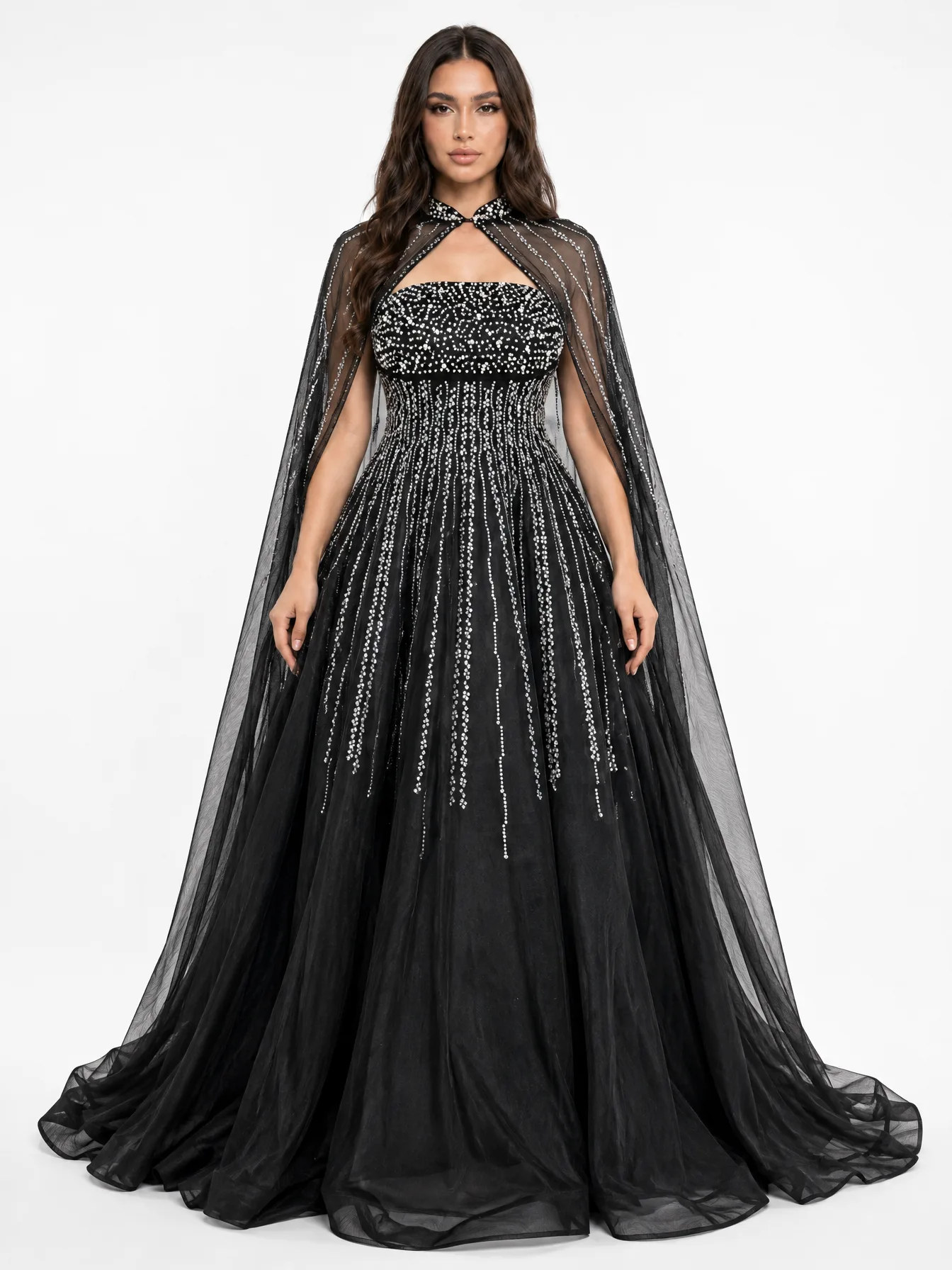
Lianora supplies evening dresses and kaftans from established Turkish ateliers, and delivers across the UAE and the GCC in 10–15 days from the confirmed order, with customs duties and taxes paid. If you have a henna night and a wedding to dress for, browse the evening dresses and the Arabic collection, and order early enough to leave time to try everything on.
Questions
Are men and women together at an Emirati wedding?
Usually not. The celebrations are held in separate halls, and the groom and close male relatives enter the women's hall only briefly, later in the night.
Can I take photos at an Emirati wedding?
In the women's hall, usually not. Photography is typically restricted to protect guests' privacy, so keep your phone away unless the family says otherwise.
How long does an Emirati wedding last?
The bride's celebration usually runs about three to four hours in the evening. The wider process, from the milcha to the wedding, can take days or months.
Do I bring a gift to an Emirati wedding?
Close friends and family often give gifts to the bride, especially around the henna night. Guests at a large wedding are not usually expected to bring one to the hall.
Sources
- Gulf News: All you need to know about an Emirati wedding (June 2019)
- The National: What happens at an Emirati wedding? A guide to local traditions (November 2022)
- UNESCO: Henna — rituals, aesthetic and social practices (inscribed 2024)
- UNESCO: Decision 9.COM 10.33 — Al-Ayyala, a traditional performing art of Oman and the UAE (2014)
- Abu Dhabi Department of Community Development: DCD launches the Medeem Model for Women's Weddings
- Gulf News: Abu Dhabi launches service to help couples avoid extravagant weddings