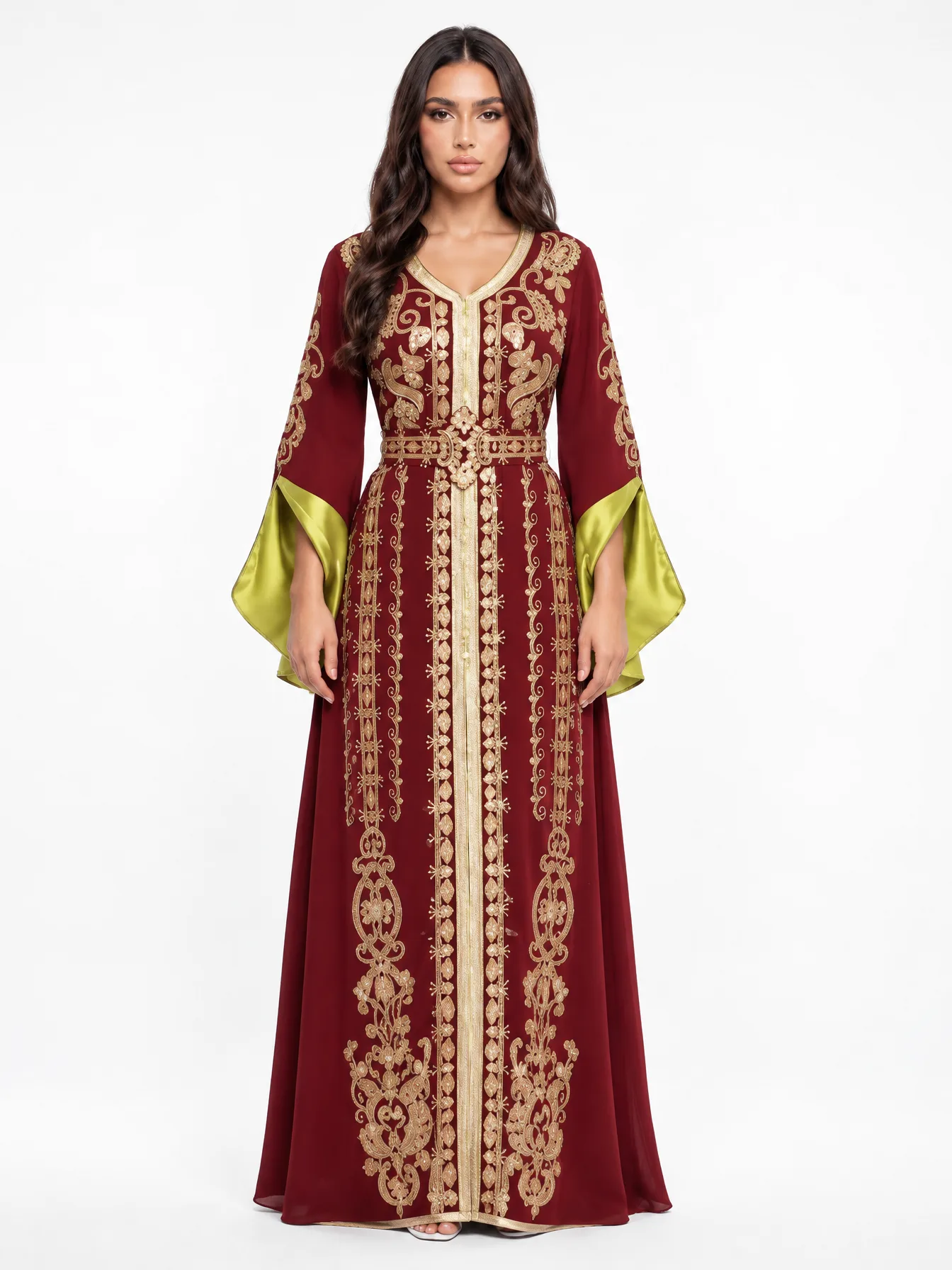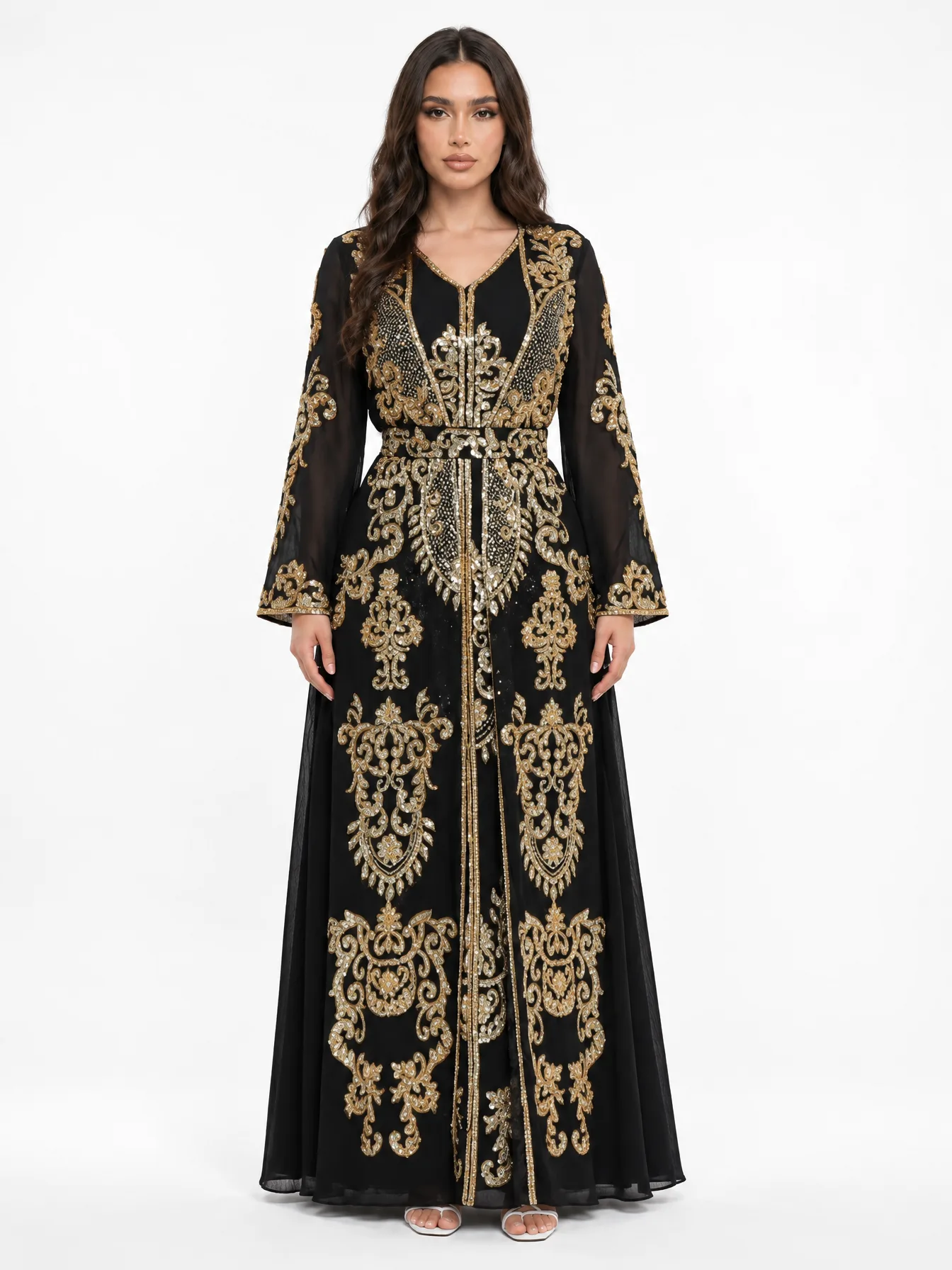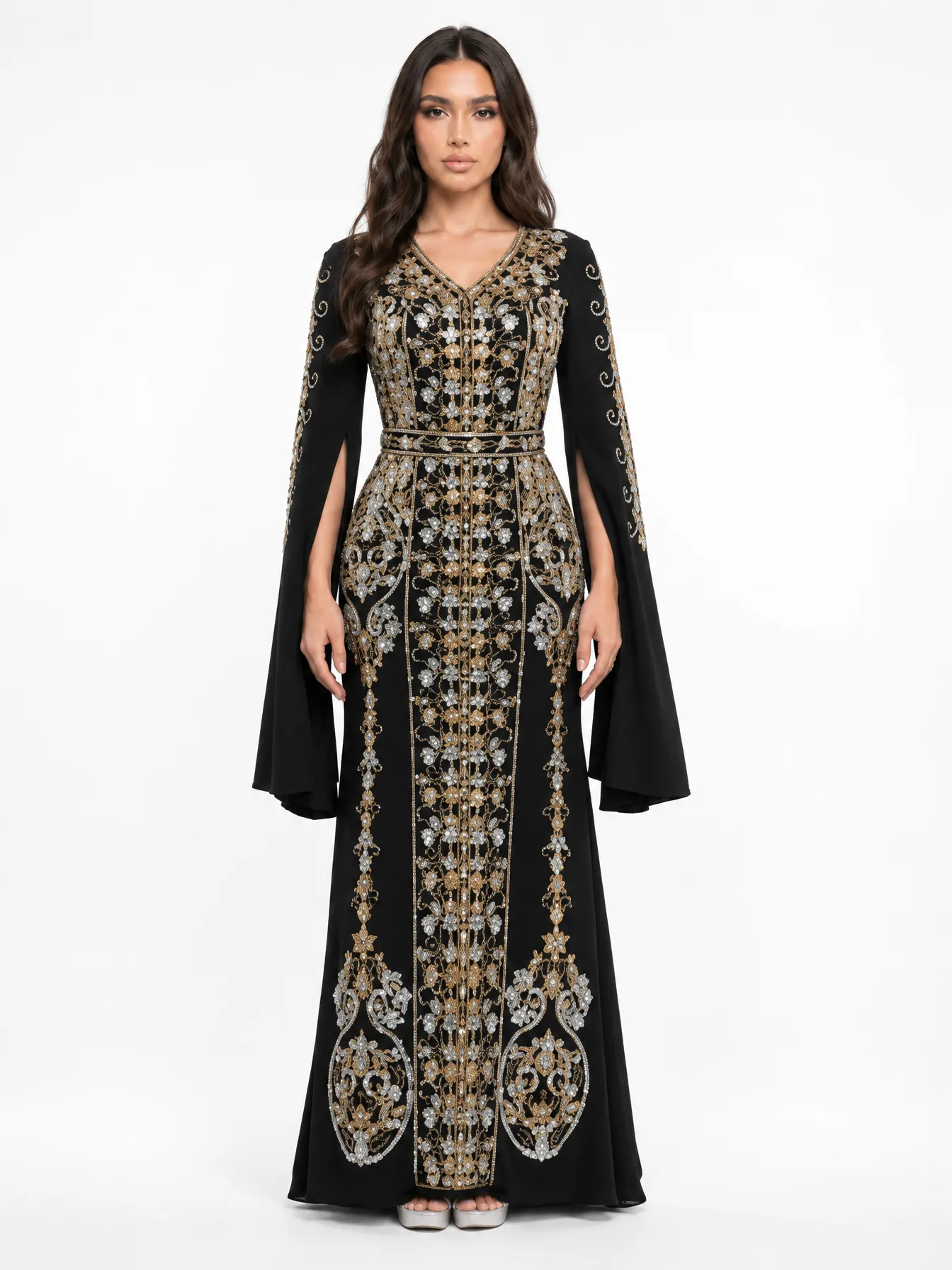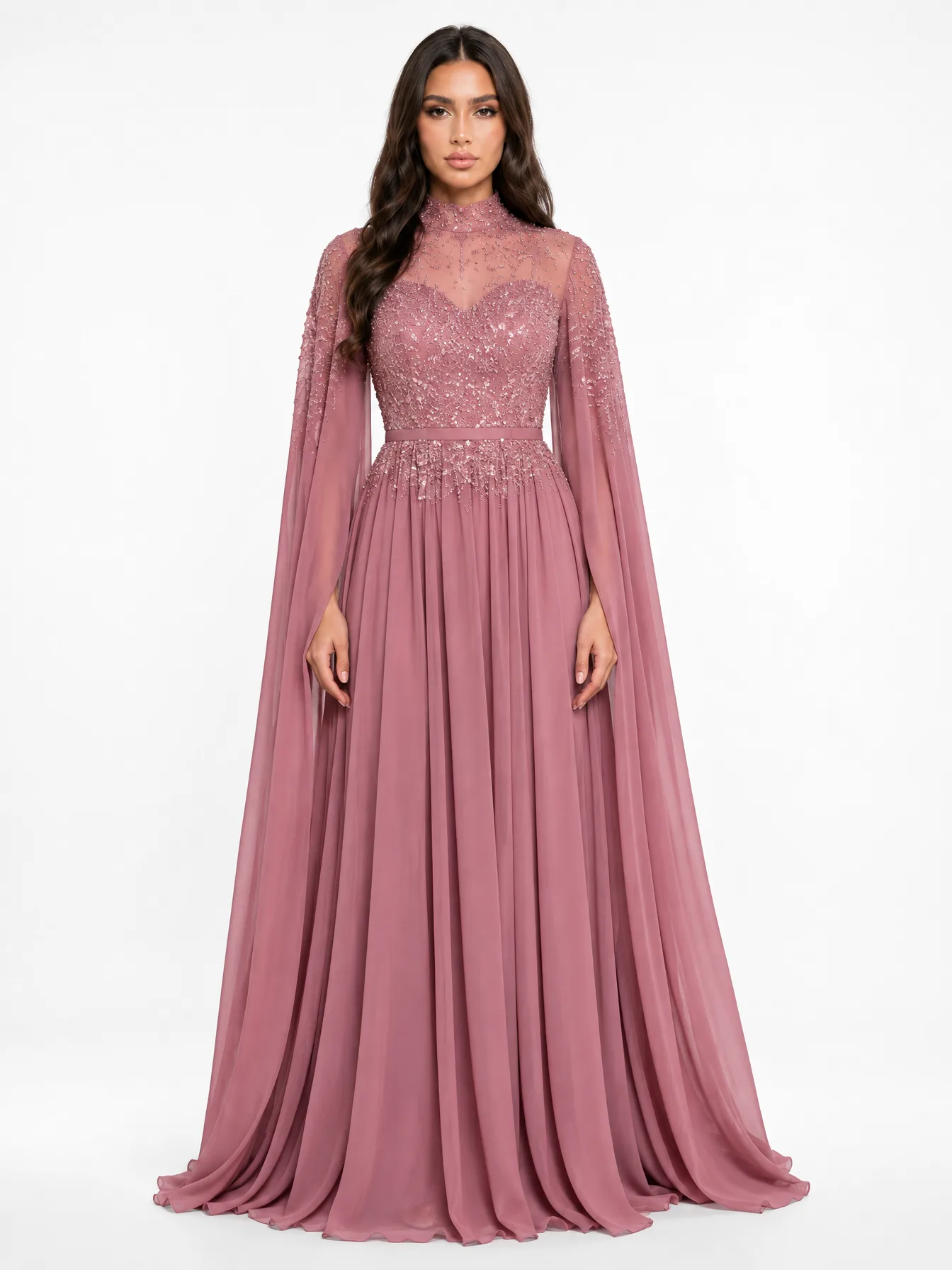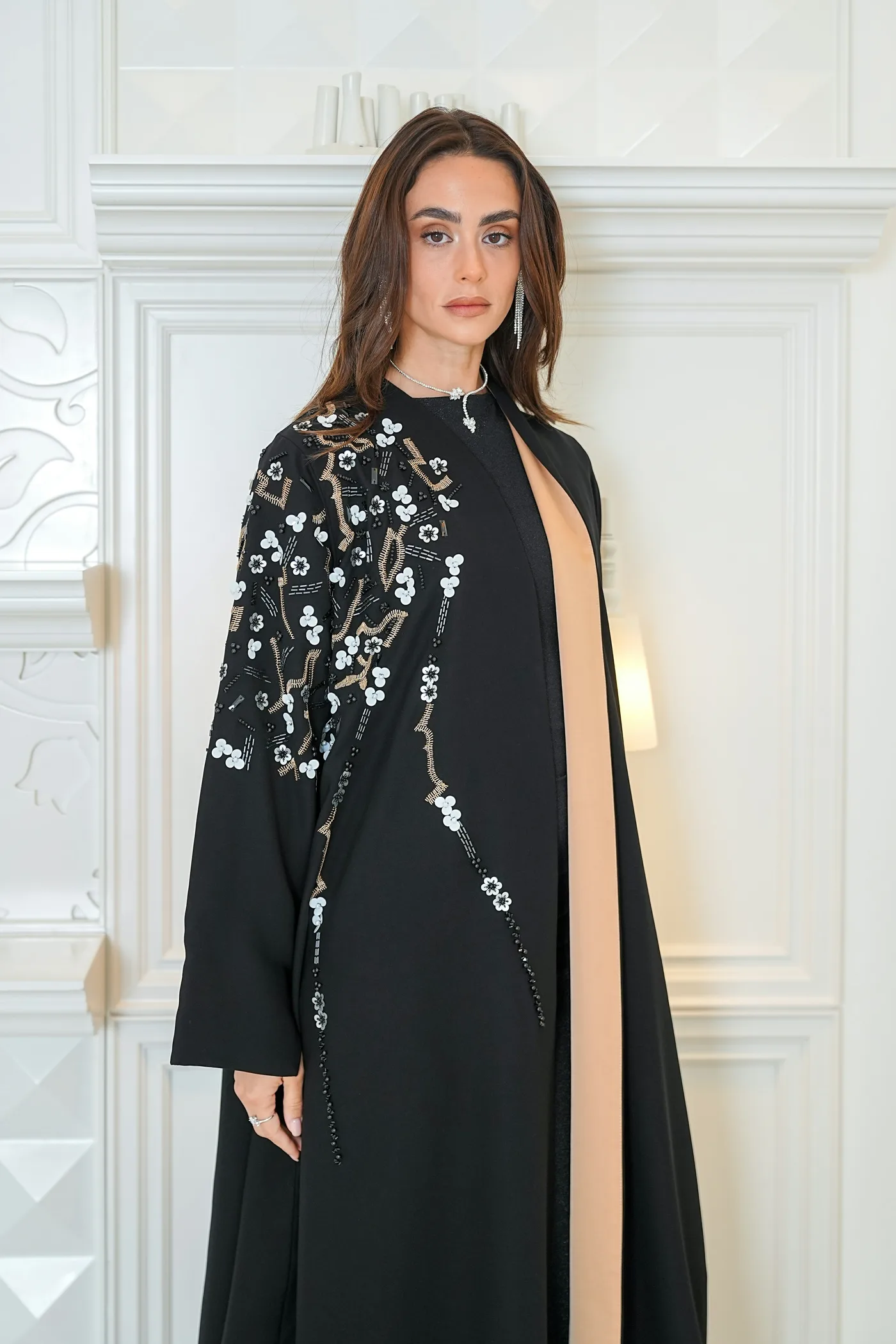
For a henna night, wear something festive but softer than a wedding gown: a kaftan, jalabiya or flowing long dress in a rich colour, with wide or short sleeves you can push up out of the way of wet henna. Leave white, pale silk and the bride's own colour, often green, to her. If you are the bride's sister or close family, you will usually dress up more and may be asked to match. This guide covers both, plus how to keep henna off your outfit.
What is a henna night?
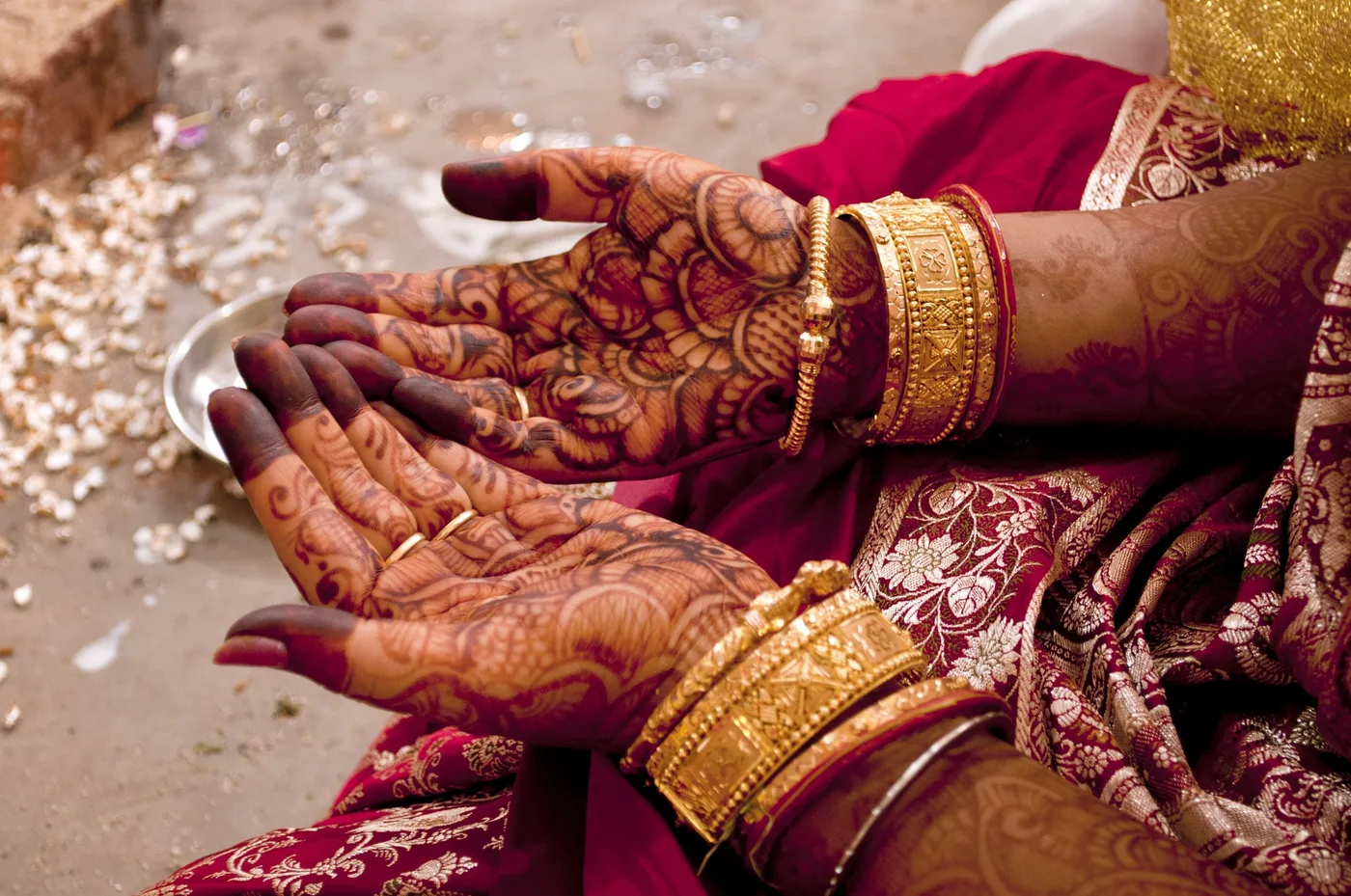
A henna night, laylat al henna, is a women's celebration held before the wedding, when the bride's hands, and often her feet, are decorated with henna. Gulf News describes the Emirati version as a female-only party a few days before the wedding, where the bride receives gifts and a henna artist decorates her hands, and where there is often a DJ and dancing late into the night.
It used to be smaller. A note from The Zay Initiative, a collection of Emirati dress on loan to the Al Shindagha Museum in Dubai, describes henna nights as traditionally a modest affair attended mainly by close friends and family, which grew over the decades into gatherings of hundreds. Customs vary across the region: Arab News notes that a henna night is not typical of Najdi weddings in Saudi Arabia, while in Jordan women from both families gather for one.
For a guest, the practical upshot is this: it is a women's party, it is festive rather than formal, and there will be wet henna in the room.
What should a guest wear to a henna night?
Dress up, but a step below the wedding itself. Think colourful and comfortable rather than structured and heavy.
- Kaftans and jalabiyas: the easiest choice. They are festive, modest, and the loose cut is comfortable for an evening of sitting on cushions and dancing.
- Flowing long dresses: chiffon, crepe or soft satin in a jewel tone. Avoid stiff corsets and big trains you will be sitting on.
- Embellishment: embroidery, gold thread and beading suit the occasion. Save the heaviest crystal gown for the wedding.
- Length: long or ankle-length is the norm. You may be sitting on low seating, so check how the hem falls when you sit.
- Shoes: flat or low sandals. There is usually a lot of dancing.
Our Arabic and kaftan section shows the kind of shape that works, such as the embroidered Arabic kaftan, whose wide sleeves are easy to push back.
What colours are traditional for a henna night?
Green, red and gold are the classic palette. A Gulf News feature on henna dresses describes the traditional bridal henna outfit as green and red with elaborate gold embroidery, usually two pieces: a fitted inner layer in silk or velvet under a flowing outer layer of chiffon, tulle or organza.
Green in particular is now strongly linked with the bride. Interestingly, The Zay Initiative's note dates green henna clothing in the UAE only to the 1980s, describing it as a custom that arrived from neighbouring Gulf countries. Today many brides choose it, though a Dubai designer interviewed by Gulf News has widened the range to teal, turquoise, pink and maroon.
As a guest:
- Ask, or look at the invitation. If the bride is wearing green, choose another colour.
- Rich colours suit the night: burgundy, purple, deep pink, royal blue, gold and warm metallics.
- Avoid white and very pale silk: they show every henna mark.
What should the bride's sister or close family wear?
If you are the bride's sister, mother, cousin or closest friend, you are part of the occasion rather than a guest at it, and you will usually dress up more. You may also be applying henna, carrying trays or dancing with the bride, so practicality matters even more.
- Coordinated outfits: some families choose a shared colour or matching kaftans or jalabiyas for the women closest to the bride. Ask early, because matching several outfits takes time.
- Traditional dress: an embroidered thobe or jalabiya is a lovely choice for close family and photographs well next to the bride.
- Two layers: a sheer embroidered overlayer on an inner dress lets you take off the top layer if you are helping with henna. The two-piece hand-beaded kaftan is built this way.
- Colour: stay in harmony with the bride's colour without copying it.
In a Gulf News feature, one Dubai designer said brides commission their henna dress about three months before the party. If your family is coordinating, start planning at the same time.
Does henna stain clothes?
Yes. Fresh henna paste can leave an orange-brown mark on fabric, and once it has set it is hard to remove. Gulf News explains that henna's colour comes from lawsone, a dye that binds to proteins in skin, which is why the stain lasts. The same article notes that henna has long been used to dye silk, wool and leather, so treat those fabrics with particular care.
The risk is highest in the hour or two after application, while the paste is still damp, and when the dried paste starts flaking off.
- Choose darker or patterned fabrics, which hide a small mark.
- Avoid white, ivory and pale silk near your hands.
- Keep your hands palm-up and away from your lap while the paste dries.
- Do not rub a fresh smudge; lift it off and let a professional cleaner deal with it.
- Carry tissues, and keep a dark wrap or shawl on your lap if you are sitting with henna on.
Gulf News also notes that today's darker henna shades often use additives. Whatever is in the paste, assume it will mark your clothes.
Which sleeves work best with henna?
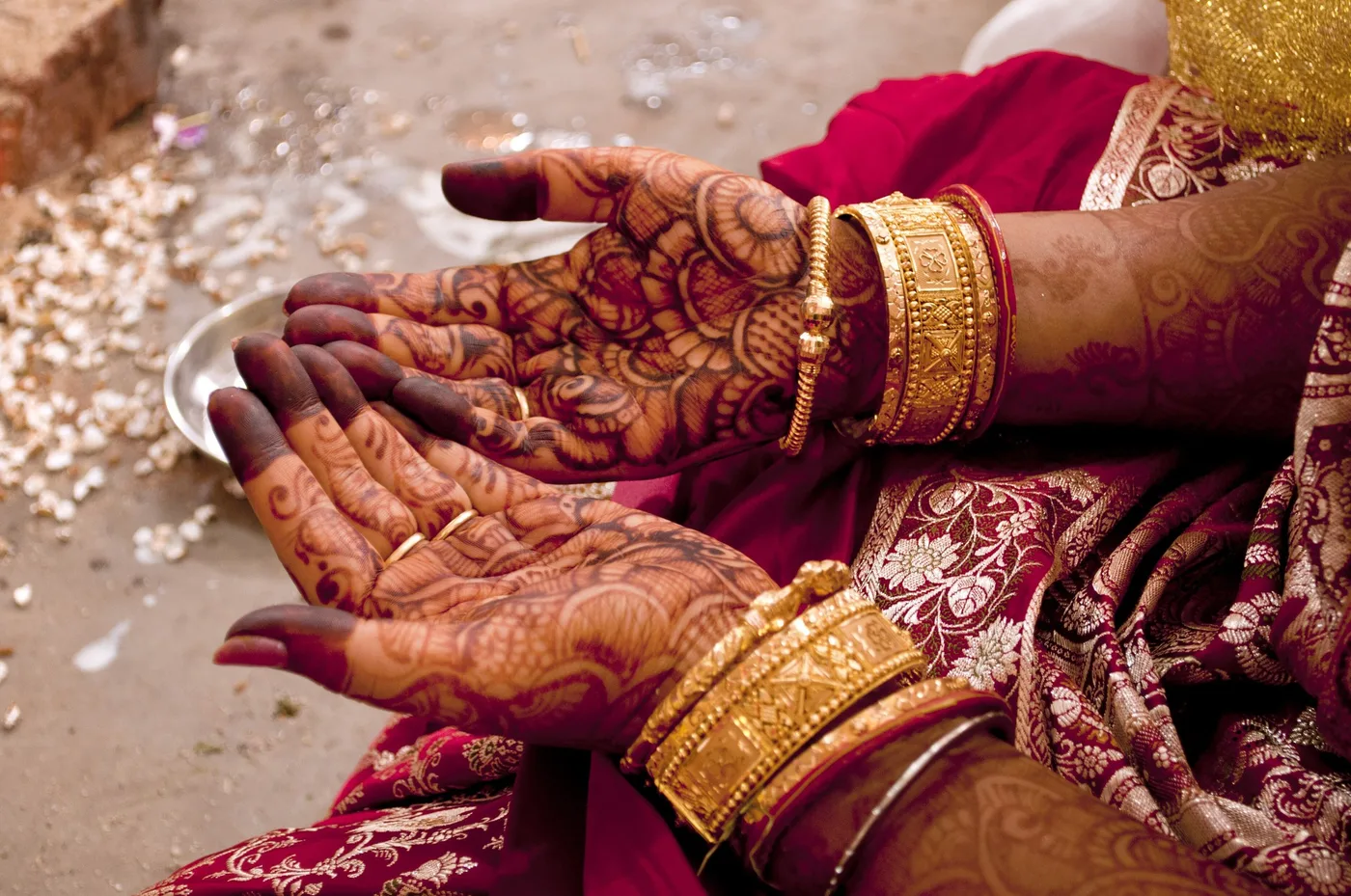
If you plan to have henna yourself, your sleeves matter more than anything else you wear. Gulf News notes that henna was traditionally kept to the inside of the palm, out of modesty, with classic Emirati styles covering the palm and fingers. Many modern designs also reach the back of the hand and the wrist.
- Best: wide kaftan or bell sleeves you can push up to the elbow, or three-quarter sleeves that stop above the wrist.
- Good: short or cap sleeves, with a shawl if the family is conservative.
- Avoid: tight long sleeves with buttoned cuffs, sheer sleeves that end at the wrist, and anything with lace or beading at the cuff.
Push your sleeves up before the henna artist starts, and keep them there until the paste is dry.
Can you take photos at a henna night?
Treat it like any women-only Gulf celebration and assume photos of other guests are not allowed. Writing about Emirati weddings, The National reports that photography is typically not permitted at the women's celebrations, and that close friends who do take pictures do so on the understanding they are never shared publicly.
A photo of your own hennaed hands is usually fine. Pictures of the bride or other women are not, unless the bride or her family invite you to, and even then keep them private.
When should you order your henna night outfit?
The henna night usually falls a day or a few days before the wedding, so you are often buying two outfits for the same week. Plan them together.
- 1. Choose the wedding gown first, then a henna outfit in a different colour and a lighter weight.
- 2. If you are ordering online, allow at least three weeks. Lianora, for example, delivers across the UAE and the GCC in 10 to 15 days from confirmation.
- 3. Try both on the day they arrive. Exchanges are possible within 7 days of delivery for unworn pieces in their original packaging; see delivery and returns.
- 4. If family outfits must match exactly, ask before you order how closely the colours will match; see ordering and payment.
For the wedding night itself, see our guide to what to wear to an Emirati wedding.
Questions
Can I wear green to a henna night?
It is best to ask. Green is closely associated with the bride's henna outfit in the Gulf, so many guests avoid it unless the family has asked everyone to wear it. Burgundy, purple and gold are safe alternatives.
Is a henna night more casual than the wedding?
Yes, slightly. It is festive and guests still dress up, but kaftans, jalabiyas and soft long dresses are more usual than structured ball gowns. Comfort matters because there is sitting, dancing and wet henna.
How do I get henna out of a dress?
Act quickly and do not rub, which pushes the dye deeper. Lift off any paste, blot gently, and take the dress to a professional cleaner, telling them it is henna and what the fabric is. Delicate silks and beaded pieces should not be treated at home.
Should I bring a gift to a henna night?
Often, yes. Gulf News notes that the bride receives gifts at Emirati henna nights. Perfume, jewellery or something for her new home are common choices, but ask a close friend what is usual in that family.
Sources
- Gulf News: From diving balm to wedding tradition, henna's heritage of beauty in UAE (2022)
- Gulf News: Wearable art – henna dresses (2019)
- The Zay Initiative: Embellished combination overgarment tunic with train, henna set, UAE
- Gulf News: All you need to know about an Emirati wedding (2019)
- Arab News: Jordanian, Saudi wedding traditions to look out for at the royal celebrations (2023)
- The National: What happens at an Emirati wedding? A guide to local traditions (2022)