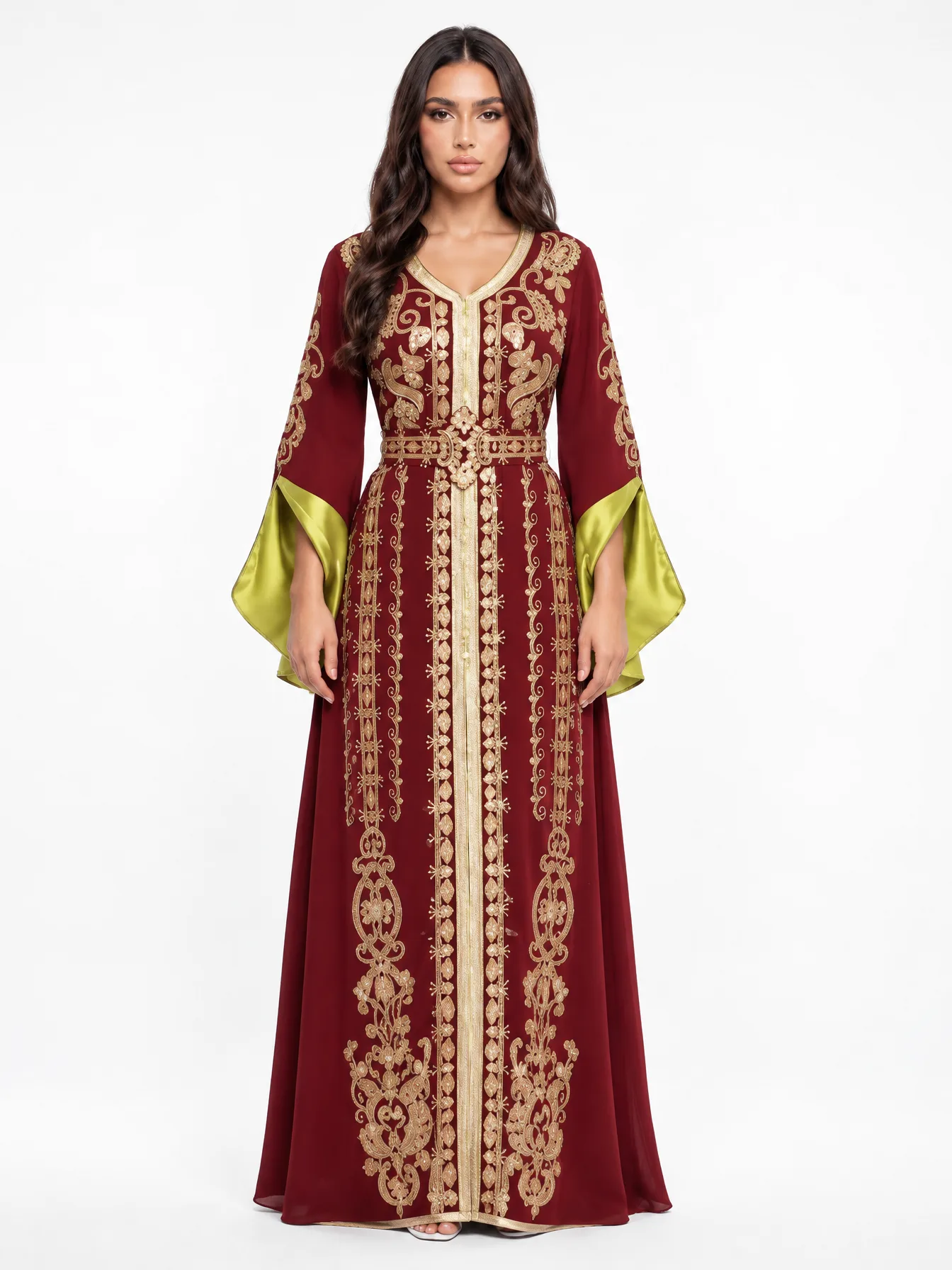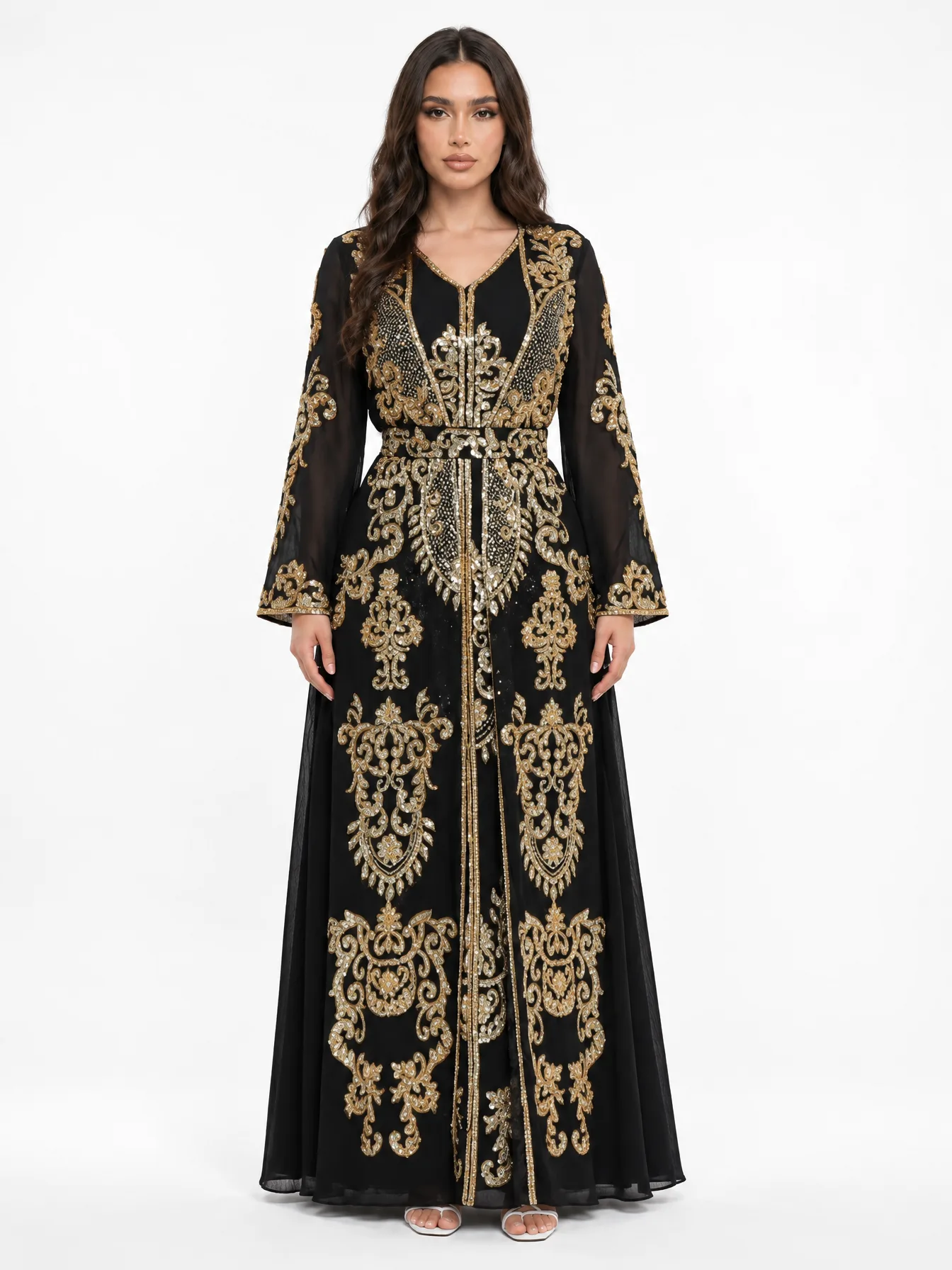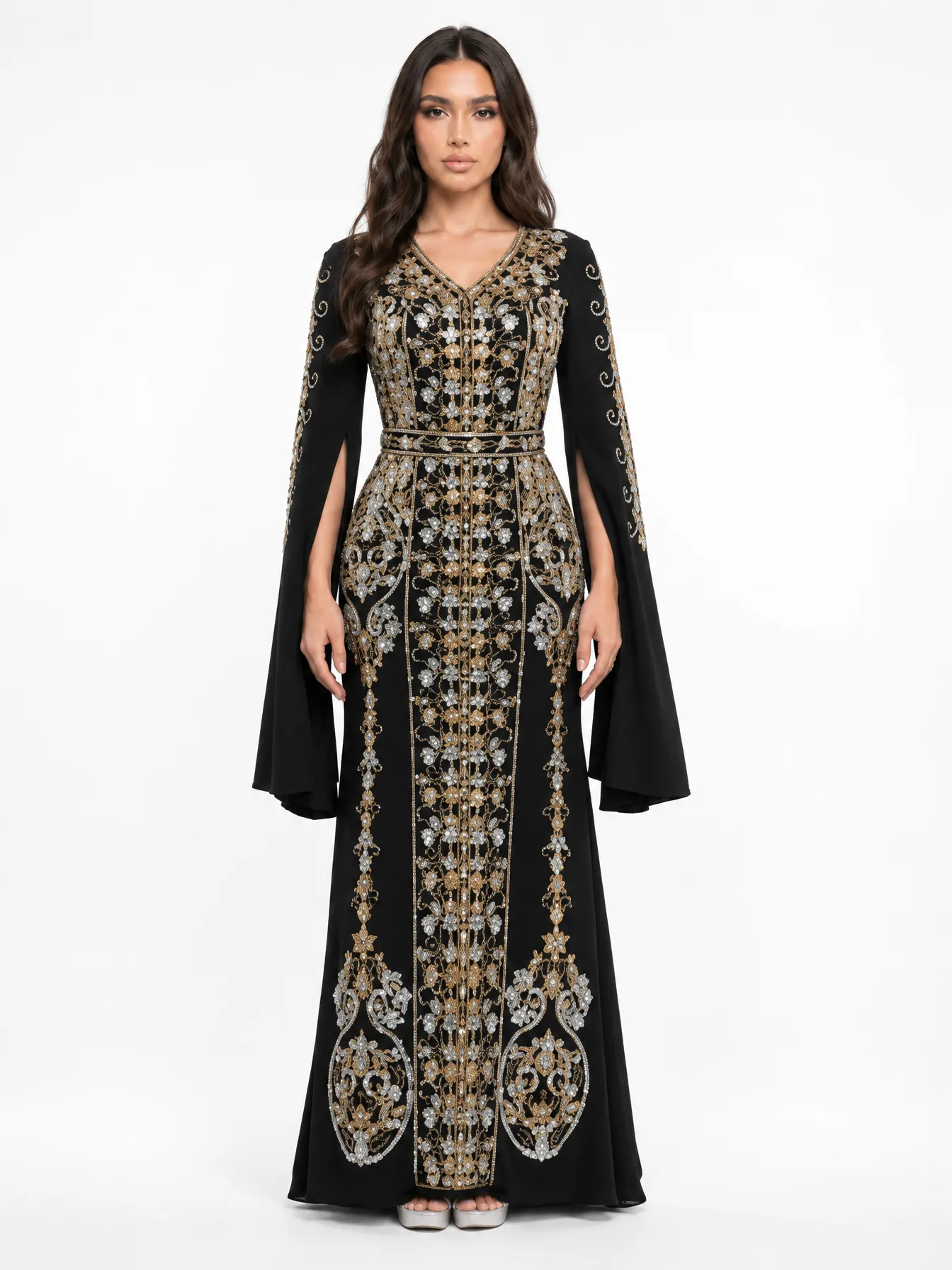
In short: an abaya is an outer cloak worn over other clothes, a kaftan is a long, loose robe that is the outfit itself, a jalabiya is a long dress that began as house wear and is now often embroidered for occasions, and a Gulf women's thobe is a wide, often sheer ceremonial robe worn over a fitted gown. The names overlap from country to country, which is why they get confused. Here is how to tell them apart.
Why are these names so confusing?
Because the same word means different things in different places. A 2025 Euronews report on the abaya's rise as Ramadan fashion noted that in Arab countries the garment goes by many names, including jalaba, jalabiya, Omani and qaftan. In Morocco a djellaba is a hooded outer robe; in Egypt a galabeya is an everyday long dress; in the Gulf a jalabiya is a long, often embroidered dress worn at home or to gatherings.
The word thobe is even more flexible. For Gulf men it is the long white robe, called a kandura in the Emirates. For Gulf women it is a wide, ceremonial over-robe. AramcoWorld's guide to Gulf women's dress adds the dira'a, a fitted long-sleeved gown worn under the thobe, which is also called a dishdasha, miqta' or kandura depending on the region.
So the best way to tell them apart is not the name but the function: is it worn over clothes, as the outfit, or under something else?
What is an abaya?
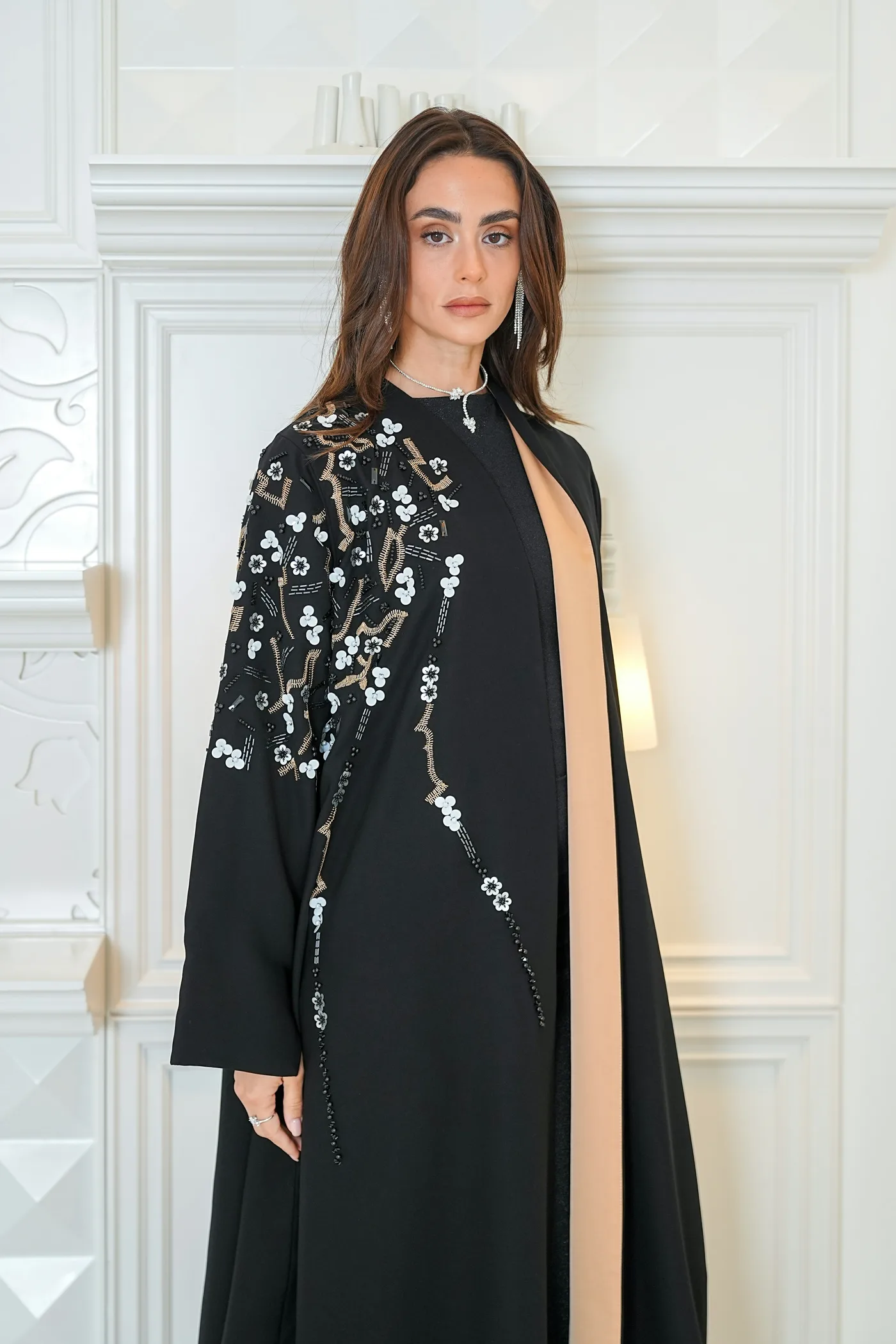
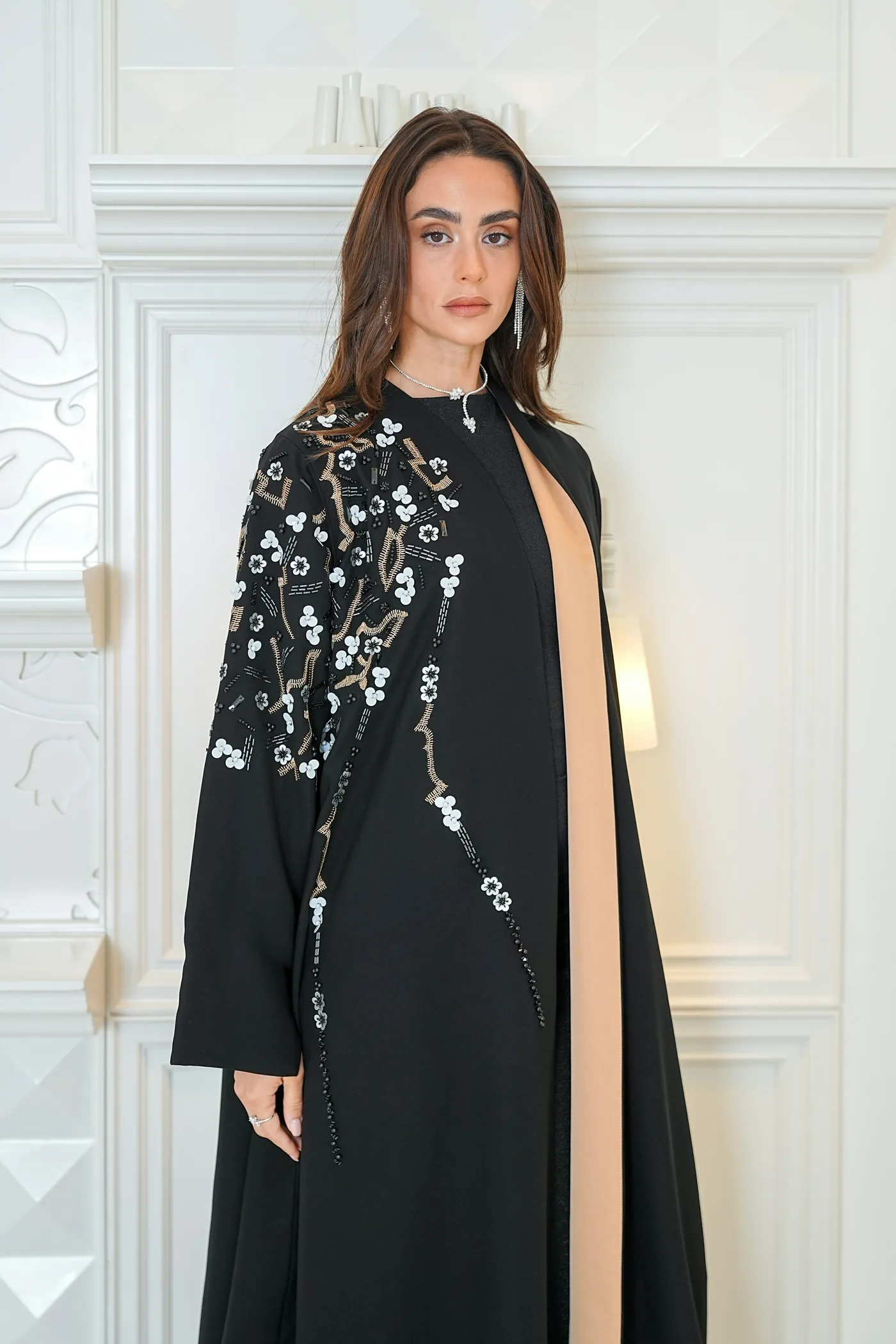
An abaya is an outer garment: a long, loose cloak worn over your clothes when you go out, traditionally black. AramcoWorld describes older generations of women wearing it over their dresses when leaving the house.
Today the abaya is also a fashion category in its own right. Gulf News reported that the two months before Ramadan are the peak season for abaya sales, with one Dubai designer putting the increase at 60 to 70 per cent, and abayas now come in colours, embroidered fronts, open styles and luxurious fabrics.
- Worn: over other clothes, in public, and often at the door of a women's event, where it comes off.
- Typical fabrics: crepe, nidha, chiffon and georgette.
- When: daily wear, work, travel, Ramadan and arriving at weddings.
An abaya is not required for visitors in the UAE or, since recent reforms, in Saudi Arabia. Our guides to what women can wear in Dubai and in Saudi Arabia explain the rules.
What is a kaftan?
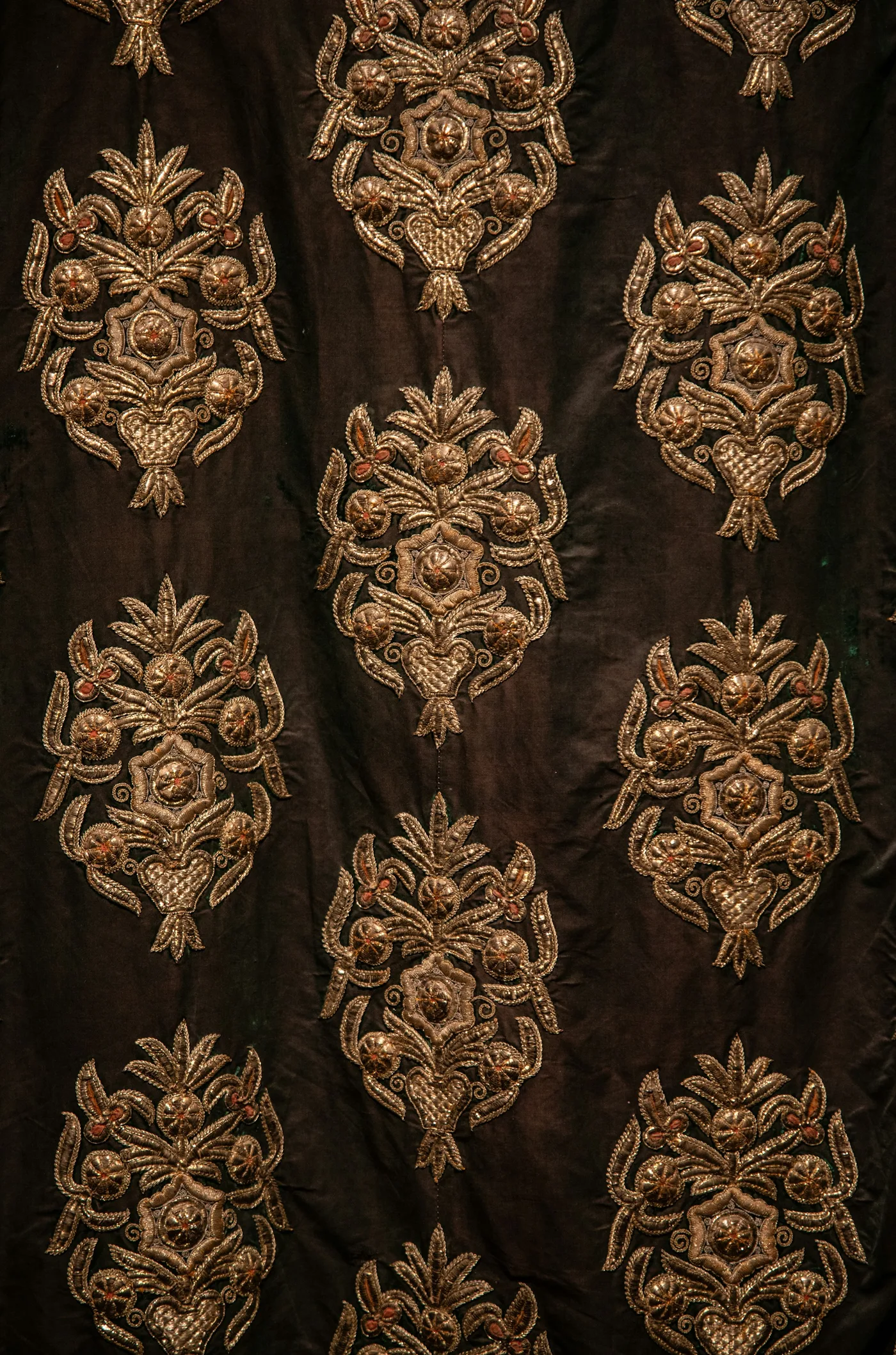
A kaftan (or caftan) is a long, loose robe that is the outfit itself, not a cover for something else. It has an old and grand history. The Topkapi Palace in Istanbul holds one of the largest collections of Ottoman court dress, spanning the 15th to 20th centuries; Nurhan Atasoy's book on the collection describes nearly 2,500 pieces that are robes of honour, kaftans and şalvar trousers. The Smithsonian's National Museum of Asian Art notes that fur-lined kaftans were the ultimate Ottoman robes of honour.
In Morocco the caftan is a national garment, and in December 2025 UNESCO inscribed "Moroccan caftan: art, traditions and skills" on its list of intangible cultural heritage.
- Worn: on its own, often with a belt or over a slip.
- Typical fabrics: silk, satin, chiffon, crepe, velvet in winter, with embroidery or beading.
- When: in the Gulf, everything from a light day kaftan for Eid morning to a hand-beaded evening kaftan for a wedding.
In Gulf fashion, a beaded kaftan is as formal as an evening gown.
What is a jalabiya?
In the Gulf, a jalabiya is a long, loose dress, usually with sleeves, that began as comfortable house wear and has become a dressed-up piece in its own right. The Saudi newspaper Okaz described how the jalabiya has been transformed from a simple home garment into an elegant piece adorned with artistic touches and heritage-inspired patterns, especially for Ramadan, with white, cream and beige favoured for the days and darker shades for the evenings.
- Worn: on its own, at home, at family gatherings and in women's majlis.
- Typical fabrics: cotton, linen, crepe and chiffon, with embroidery at the neck, chest and cuffs.
- When: Ramadan evenings, Eid mornings, family visits and relaxed women's gatherings.
The line between a jalabiya and a kaftan is soft. As a rule of thumb, a jalabiya is simpler and more everyday, and a kaftan is fuller, grander and more often beaded.
What is a women's thobe?
A Gulf women's thobe is a wide, nearly square robe with billowing sleeves, often sheer, worn over a fitted gown and sometimes trousers. Its grandest form, the thobe nashal, has a front panel embroidered in gold or silver from neckline to hem. AramcoWorld places its heartland in Kuwait, Bahrain, Qatar and eastern Saudi Arabia, and lists weddings, henna nights, Ramadan gatherings and national-day folk dances as the occasions it is worn.
- Worn: over a dira'a or a slip dress, never on its own.
- Typical fabrics: silk, tulle or organza, with gold or silver embroidery.
- When: henna nights, women's wedding parties, Ramadan nights and national celebrations.
Our full guide to the Khaleeji thobe covers its history and regional styles.
Which one should you wear, and when?
A quick guide for the occasions Gulf women dress for most:
- Going out in public, to work or travelling: an abaya.
- Eid morning and family lunches: a jalabiya or a light day kaftan.
- Ramadan evenings and iftar invitations: an embroidered jalabiya or kaftan; see our Ramadan iftar and suhoor dress code.
- Henna night: a coloured thobe or a festive kaftan.
- Wedding or engagement party: a hand-beaded evening kaftan, or an evening gown, with an abaya for arriving.
- Founding Day or National Day: a heritage-inspired kaftan or thobe.
- Hotel gala or formal dinner: a beaded kaftan or an evening gown.
If you own only one dressy traditional piece, make it a well-made embroidered kaftan in a deep colour. It works from Ramadan to weddings, and it is the easiest to restyle.
Where Lianora fits
Lianora's Arabic collection is made up of kaftans from established Turkish ateliers, from embroidered pieces to hand-beaded two-piece sets, alongside evening gowns for the occasions that call for one. Delivery across the UAE and the GCC takes 10–15 days from the confirmed order, with customs duties and taxes paid by Lianora. Browse the Arabic collection, and see the two-piece hand-beaded kaftan for an example of how formal a kaftan can be.
Questions
Is a kaftan the same as an abaya?
No. An abaya is an outer cloak worn over your clothes in public; a kaftan is the outfit itself, worn on its own. Some modern designs blur the line, but the function is different.
Can I wear a kaftan to a wedding?
Yes. In the Gulf a hand-beaded or richly embroidered evening kaftan is a formal choice for a wedding, as appropriate as an evening gown.
What is the difference between a jalabiya and a kaftan?
The line is soft. A jalabiya is usually simpler and more everyday, worn at home and family gatherings; a kaftan is usually fuller and more elaborate, and dressier versions are beaded for evening.
Sources
- Euronews: The abaya, the women's outfit that has become a must-have fashion item for Ramadan (March 2025)
- AramcoWorld: The gown that steals your heart (March 2016)
- Gulf News: Women go on abaya buying frenzy for Ramadan and Eid
- Okaz: The Ramadan jalabiya (Arabic)
- Smithsonian National Museum of Asian Art: Robe (kaftan), Ottoman dynasty
- UNESCO: Moroccan caftan — art, traditions and skills (inscribed 2025)