European dress sizes run in even numbers from about 32 upwards. As a rule of thumb, a European 38 is a UK 10 and a US 6, and each step of two European sizes is one step of two in the UK and US: EU 40 is UK 12 and US 8, EU 42 is UK 14 and US 10. But the number on the label is only a starting point. Evening gowns are fitted, brands cut differently, and the only reliable guide is your own bust, waist and hip measurement in centimetres.
How do EU, UK and US sizes convert?
The conversion sites Size.ly and Fashion Era, and retailers' own charts, agree on the basic pairings:
- EU 34 = UK 6 = US 2
- EU 36 = UK 8 = US 4
- EU 38 = UK 10 = US 6
- EU 40 = UK 12 = US 8
- EU 42 = UK 14 = US 10
- EU 44 = UK 16 = US 12
- EU 46 = UK 18 = US 14
- EU 48 = UK 20 = US 16
- EU 50 = UK 22 = US 18
- EU 52 = UK 24 = US 20
Size.ly gives the arithmetic behind it: the US size is the European number minus 32, and the UK size is the US number plus 4. Italian and French sizes use different numbers again: an Italian 42 and a French 40 are both roughly a European 38. Most Turkish brands use the European numbers, but always check which system a brand uses.
What measurements are behind each size?
This is where charts start to disagree. For the same size, published body measurements can differ by several centimetres:
- EU 38: Size.ly gives a bust of 86–89 cm and a waist of 69–72 cm; Fashion Era gives a bust of 88–92 cm and the same waist.
- EU 40: Size.ly gives a bust of 90–93 cm and a waist of 73–77 cm; Fashion Era gives a bust of 93–97 cm. The British tailor Favourbrook's chart gives a single bust of 93 cm, waist of 74 cm and hips of 99 cm.
- EU 42: Size.ly gives a bust of 94–97 cm and a waist of 78–81 cm; Fashion Era gives 98–102 cm and 78–82 cm.
- EU 44: Favourbrook gives a bust of 103 cm, a waist of 84 cm and hips of 109 cm.
The gap is up to 4 cm at the bust for the same label size, which is the difference between a gown that zips and one that does not. That is why every serious evening-wear retailer publishes its own chart, and why you should use the brand's chart, not a generic one.
Why is there no single European standard?
There is one on paper. The European standard EN 13402, "Size designation of clothes", was created because several sizing systems were in use across Europe, confusing shoppers and complicating supply chains. Its idea is simple: label clothes by the body measurements they are designed for, in centimetres, rather than by an arbitrary number. Part 3, on body measurements and intervals, was revised in 2017.
Adoption has been uneven, though. The size numbers you see on dresses, such as 38 or 42, are a convention that predates the standard, and brands still set their own measurements for each number. The practical lesson from EN 13402 is the one that matters: compare centimetres to centimetres.
How do you measure yourself for an evening gown?
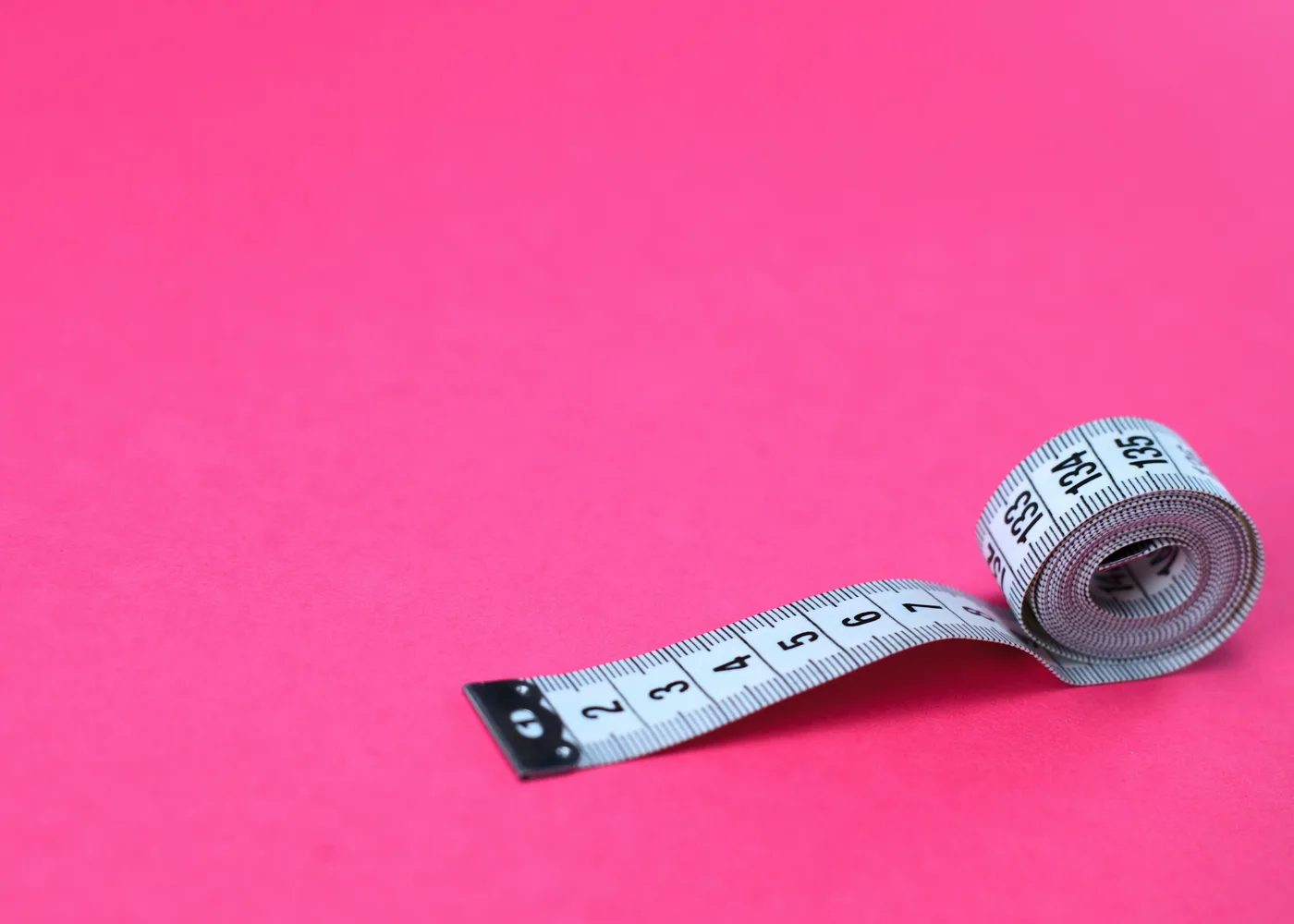
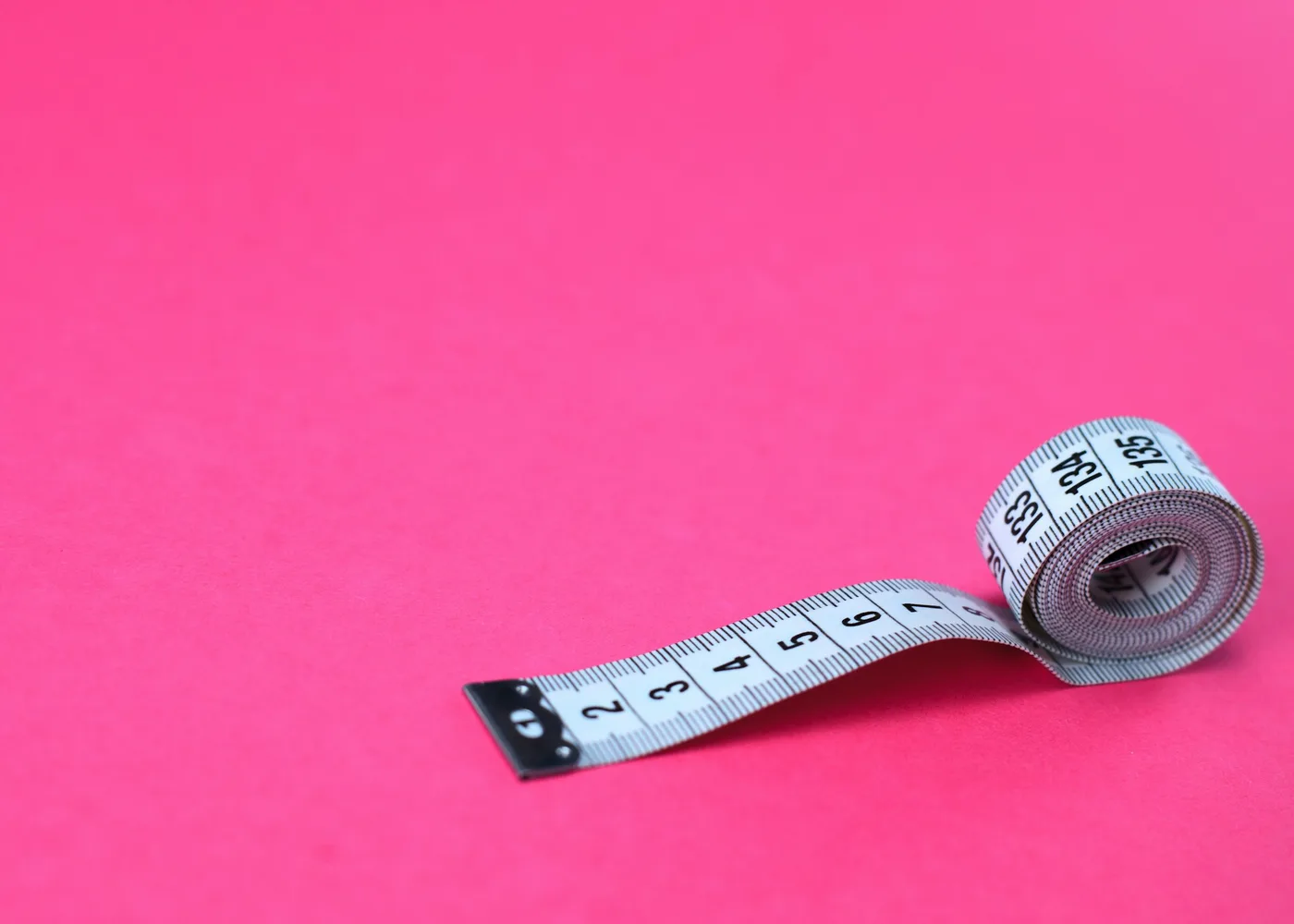
Use a soft tape measure, wear the underwear you will wear with the dress, and ask someone to help if you can.
- Bust: around the fullest part of your chest, tape level across your back.
- Waist: around your natural waist, the narrowest part of your torso, usually just above the navel.
- Hips: around the fullest part of your hips and seat, with your feet together.
- Hollow to hem: from the dip at the base of your neck to the floor, wearing the shoes you plan to wear. This is the length that matters for a floor-length gown.
- Upper arm: around the fullest part, if you are choosing a long-sleeved or fitted-sleeve gown.
Then choose by your largest measurement in the fitted areas. For a corseted or mermaid gown, the bust and hips decide; for an A-line or kaftan, the bust usually does. It is easier for a tailor to take a gown in than to let it out, and beaded seams in particular are hard to enlarge.
Write your measurements down and keep them on your phone, with the date. Bodies change, and measuring again before each important order takes five minutes and saves an exchange. Add your height and usual heel height too, because they decide the hem length of any floor-length gown. Measure in centimetres, the unit Turkish and European charts use.
What if you are between sizes?
This is very common, especially for women whose bust and hips fall in different sizes.
- Size up for fitted gowns, then have the waist or bust taken in.
- Check the fabric. Stretch crepe and jersey forgive a little; satin, mikado and beaded fabric forgive nothing.
- Check the closure. A lace-up corset back adjusts across about a size; a concealed zip does not.
- Look at the seam allowances when the dress arrives. Good gowns leave room inside the seams for alterations.
- Ask before you order. A good shop will tell you how a particular design fits: true to size, small or generous.
Remember that most shops will not exchange a gown that has been altered, so try it on, unaltered, as soon as it arrives. Our guide to choosing an evening dress for your body shape helps with silhouettes that suit different proportions.
Where Lianora fits
Lianora's dresses come from established Turkish ateliers and are made to standard international sizes; each product page lists the sizes a design is available in, typically in European numbers. Read the sizes and fit guide and compare it with your measurements before ordering, and ask through the frequently asked questions if you are between sizes. Unworn pieces in their original packaging can be exchanged within 7 days of delivery; altered pieces cannot.
Questions
What is a European size 42 in UK and US sizes?
A European 42 is usually a UK 14 and a US 10. Check the brand's own chart in centimetres, because the measurements behind a 42 vary between brands.
Are Turkish dress sizes the same as European sizes?
Most Turkish evening wear brands use the European numbering, such as 36, 38 and 40. Their cut can still run small or large, so compare your measurements with each brand's chart.
Should I size up or down for an evening gown?
If you are between sizes, size up for fitted or beaded gowns and have them taken in. Taking a dress in is easier than letting it out, especially where seams are beaded.
Sources
- Size.ly: Women's international size conversion chart
- Fashion Era: International dress size chart
- Favourbrook: Womenswear size guide
- ASOS: Women's dresses size guide
- Wikipedia: Joint European standard for size labelling of clothes (EN 13402)
- DIN Media: DIN EN 13402-3 — Size designation of clothes, body measurements and intervals