The simplest way to dress a bridal party with different modesty preferences is to fix the colour, the fabric family and the length, and let each bridesmaid choose her own sleeves, neckline and silhouette. A hijabi bridesmaid in a high-necked, long-sleeved gown and a friend in an off-the-shoulder one will look like a set if they share a shade, a finish and a hemline. The rest is conversation and planning. This guide covers how to ask, what to keep the same, what can vary, how to coordinate hijabs, and how to order so nobody is left with a dress she isn't comfortable in.
Can bridesmaids wear different styles and still look coordinated?
Yes. Mixed styles are a familiar choice for bridal parties, and the principle behind them is simple. As Inside Weddings puts it, the outfits need at least one element in common, such as a single colour, a shared length or a shared neckline. It also points out the other benefit: each bridesmaid can choose a dress that suits her shape and style.
For a party with different modesty preferences, keep more than one element the same. Colour alone is not enough when one dress has long sleeves and a high neck and another is strapless; colour, fabric and length together are what make them read as a group.
How do you ask bridesmaids about their modesty preferences?
Ask each bridesmaid privately, early, and without assuming. A friend who wears a hijab may be relaxed about sheer sleeves; a friend who doesn't may still want her arms covered in front of family. A short message works better than a group chat poll:
- Sleeves: long, three-quarter, cape sleeves, or sleeveless?
- Neckline: high, modest, or open at the shoulders?
- Back: covered, or open?
- Skirt: any limit on slits or a close fit through the hips?
- Hair: will she cover her hair for the whole event, or only when men are present?
- Photographs: is she comfortable with pictures of the women's celebration being shared?
The last question matters more than it seems. Writing about Emirati weddings, The National notes that photography is generally not allowed at the women's celebration, and that friends who take pictures do so on the understanding that they won't be shared publicly. Agree the rule for your wedding with every bridesmaid before the day.
What should stay the same across the bridal party?
Choose three or four anchors and hold them firmly:
- Colour: one shade, or a tight family of shades from light to deep. Be precise. "Champagne" or "navy" can look noticeably different from one maker or fabric to another, so compare swatches or photos side by side before anyone orders.
- Fabric family: all chiffon, all satin, or all beaded tulle. Mixing a matte crepe with a high-shine sequin breaks the set faster than mixing sleeve lengths.
- Length: floor length for everyone is the easiest anchor for a Gulf evening wedding.
- Level of embellishment: either everyone has beading, or nobody does.
- Accessories: the same metal for jewellery, matching shoes if they show, and matching bouquets.
Choosing every dress from one supplier's range can help, but a shade can still vary between designs and fabrics, so ask before you order how closely they match, through the frequently asked questions. You can see how one colour name appears across several silhouettes in the bridesmaid dresses section.
What can change from one bridesmaid to another?
Once the anchors are set, the parts of the dress that carry modesty are the ones to vary:
- Sleeves: long opaque sleeves, sheer sleeves, cape sleeves, cap sleeves or none.
- Neckline: high collar, jewel neck, keyhole, off-the-shoulder.
- Silhouette: an A-line or full skirt for someone who wants ease through the hips, a mermaid for someone who likes a close fit.
- Layers: a cape or an inner long-sleeved layer can bring a more open dress closer to the rest of the group.
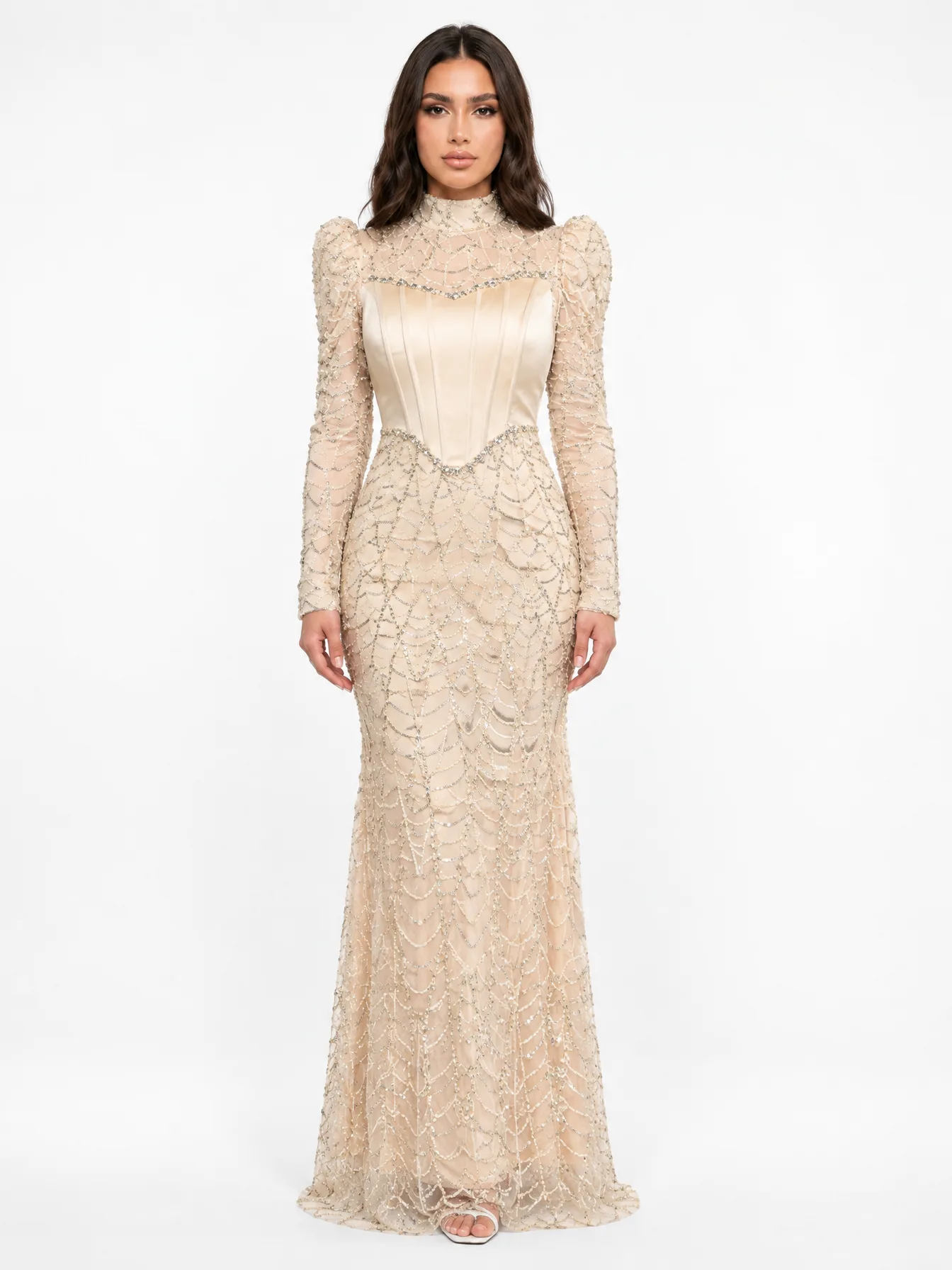
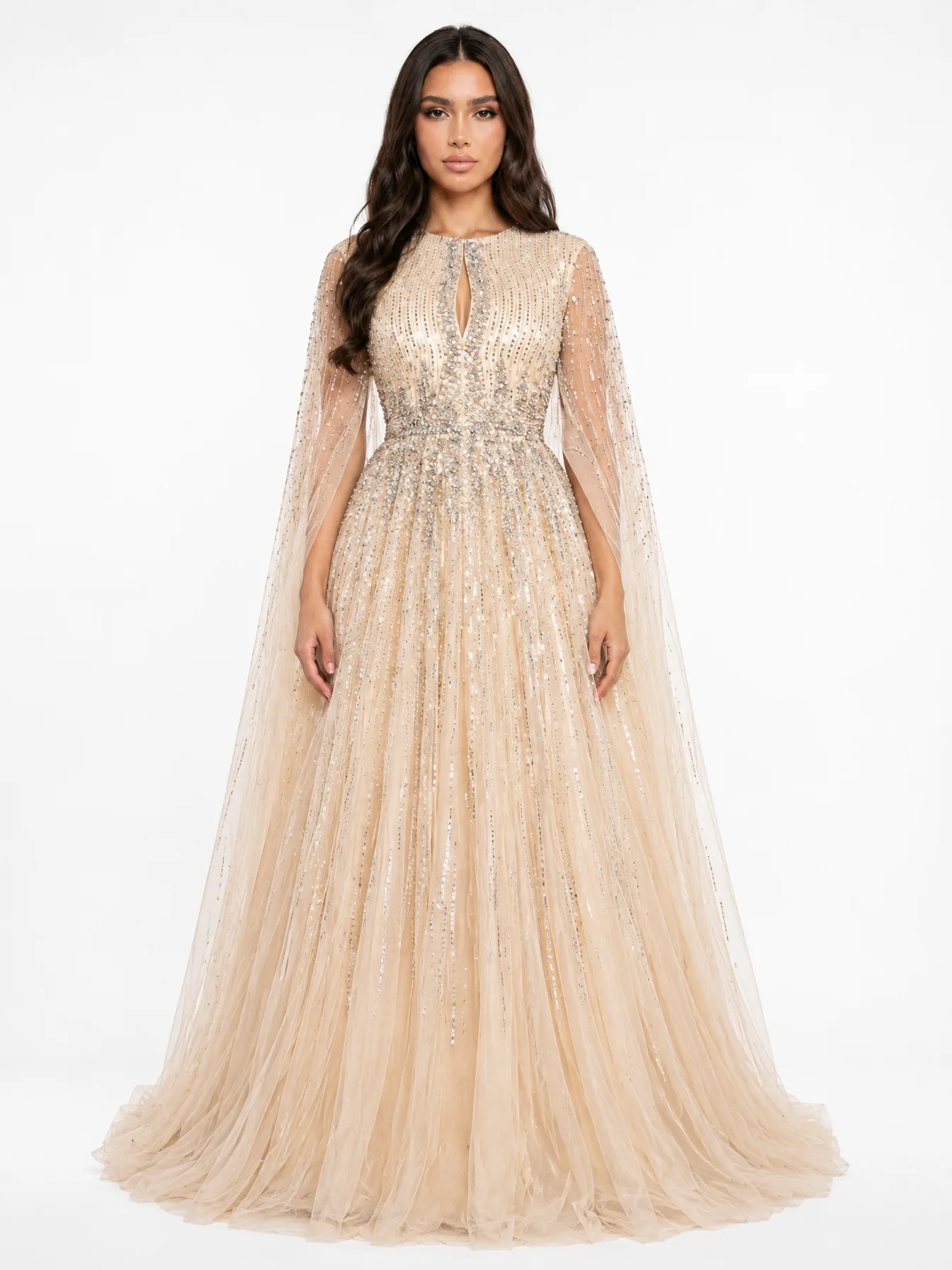
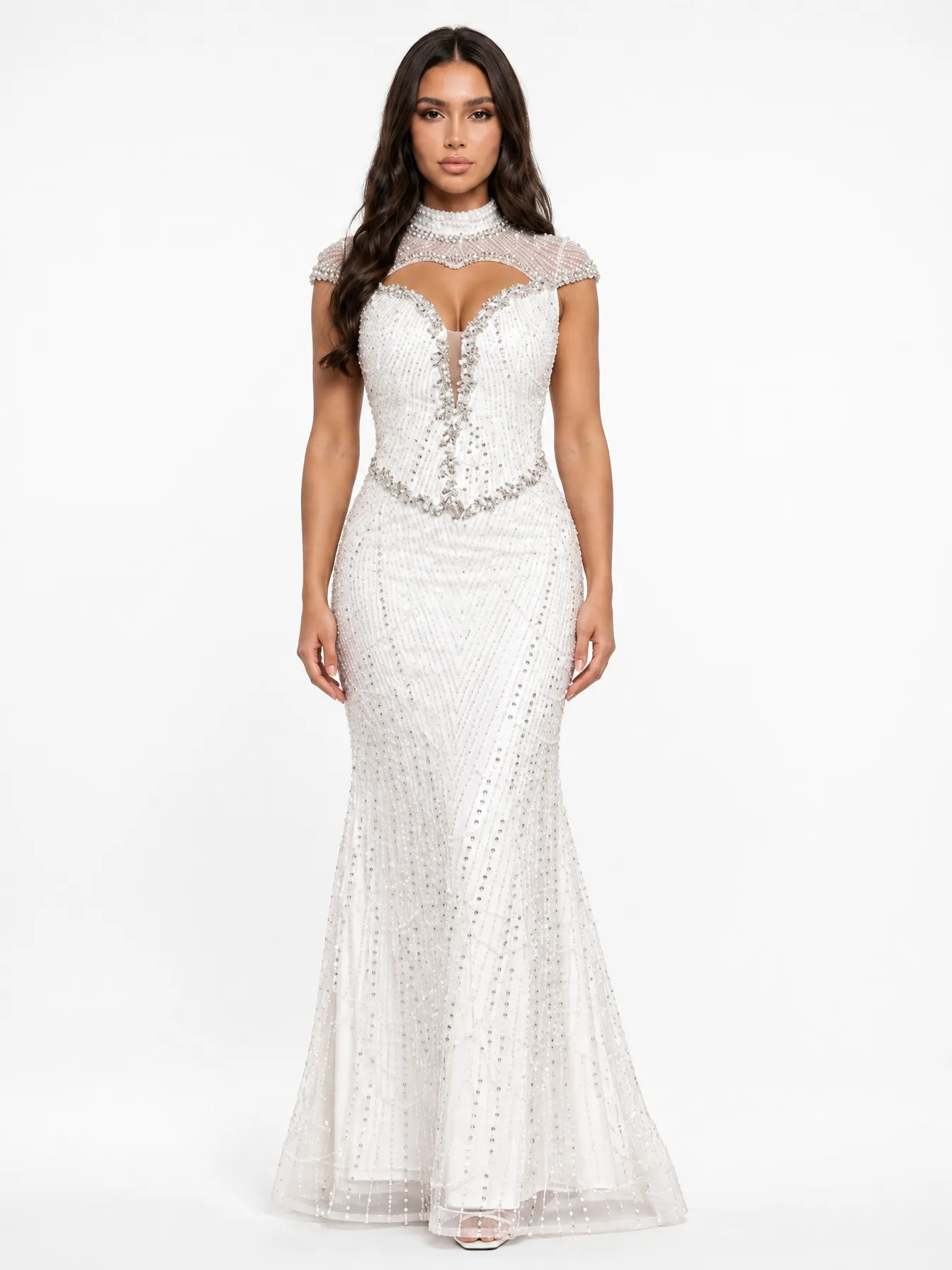
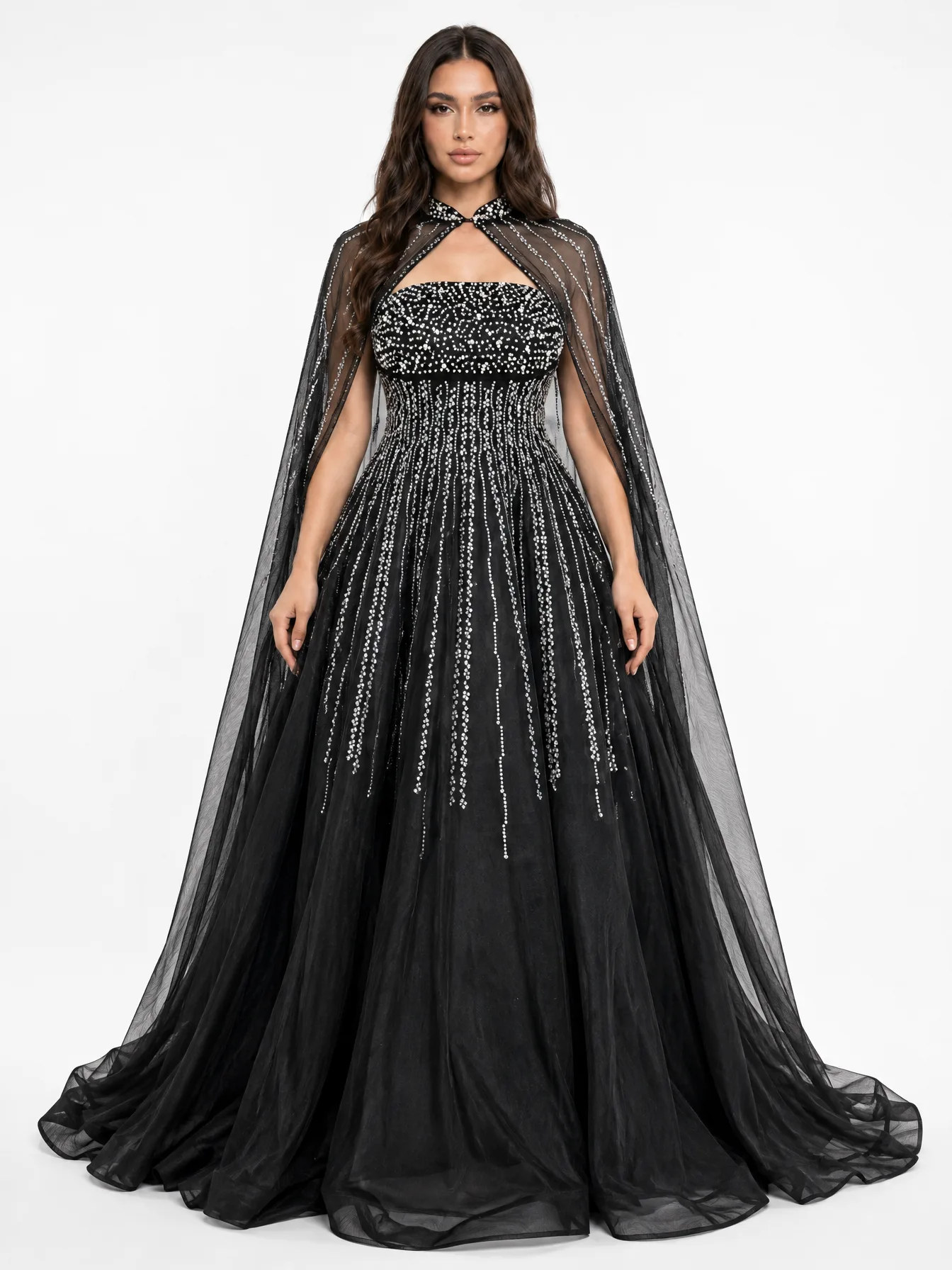
Here is how that can look in one colour. In Champagne, a single range might offer a gown with long sleeves and a sheer beaded high collar (satin corset collar gown), one with a keyhole neckline and sheer cape sleeves (crystal pearl cloche gown), one with a high crystal collar and cap sleeves (hand-beaded crystal collar gown), and a strapless ball gown that comes with its own cape (pearl-beaded ball gown with cape). Four levels of coverage, one shade, one beaded finish. Check the shades against each other all the same, because fabric changes how a colour reads.
How should hijabi bridesmaids coordinate their scarves?
The scarf is part of the outfit, so plan it with the dress rather than on the morning of the wedding.
- Colour: the same shade as the dress gives the cleanest line; a shade lighter or deeper adds depth. Agree one approach for every hijabi bridesmaid.
- Fabric: chiffon and georgette sit softly and suit most evening fabrics; satin adds shine next to a satin gown. Avoid a heavy jersey scarf with a light chiffon dress.
- Style: the same wrap for everyone looks deliberate in group photographs. If the gowns have high or beaded collars, try the wrap with the dress, as a thick collar can push the scarf outwards.
- Pins and trims: matching pins or a small brooch in the group's chosen metal tie the hijabi and non-hijabi bridesmaids together, especially if the others wear hair accessories in the same metal.
Our modest evening dresses guide explains which necklines sit most comfortably under a hijab.
What about women-only celebrations and the groom's entrance?
At many Gulf weddings the women's celebration is separate, and some bridesmaids who cover in mixed company are comfortable uncovering inside it. Plan for the moment that changes. The National describes how, at Emirati weddings, a change in the music signals the groom's entrance and women cover their hair and shoulders with shaylas.
- Give every bridesmaid who wants one a shayla or wrap in the group colour, so covering up doesn't break the look.
- Consider matching capes for the whole party. A cape, which WeddingWire's guide to cover-ups lists among the classic bridal layers, unifies different dresses and covers shoulders and arms in seconds.
- Keep the shaylas and capes in one place near the bridal party, not in the cloakroom.
How do you order for a mixed bridal party without pressuring anyone?
A shortlist is kinder than a single dress and clearer than "wear anything in sage".
- Step 1: fix the anchors (colour, fabric, length, finish) and share them in writing with photos.
- Step 2: offer a shortlist of three to five designs that meet them, covering every level of coverage your bridesmaids asked for.
- Step 3: let each bridesmaid choose from the shortlist, and confirm her size from the seller's size chart, not from her usual size elsewhere.
- Step 4: order everything at the same time, since dresses ordered together are more likely to come from the same dye batch.
- Step 5: have every bridesmaid try her dress on as soon as it arrives, before any tailoring. With many sellers, Lianora included, altered pieces cannot be exchanged.
Leave room in the calendar. Lianora delivers within the GCC in 10–15 days from order confirmation, and exchanges of unworn pieces in original packaging are possible within 7 days of delivery, but many brides order months ahead so there is time for tailoring and second choices. Our guide on when to order bridesmaid dresses sets out a full timeline, and the delivery and returns page has the exchange terms.
Questions
Should hijabi and non-hijabi bridesmaids wear the same dress?
They don't have to. Matching the colour, fabric and length and letting each choose her sleeves and neckline usually looks just as polished, and nobody has to compromise on coverage.
Can one bridesmaid wear a cape when the others don't?
Yes, especially if the cape is in the same colour and fabric as the dresses. If you want a fully uniform look, offer matching capes to everyone and let each decide whether to wear hers.
What colours work best for a bridal party with mixed coverage?
Mid-tone and deep shades such as champagne, dusty rose, navy, emerald and burgundy forgive differences in fabric and cut better than very pale colours. Whichever you choose, compare samples side by side before ordering.
How early should you ask bridesmaids about modesty?
Before you build the shortlist, ideally when you first ask them to be bridesmaids. Knowing everyone's limits early saves reordering and awkward conversations later.