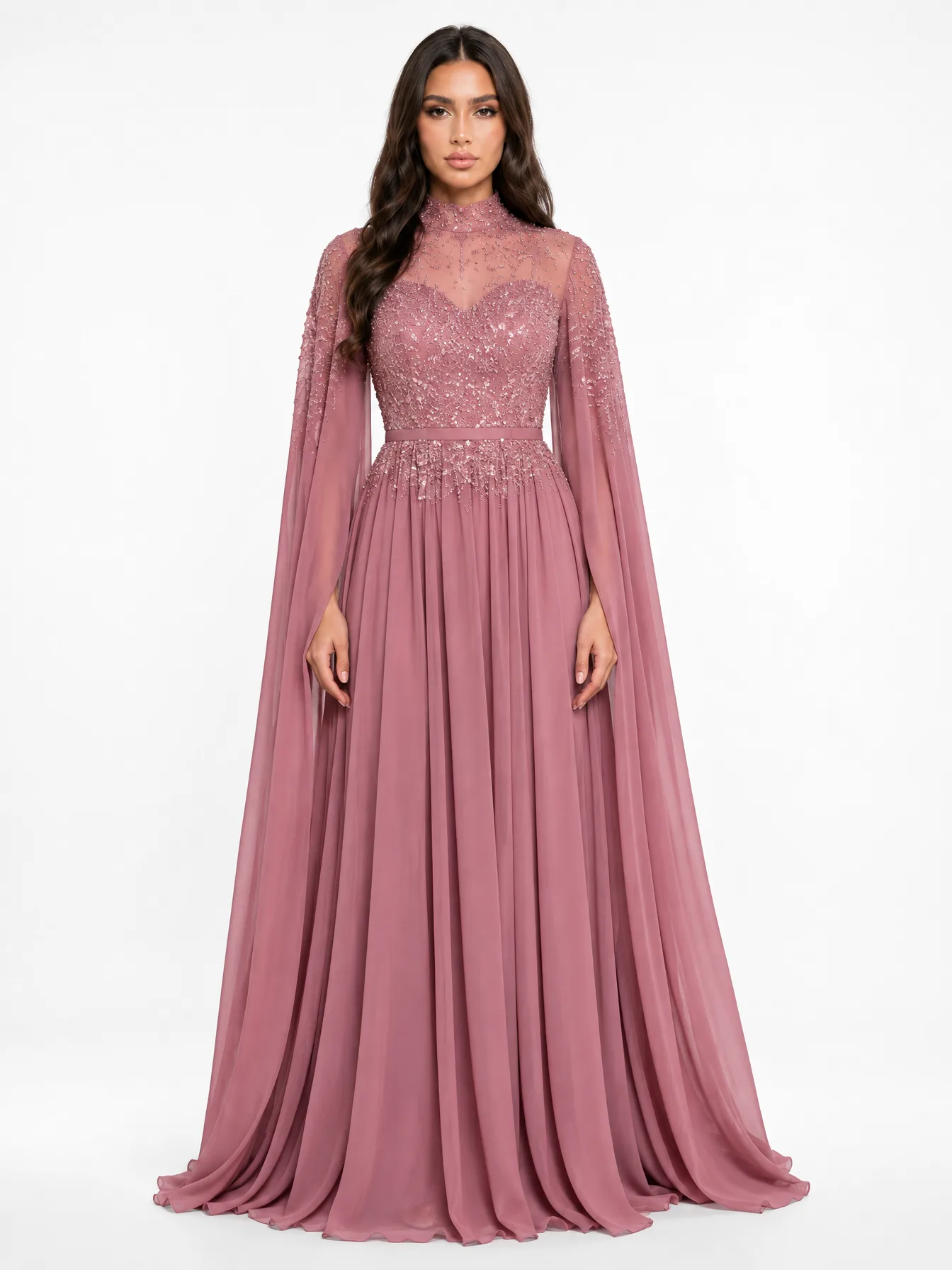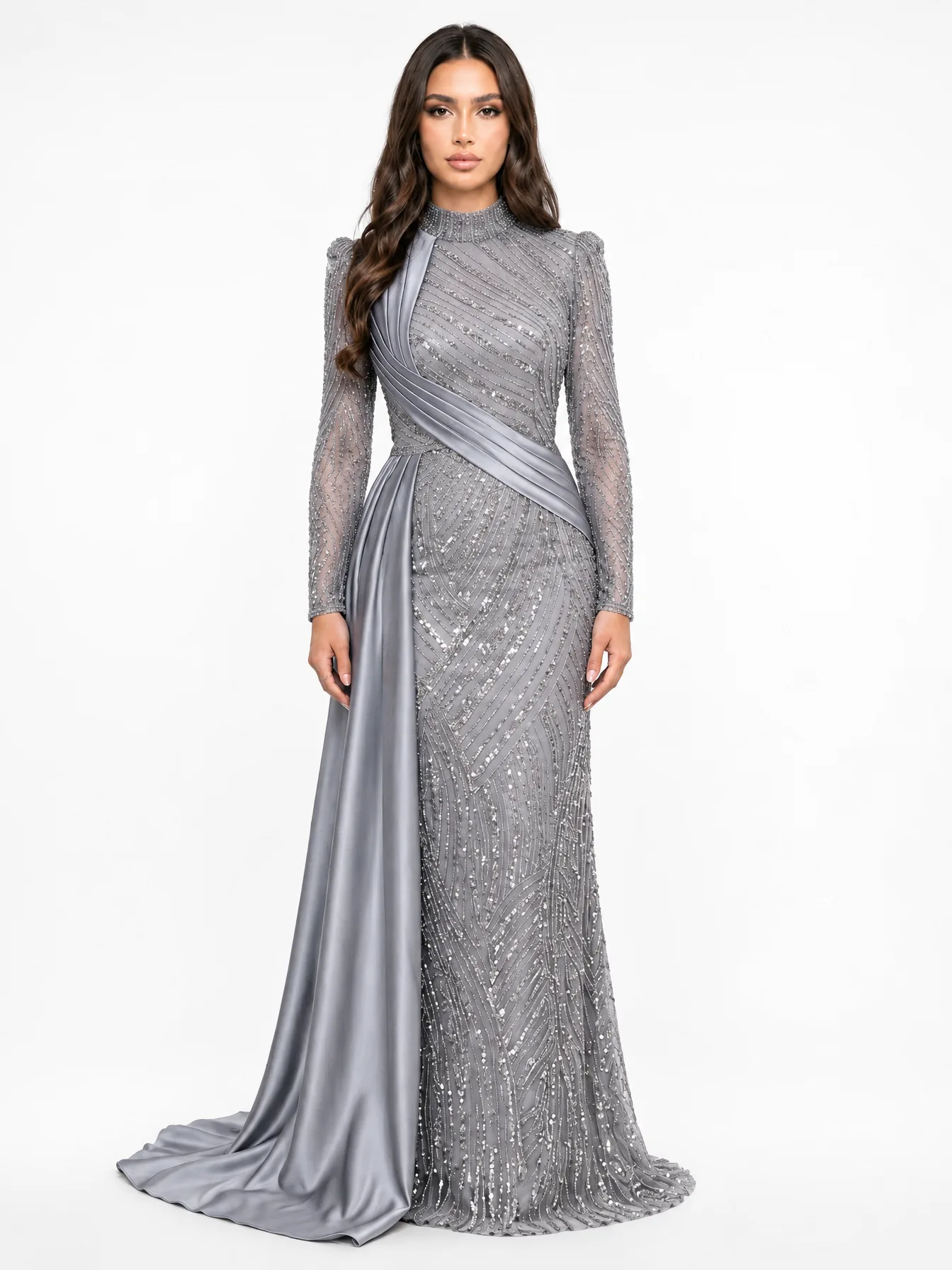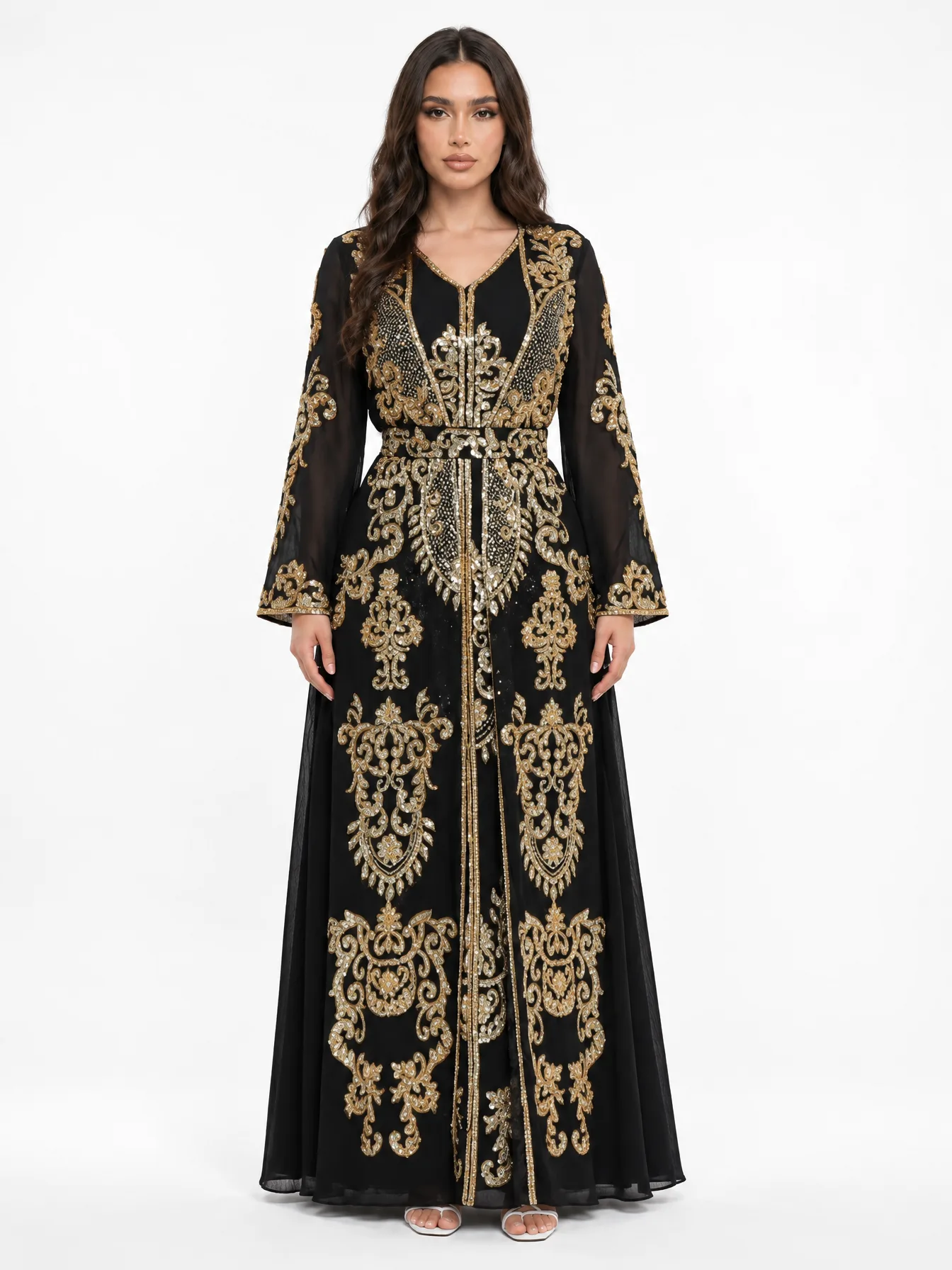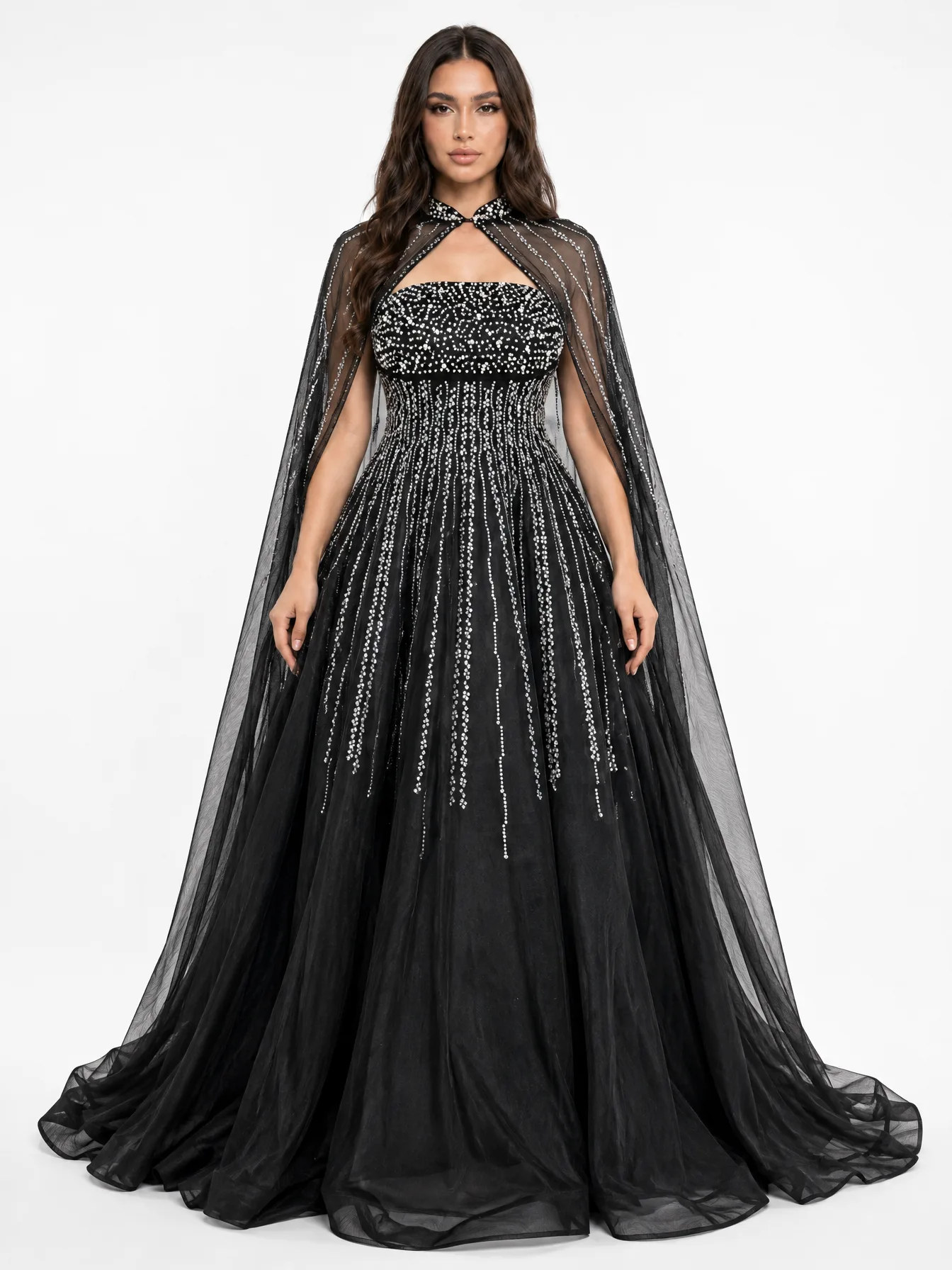
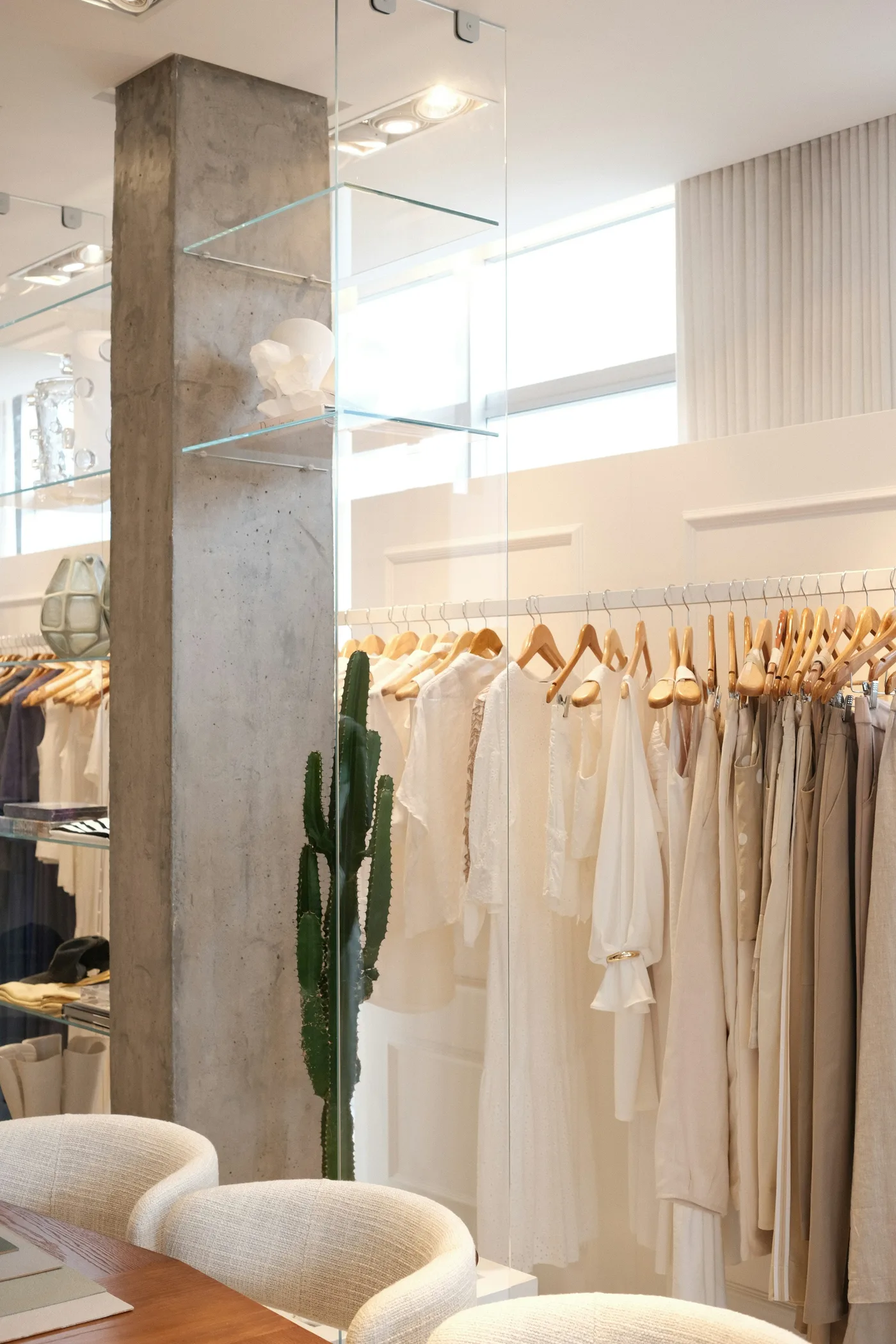
Merchandise modest evening wear around the question every shopper is really asking: will this cover what I need it to cover, for this occasion? Group pieces by occasion, show how a dress works with a cape, jacket or abaya, photograph the coverage from every angle, and label sleeve length, neckline and lining so customers can filter, online and on the rail. Modesty is personal and varies by family, country and event, so the aim is not to decide for the customer. It is to make the facts about each dress easy to see.
What do modest evening wear shoppers look for first?
Coverage details, before colour or embellishment. In practice a customer scans for:
- Sleeves: long, three-quarter, cape or sheer, and whether sheer sleeves are lined.
- Neckline: high, round, keyhole, V, off-shoulder or strapless.
- Back: closed, low or open.
- Slit: none, front or side, and how high it goes.
- Sheer areas: yokes, sleeves and panels, and what sits underneath.
- Silhouette: flowing, structured or close-fitting.
Requirements differ by event as much as by person. A guest may dress differently for a women-only wedding hall than for a mixed gala, and many travel to and from events in an abaya. Do not assume; give her the information to decide.
The market is worth taking seriously. Salaam Gateway's Modest Fashion Sector Snapshot 2024/25 puts Muslim consumers' spending on apparel and footwear at US$326.95 billion in 2023, and ranks Saudi Arabia the third-largest market, after Iran and Türkiye.
How should you group modest evening wear on the shop floor?
By occasion first, then by coverage within each group. Customers usually arrive with an event in mind, so start there:
- Weddings and engagements: the largest group for most boutiques, from structured ball gowns to flowing chiffon.
- Henna nights, Eid and Ramadan gatherings: kaftans, jalabiyas and softer, more colourful pieces.
- Galas and corporate dinners: cleaner lines, long sleeves, less embellishment.
- Bridesmaids: designs that come in several colours and sizes, displayed as a group.
Within each group, move from full coverage to more open styles along the rail, so a customer can see quickly where her comfort zone sits. Avoid a separate "modest corner" that implies the rest of the shop is not for her; in the Gulf, coverage is often the default. Online, mirror the same structure with categories and filters. A shop's kaftan range, for example, can sit in its own category, as Lianora's Arabic collection does.
How do you style evening dresses with capes, jackets and abayas?
Show the solution, not just the dress. Many customers will happily buy a more open design if you show them how to cover it. On mannequins and in photos:
- Show two-piece designs both ways. The pearl-beaded ball gown with cape is a strapless gown sold with a cape, so display it with the cape on and mention what it looks like without.
- Pair a sleeveless dress with a matching cape, bolero or sheer jacket on the next mannequin.
- Style an evening dress under an open embellished abaya, as many customers will wear it on the way to the event.
- Show layered kaftans as layers: a sheer embroidered outer over an inner dress, as in the two-piece hand-beaded kaftan.
Keep cover-ups next to the dresses they suit, not in a separate accessories area. If you stock pieces that need adjusting, such as adding sleeves, a reliable local tailor makes the sale easier.
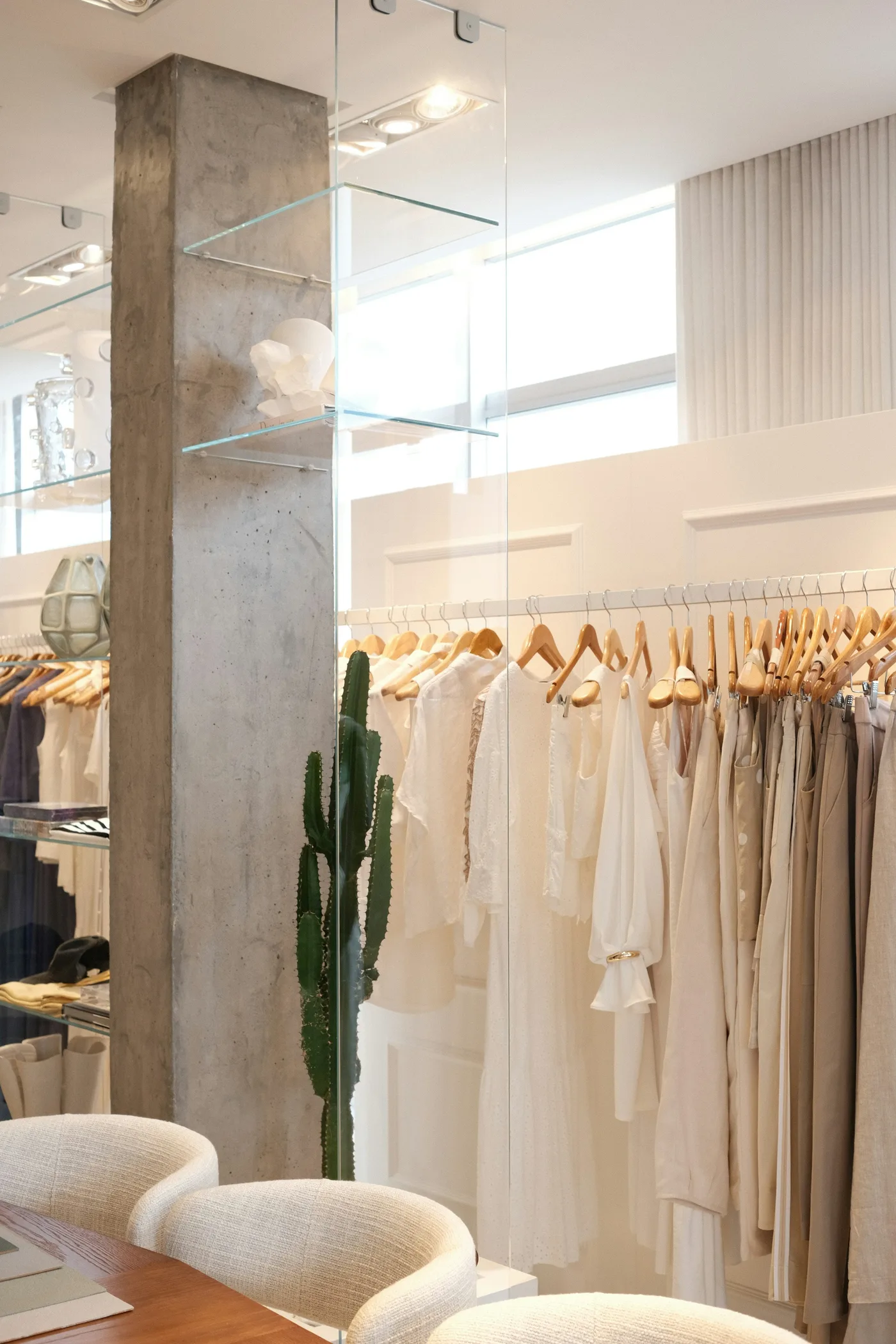
How should you photograph modest dresses for online sale?
Online, the photos have to answer the coverage questions a customer would otherwise ask in the shop. For every design, include:
- Front, back and side views at full length.
- A close-up of the neckline and one of the sleeve, including the cuff.
- Sheer areas photographed against something, such as a hand behind the fabric, so the shopper can judge how see-through they are.
- Any slit, shown standing and in a step, so its height is clear.
- Two-piece designs both with and without the cape or outer layer.
- A short video of the dress moving, which shows how much a skirt or sleeve opens.
Keep poses natural. Raised arms or dramatic angles can make a dress look more revealing than it is.
Which coverage details should you label on every product?
Turn the coverage checklist into fixed product attributes, the same for every design, in English and Arabic:
- Sleeve length: sleeveless, cap, short, elbow, three-quarter, long, cape.
- Sleeve lining: lined, sheer, partly sheer.
- Neckline: high, round, keyhole, V, sweetheart, off-shoulder, strapless.
- Back: closed, low, open.
- Slit: none, front, side.
- Length: floor-length, with train.
- Extra layer included: cape, jacket, belt, none.
Shoppers use attributes like these. In a 2015 study, the Baymard Institute found that 42% of major e-commerce sites lacked category-specific filters for several core product types, and it cited a large US department store's "Dress Occasion" filter as a useful example of the kind shoppers want. If you list products on Google, its Merchant Center has a product_detail attribute for details that other attributes do not cover, which is a natural home for sleeve length or neckline, and Google asks you to localise these details in each language's data source.
How do you make the fitting room work for modest shoppers?
Privacy and practicality decide whether a customer tries on a second dress. Small changes make a big difference:
- Full-height doors or curtains with no gaps at the sides.
- A full-length mirror inside the room, so she does not have to step out to see the back.
- Hooks for an abaya and shayla, and a seat.
- A way to ask for another size or a cape without leaving the room, such as a bell or a staff member nearby.
- Lighting close to event lighting, warm rather than harsh, so embellishment looks as it will on the night.
- A female staff member available to help with zips and capes, which many customers prefer.
Keep the cover-ups and capes for each design close to the fitting rooms, so trying the complete look takes one visit rather than three.
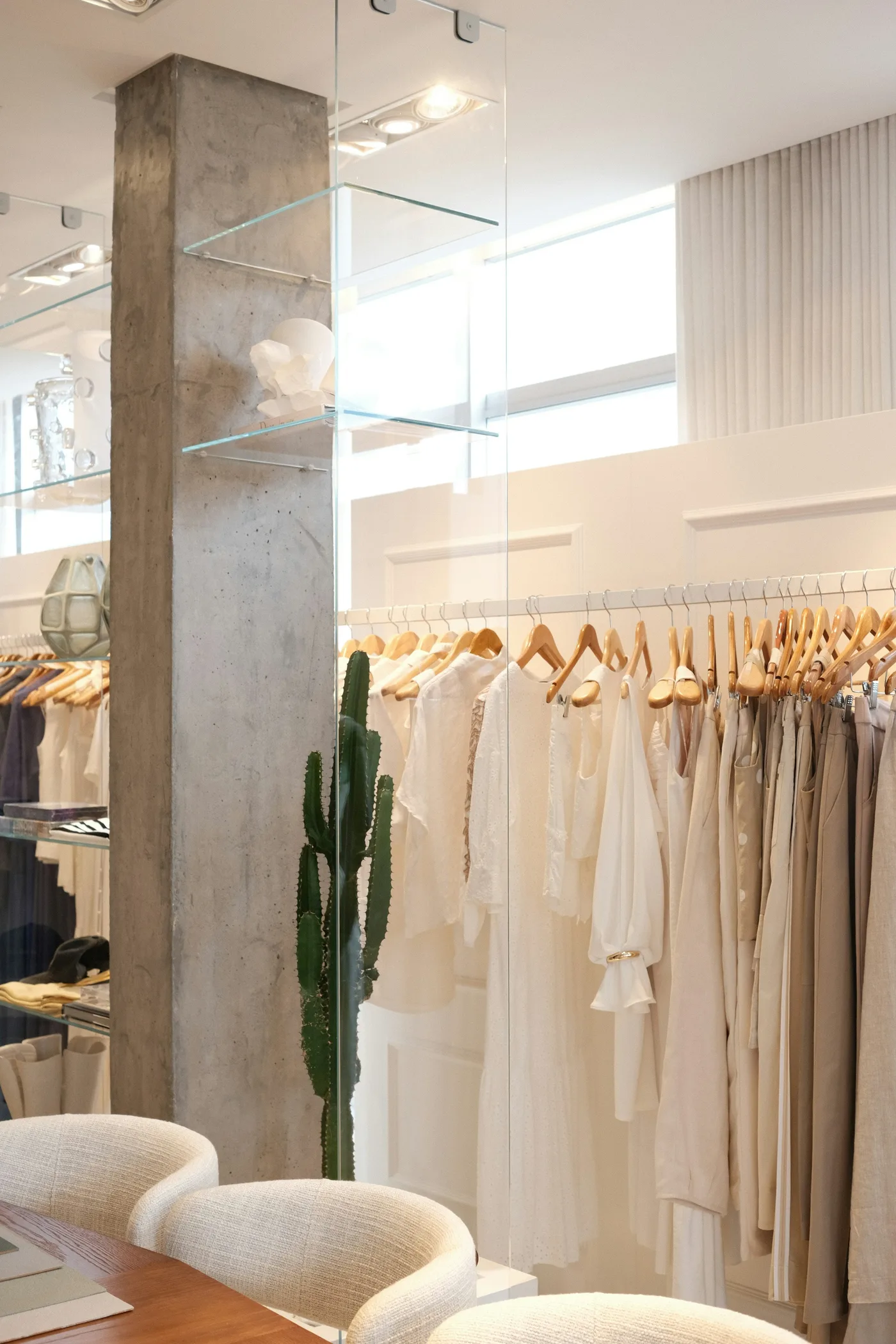
How do you write product descriptions for modest dresses?
Put the coverage facts in the first line, plainly, in both languages. "Modest" on its own tells a shopper very little, because it means different things to different people. Compare:
- Vague: "An elegant modest gown for special occasions."
- Useful: "High neck, long sheer beaded sleeves, closed back, floor-length with a train."
Say what is sheer and what is lined, what is included and what is not, and how the dress can be covered further. Be honest about designs that are only partly covered. The hand-beaded crystal collar gown, for example, has a high crystal collar but also a keyhole and cap sleeves, so its description should say both. A customer who knows exactly what she is buying is far less likely to send it back.
Questions
Should modest evening wear have its own section in a boutique?
Usually not in the Gulf, where coverage is often the default. Group by occasion and order each rail from full coverage to more open styles instead. Online, a filter for sleeve length and neckline does the job of a separate section without implying the rest of the range is not for her.
What counts as a modest evening dress?
There is no single standard. Common features are long or cape sleeves, a high or covered neckline, a closed back, floor length, a silhouette that is not tight, and opaque or lined fabric. Each customer weighs these differently depending on the event.
How can a sleeveless or strapless dress work for modest customers?
With a cape, bolero, sheer jacket or an open abaya over it, or by adding sleeves through a tailor. Show the covered version on a mannequin and in the product photos, and sell the cover-up alongside the dress.
Which product filters matter most for modest evening wear online?
Occasion, sleeve length, neckline and whether sheer areas are lined, followed by size and colour. Use the same values on every product and in both languages, so a filter never hides a dress that should appear.