For a boutique, the best evening wear fabric is one that survives try-ons, steaming and storage without losing its looks, at a price your customers will pay. In practice that usually means well-made polyester and nylon satins, crepes, chiffons and tulles, with silk kept for a few higher-priced pieces. Read the fibre content, handle the cloth, and judge it on how it will behave on your shop floor, not only on how it photographs.
What is the difference between a fabric name and its fibre content?
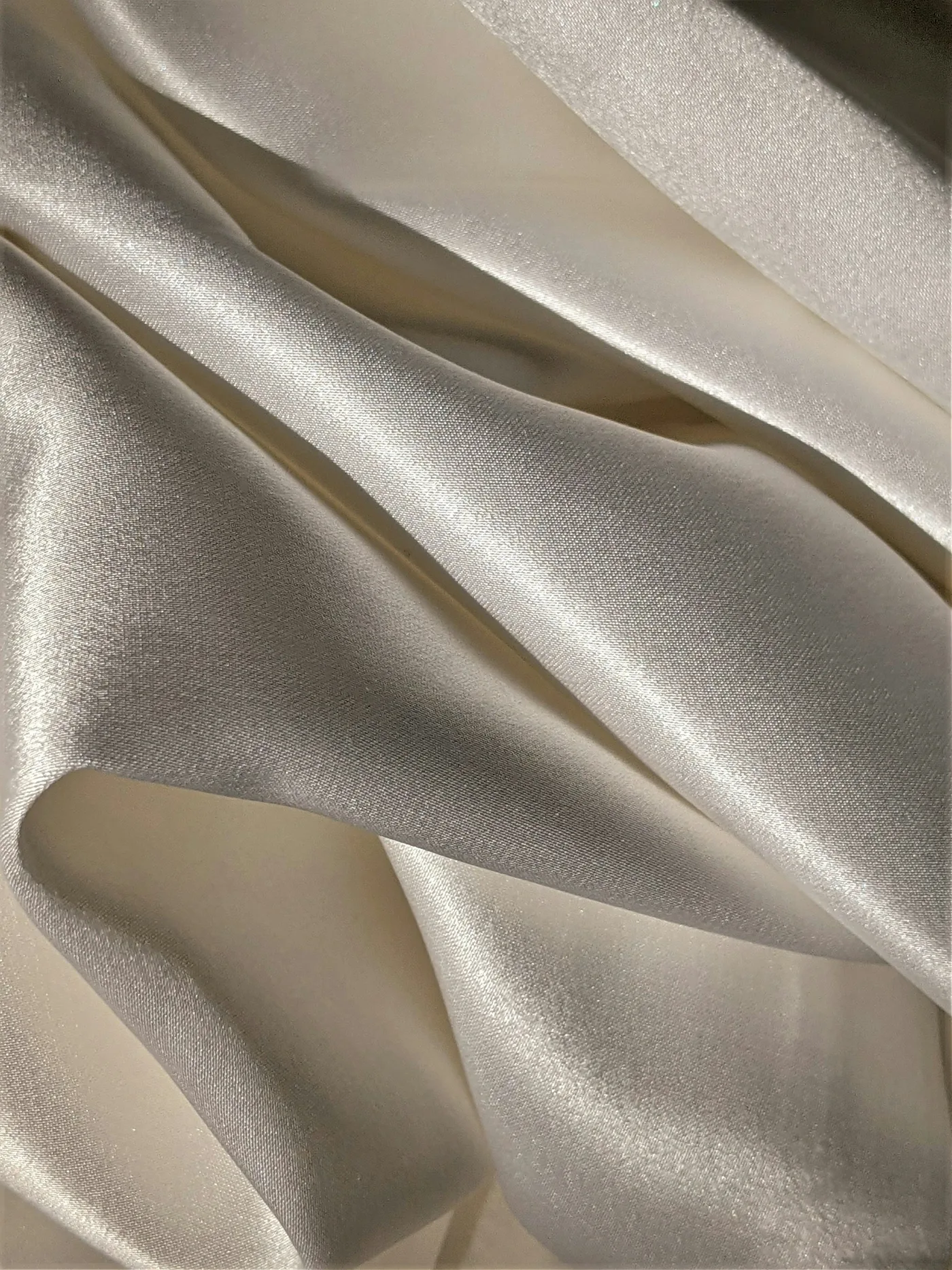
Most evening wear fabric names describe a weave or structure, not a fibre. Satin is a weave that gives a smooth, glossy face, and today it is made from silk, polyester or nylon, all still called satin. Chiffon was originally pure silk, but nylon and polyester versions followed, along with rayon and cotton. So a "silky satin" may contain no silk at all.
That is why the fibre content label matters more than the name. It lists each fibre and its percentage for the shell, and often the lining separately. The common structures, from a buyer's point of view:
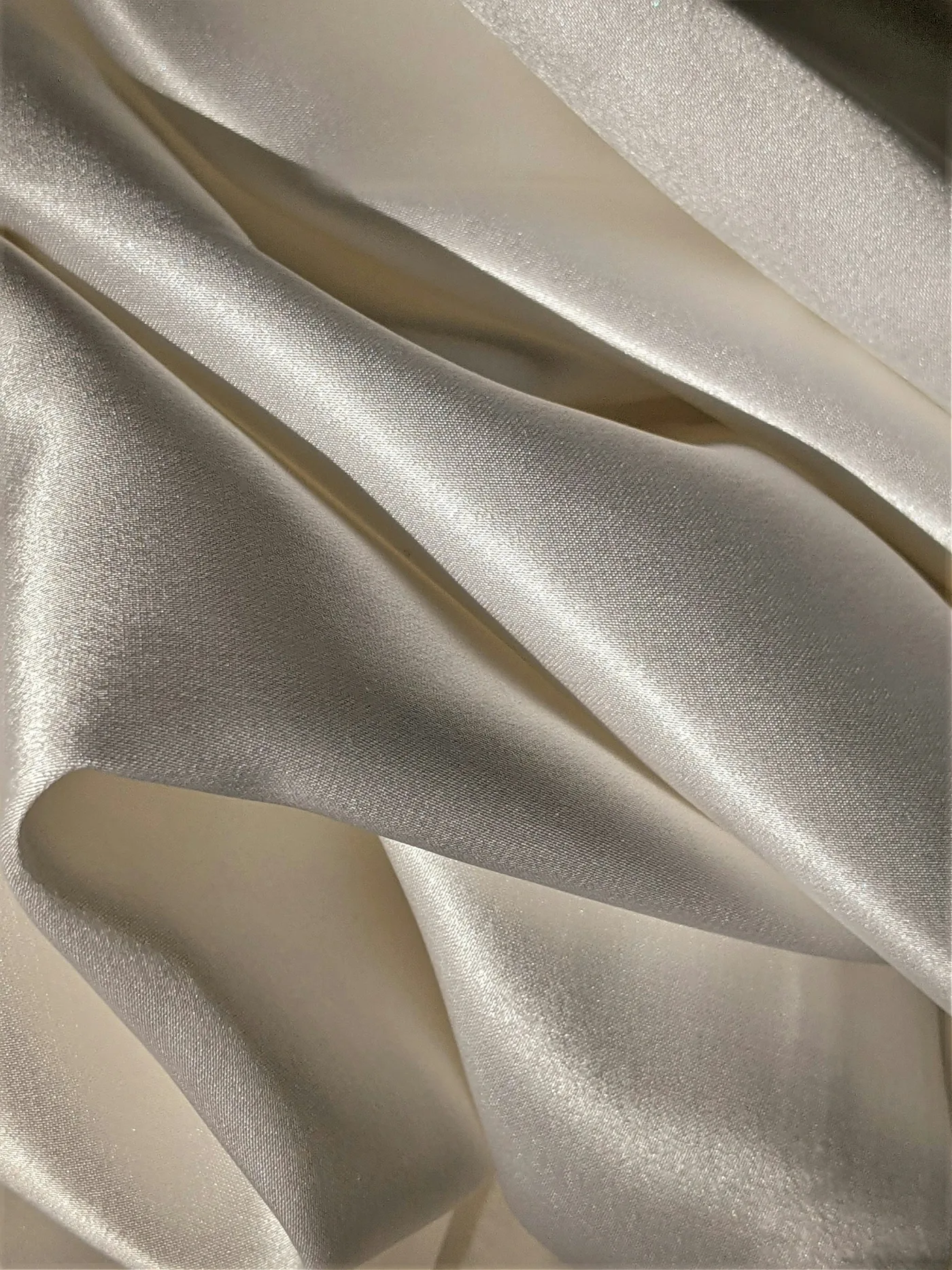
- Satin: glossy and structured. The long surface yarns that create the shine also catch and snag easily.
- Chiffon: a light, sheer plain weave of high-twist yarns. Elegant, but it frays easily and needs careful seams.
- Georgette: a sheer crepe, slightly heavier and more textured than chiffon, and a little more forgiving.
- Crepe: a matte, pebbled surface that drapes well and hides creases.
- Tulle: a fine net that gives volume. Light on its own, bulky in layers.
- Sequinned or beaded mesh: decoration sewn onto a base fabric, so judge both the decoration and the base.
Is polyester a sign of poor quality in evening wear?
No. Polyester is one of the most widely used fibres in clothing. Polyester chiffon, introduced in 1958, became popular for its resilience and low cost, and much of the evening wear sold at mainstream prices is polyester or a polyester blend.
Each fibre has trade-offs. According to University of Georgia Extension:
- Polyester: strong, wrinkle-resistant and resistant to abrasion and sunlight. But it melts if too hot, holds body oils and odours, and builds static.
- Silk: luxurious, light, absorbent and strong, and it takes rich colour. But sunlight and perspiration weaken it, it water-spots, it yellows with age and it loses strength when wet.
- Nylon: very strong and elastic, but it holds sweat stains and is sensitive to heat.
- Acetate, often used for linings: silky and drapey, but it melts at low heat and has poor abrasion resistance.
Quality varies enormously within polyester. A dense, finely woven polyester satin with a soft hand can outperform a thin, cheap silk. Judge the cloth, not the fibre name.
How does fabric choice affect returns?
Fabric decides many of the faults that bring a dress back. Before you buy, think about how each one fails:
- Satin: snags on rings, bracelets and rough fingernails during try-ons, and shows every crease and water mark.
- Chiffon and georgette: catch on jewellery, and loose weaves can pull apart at the seams under strain.
- Sequins and beads: shed if the stitching is weak, and scratch the inner arm if they run right up to the underarm.
- Polyester linings: hold odours, which matters if a worn dress is quietly returned.
- Silk: perspiration marks and water spots that may not come out.
Set your own returns policy with these risks in mind, and look closely at any returned piece for snags, odour and marks before it goes back on the rail. Lianora, for example, accepts exchanges only, on unworn pieces in their original packaging within a week (delivery and returns).
Which fabrics cope best with steaming on the shop floor?
Every display piece is steamed again and again, so heat tolerance is a buying question, not just a care question. University of Georgia Extension advises a low iron setting with steam for polyester, warns that acetate melts at low heat, and notes that silk can yellow if the iron is too hot.
On the shop floor that translates into a few rules:
- Read the label before the first steam, for the lining as well as the shell.
- Steam from the inside where you can, and keep the steamer head moving.
- Keep steam off sequins. Most modern sequins are plastic, as vinyl largely replaced earlier film and clear plastic, so direct heat can curl or dull them.
- Chiffon and tulle recover quickly; satin shows water marks, so steam it from a distance.
- Crepe and heavily sequinned fabrics barely crease, which makes them easy display pieces.
How should you store heavily beaded dresses?
Weight is the enemy. The Canadian Conservation Institute's guidance on hanging costumes says heavily decorated garments should be stored flat rather than hung. A boutique cannot box every display piece, but it can borrow the same principles:
- Use wooden or plastic hangers padded to suit the garment, never thin wire hangers.
- For heavy gowns, sew cotton hanging tapes inside the waist and loop them over the hook, so the shoulders do not carry all the weight.
- Store reserve stock of heavily beaded pieces flat, with tissue between the layers.
- Use breathable covers. The institute suggests prewashed cotton sheeting for dust covers.
- Give dresses space on the rail. In open storage, the institute recommends keeping garments at least 10 cm apart, which also stops beads catching on the next dress.
Rotate display pieces too. A gown that hangs on the shop floor for months takes more strain at the shoulders than one that is stored flat and brought out for a season.
What should you check on sequinned and beaded fabrics?
Decoration adds weight, cost and risk, so check three layers: the decoration, the stitching and the base.
- Base fabric: a fine mesh or tulle base under heavy beading can tear around the stitches. Look for a stable base, often backed by a sturdy lining.
- Stitching: tug a few sequins and beads gently. They should not move, and a run should not slide along one thread.
- Underarms and inner sleeves: plain or lightly decorated areas here make a dress far more comfortable and reduce shedding where the arms rub.
- Colour match: sequins, beads and base should match in daylight, not just under shop lighting.
- Sequin direction: all lying the same way, so the dress reads as one surface.
Heavy decoration also changes how a dress hangs and how it ships. If a supplier offers the same design in a lighter version, compare both before you choose. For a full inspection routine, see judging the quality of an evening dress sample.
How can you judge fabric quality by hand?
You do not need a laboratory. A few quick tests, done on a sample or a swatch, tell you most of what you need:
- Crush test: squeeze a corner in your fist for a few seconds and let go. Deep creases that stay mean more steaming and more complaints.
- Light test: hold the fabric up to a window. The density should be even, with no thin streaks.
- Seam test: pull gently across a seam. If the yarns spread apart beside the stitching, the weave is too loose for a fitted dress.
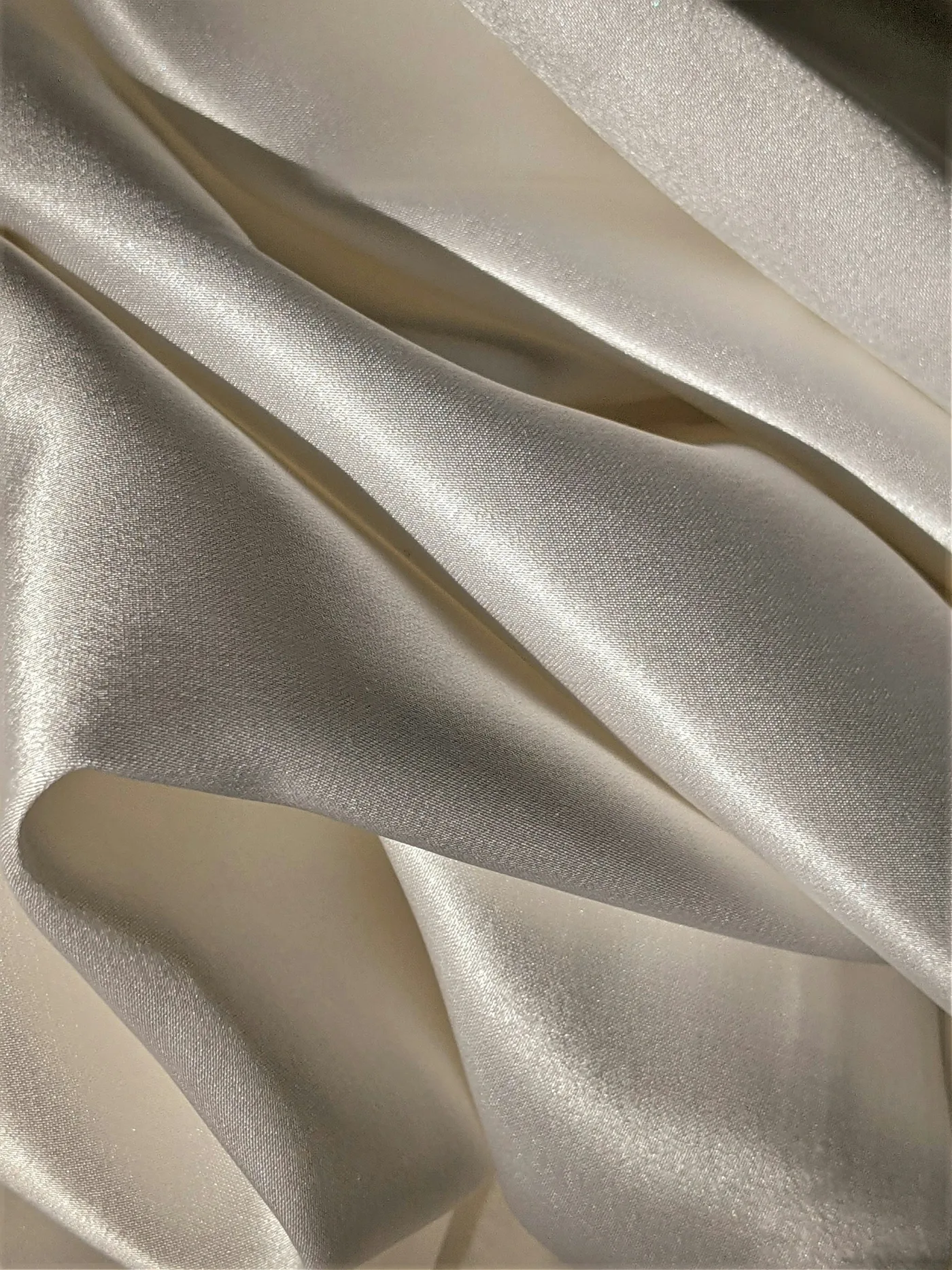
- Shine: good satin has a deep, even lustre. A harsh, glassy shine is often a sign of a thinner, cheaper cloth.
- Static: a fabric that crackles and clings in the hand will do the same on a customer.
- Silk weight: silk is often described by its weight in momme (mm). Ask for it, and compare like with like.
Write your findings next to the price. Over a few orders you will learn what your customers will pay for, and where a cheaper fabric costs you more in returns.
What should you ask a supplier about fabric?
Ask the same questions for every design, and keep the answers with your order:
- What is the fibre content of the shell, the lining and any sheer panels?
- Is each colour cut from a single dye lot?
- Are the sequins and beads sewn, and onto what base fabric?
- What do the care labels say, and are they on every piece?
- Will production use the same fabric as the sample?
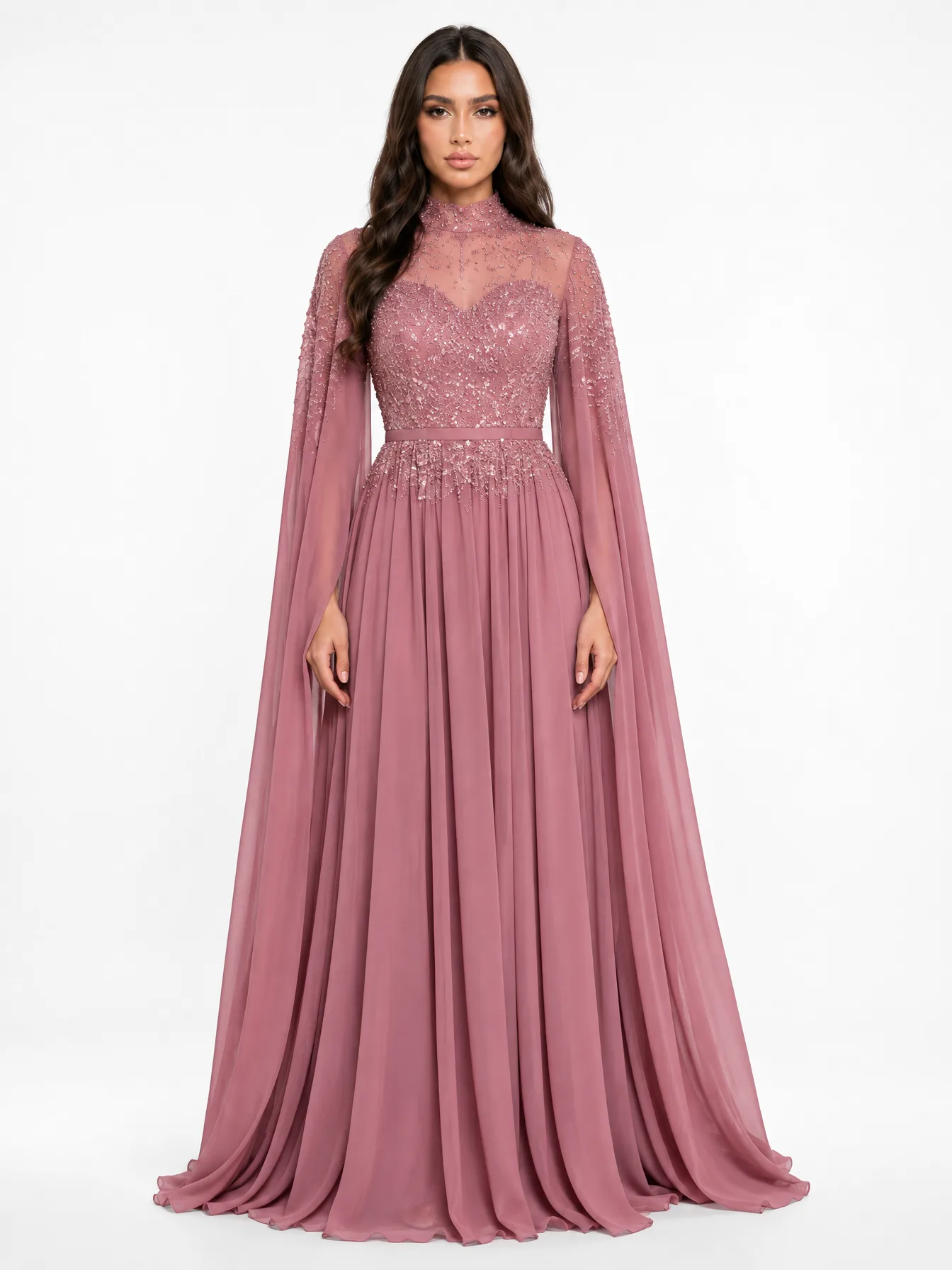
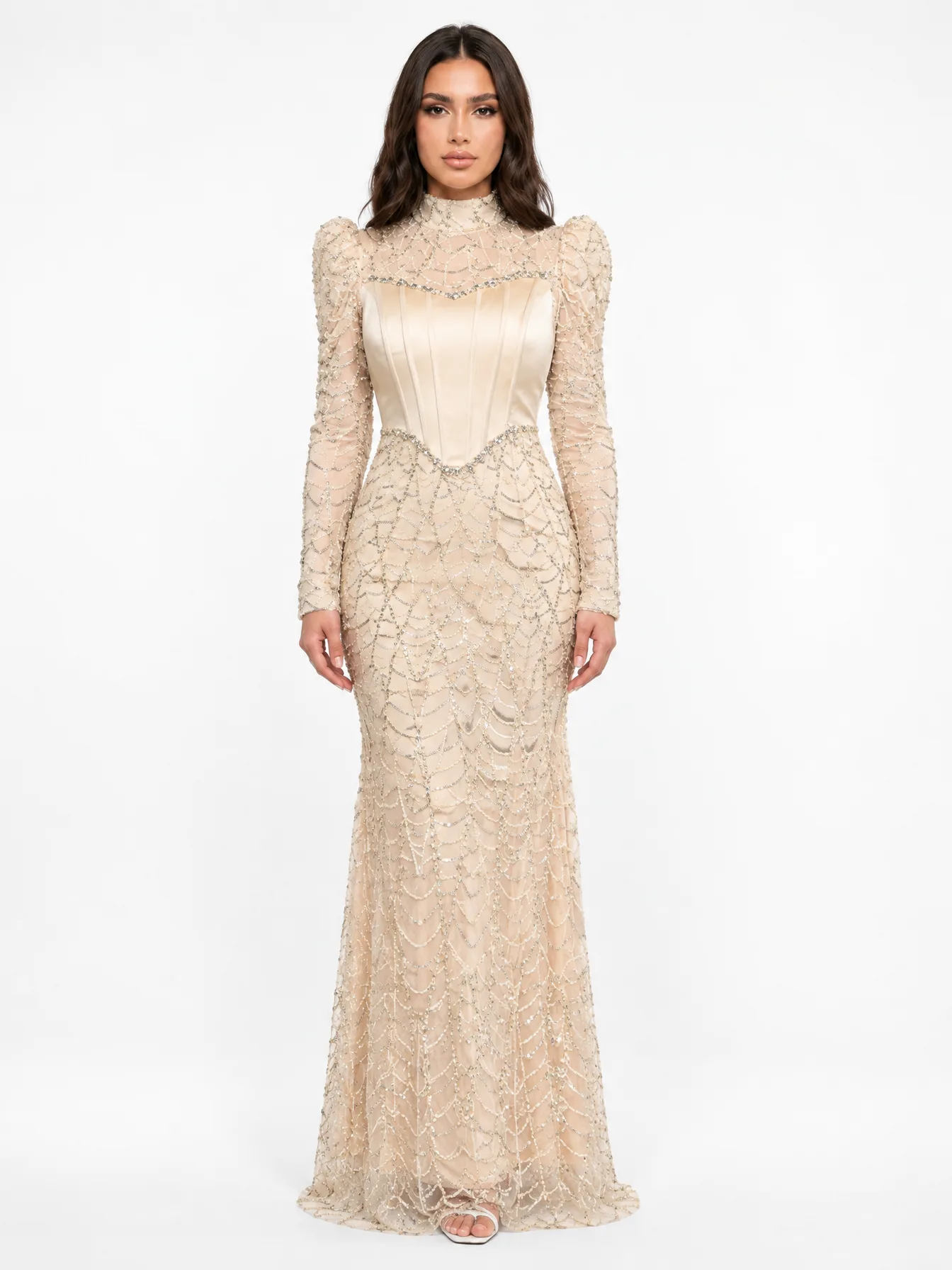
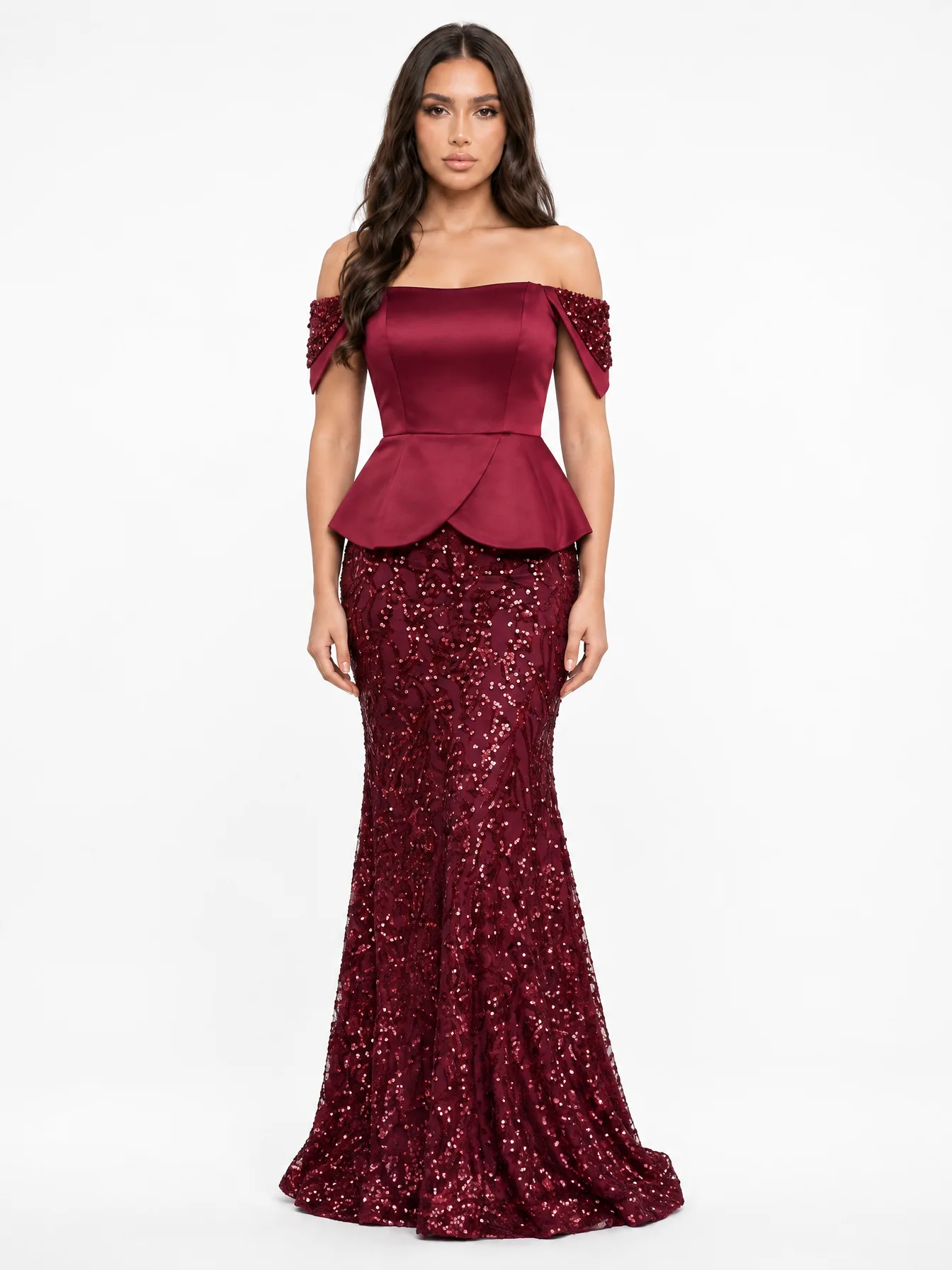
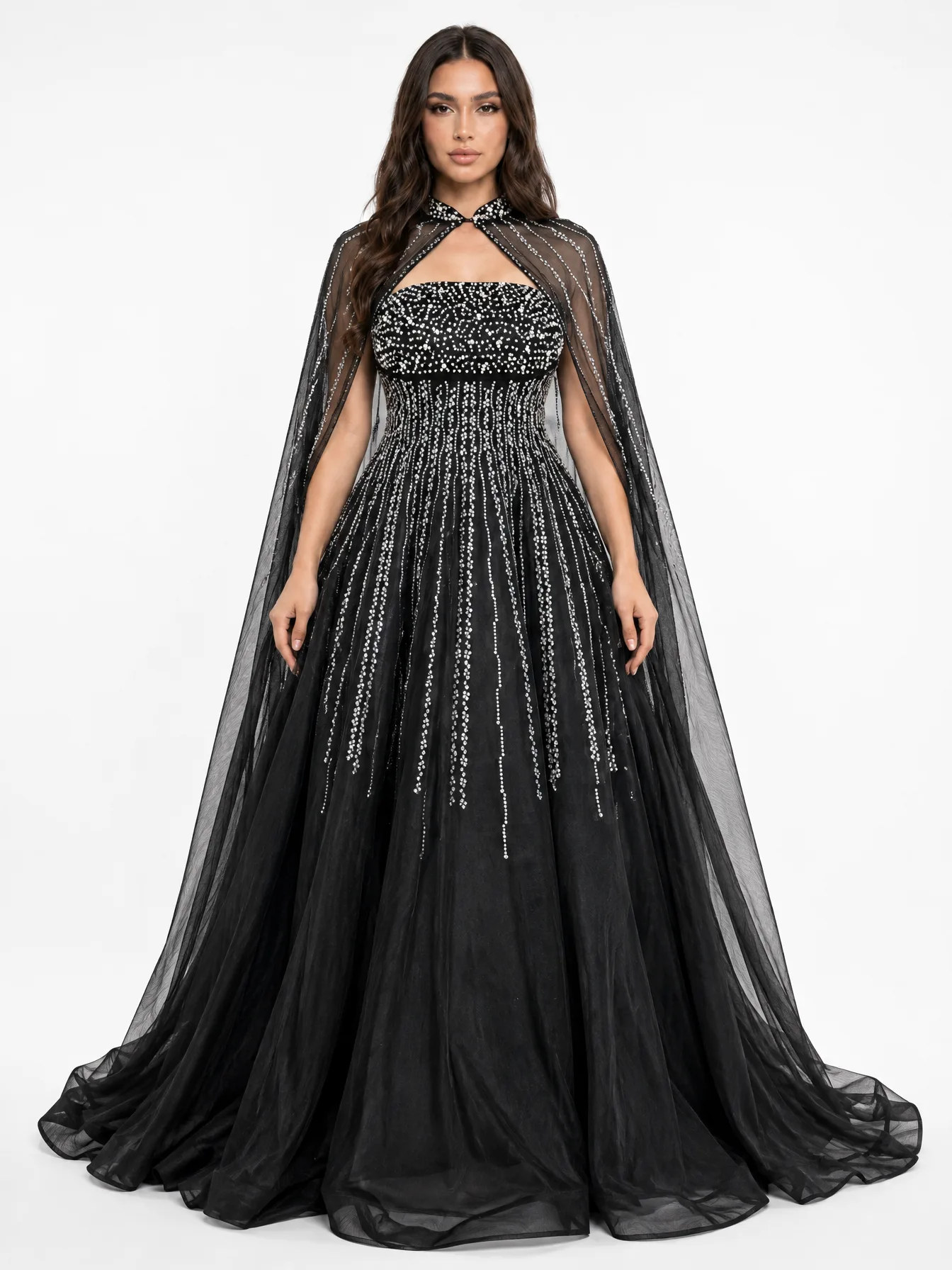
Compare the answers across designs as well as suppliers. A full chiffon skirt such as the beaded chiffon cape gown, the boned satin of the satin corset collar gown and the sequinned skirt of the peplum sequin gown each need different handling on the shop floor, so plan your steaming, storage and returns checks around the mix you buy.
Questions
Is silk worth stocking in a GCC evening wear boutique?
For a few higher-priced pieces, yes, if your customers value it and will pay for it. Silk is light and takes rich colour, but perspiration and sunlight weaken it and it water-spots, so it needs careful handling on the shop floor and clear care advice for buyers.
What does polyester satin mean on a label?
It means a satin weave made from polyester yarn rather than silk. The weave gives the shine; the fibre decides strength, heat tolerance and how the fabric feels. Good polyester satin can look and wear very well.
Can you steam a sequinned dress?
Yes, carefully. Steam from the inside and keep the steamer head away from the sequins themselves, because most are plastic and direct heat can curl or dull them. Heavily sequinned fabrics rarely crease much, so they often need very little steaming.
Why do some satin dresses look cheap?
Usually because the cloth is thin or loosely woven, which gives a harsh, glassy shine, shows every seam and wrinkles easily. A denser satin has a deeper lustre and holds structure. Handle it in daylight and compare it with a better piece before you decide.