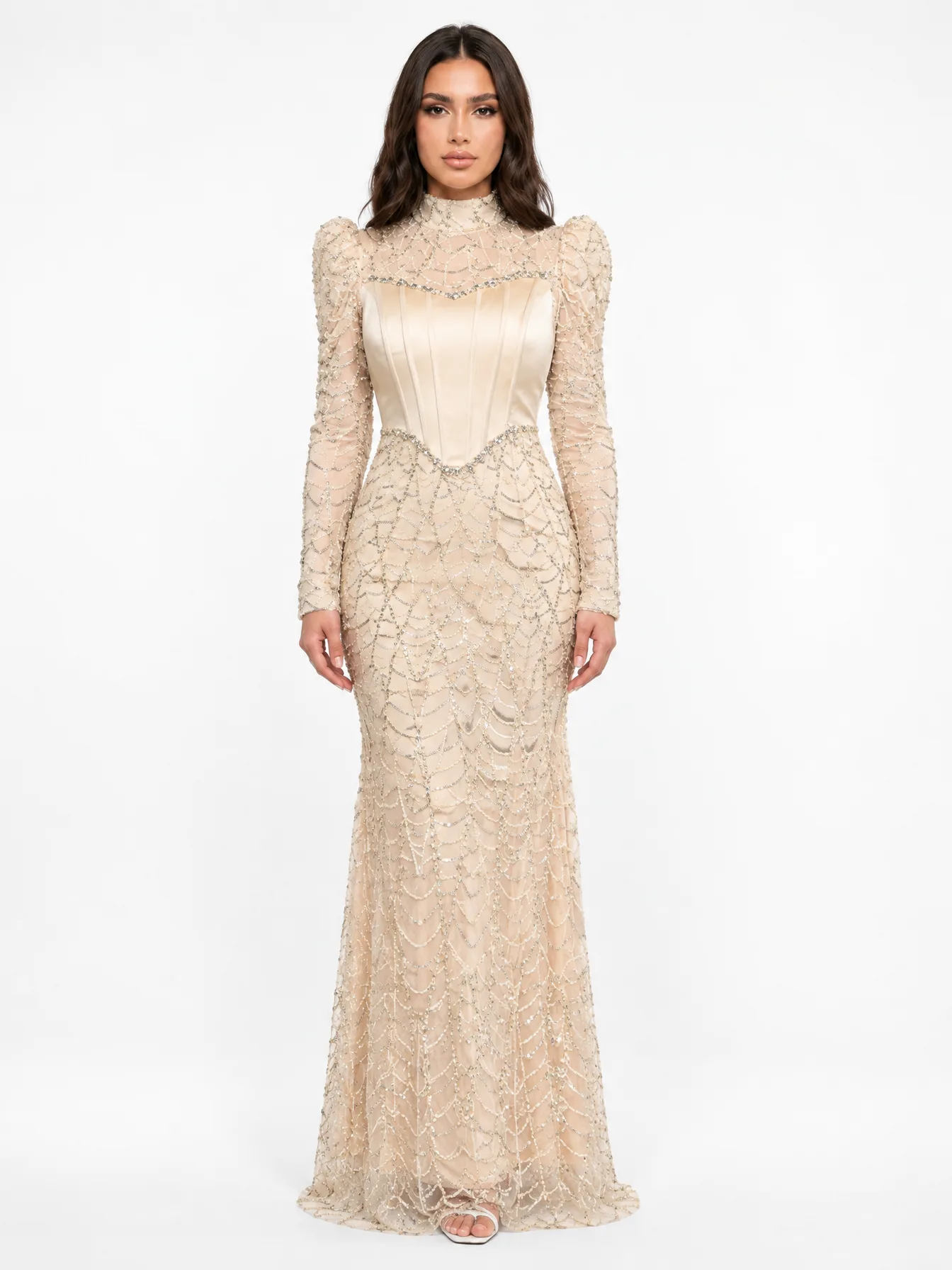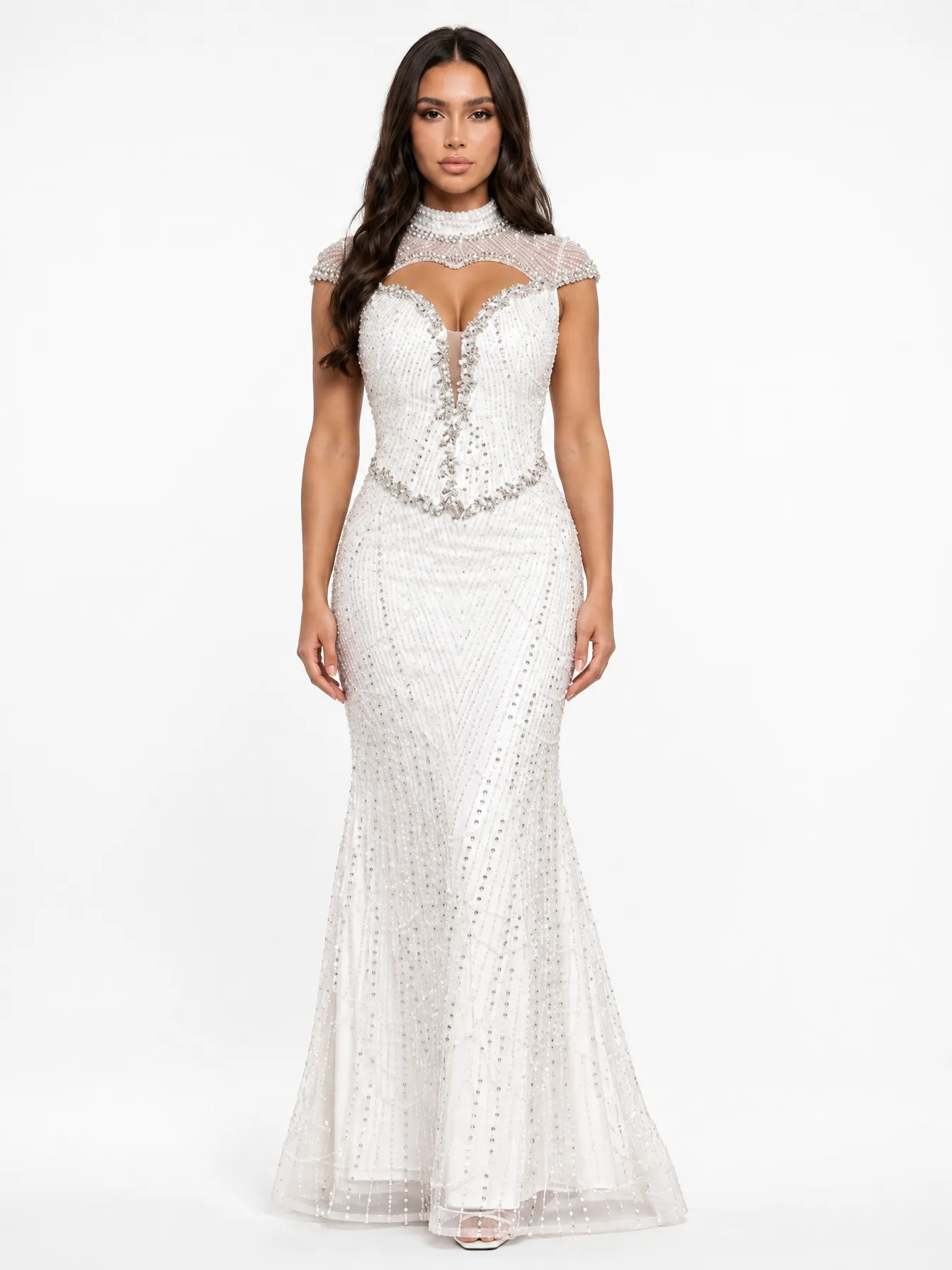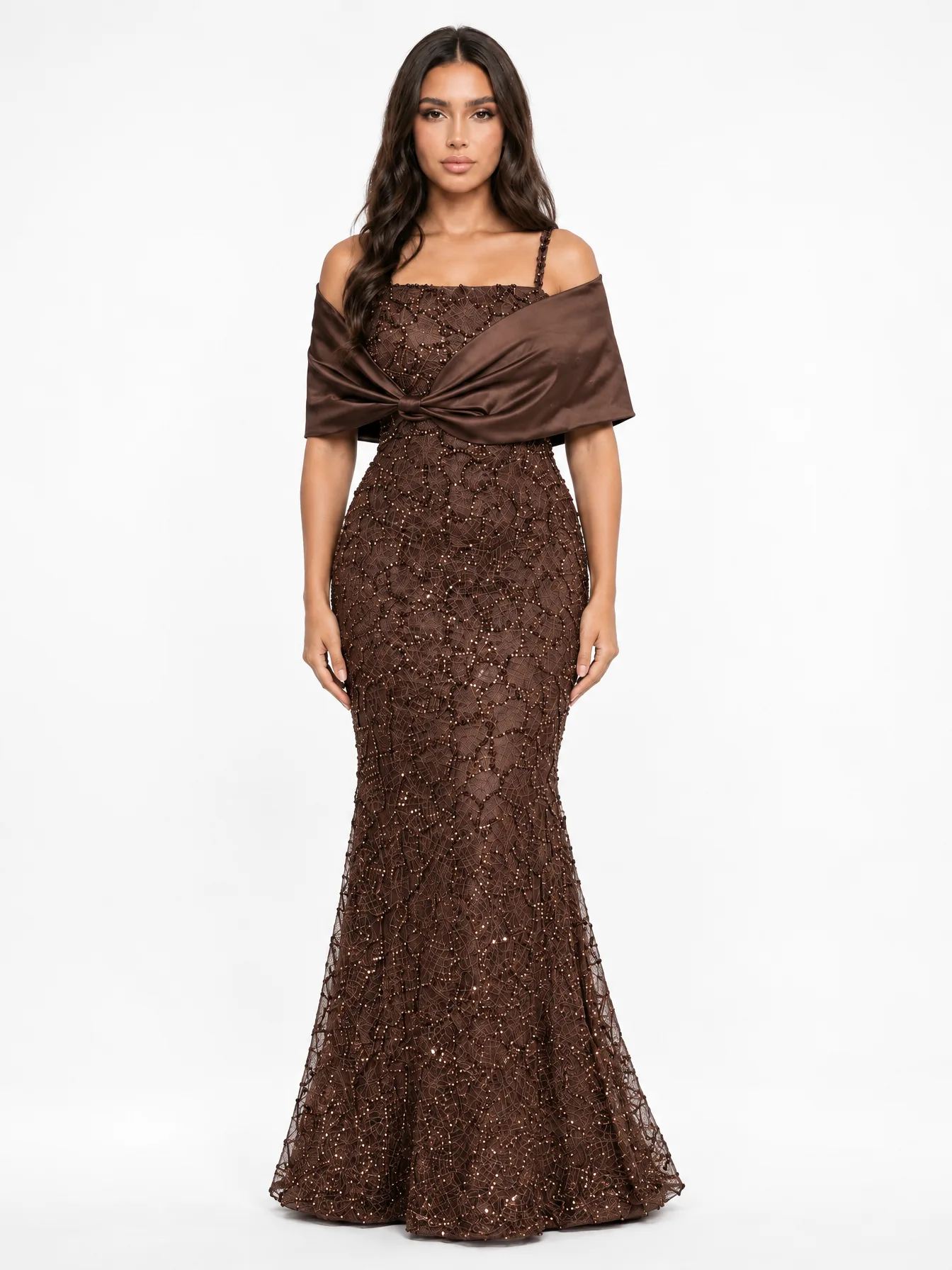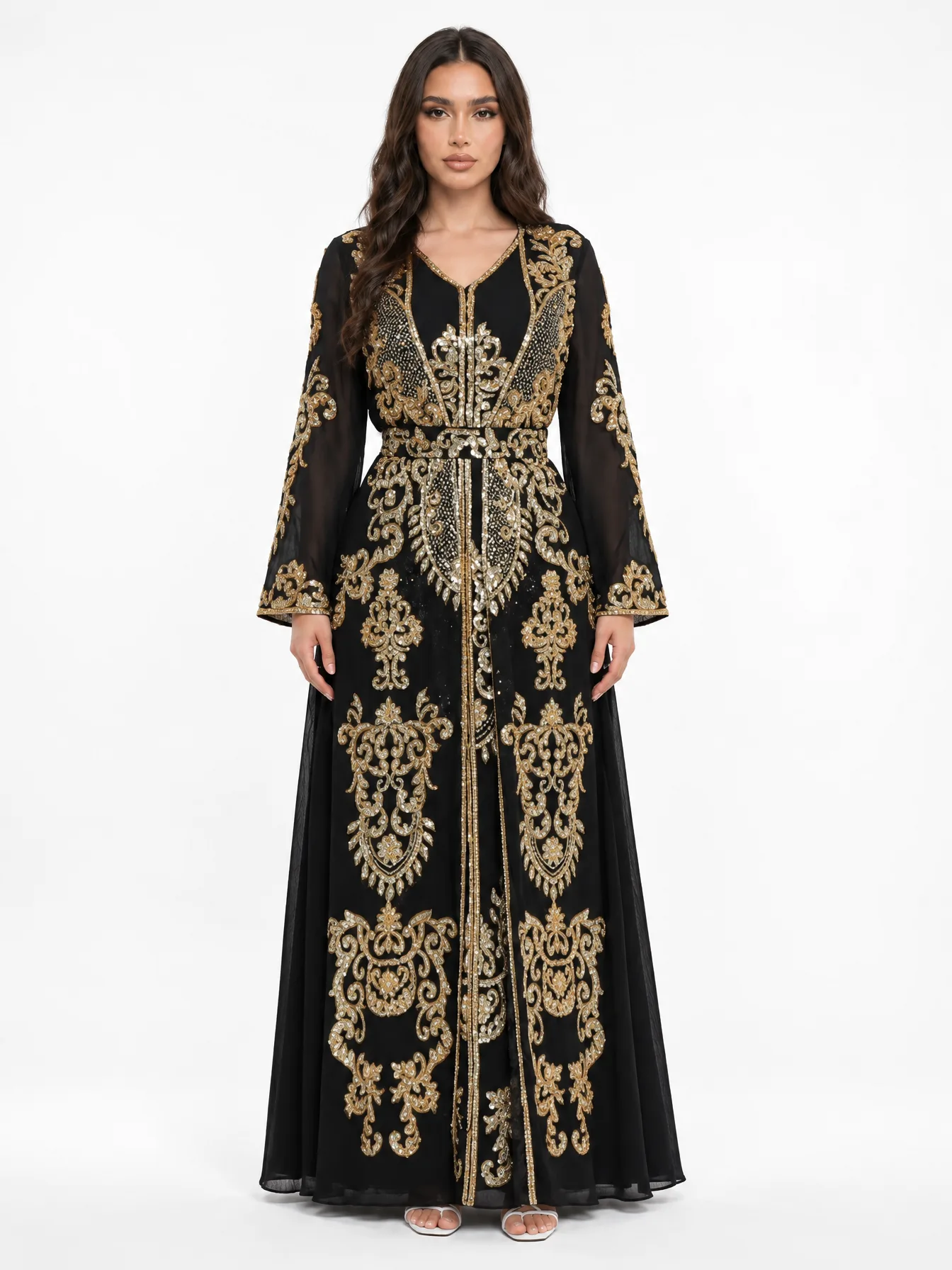

Evening dresses imported into the GCC from outside the Gulf, for example from Turkey, usually pay the common customs tariff of 5% of their CIF value: the cost of the goods plus insurance and freight to the port of entry. The duty is collected once, at the first GCC port where the goods enter, and import VAT is charged on top: 5% in the UAE and 15% in Saudi Arabia. The exact rate for a garment depends on its tariff code, and some codes and countries differ, so this guide explains how the system works rather than quoting a rate for your shipment. Customs rules change, so confirm the figures with your customs broker or the customs authority before you price your stock.
What is the customs duty on clothing imported into the GCC?
The GCC states form a customs union with a common external tariff. The UAE's Federal Authority for Identity, Citizenship, Customs and Port Security describes the union as applying a flat 5% to foreign goods from outside it, with an approved list of exempt goods and higher rates for tobacco.
For the UAE specifically, the government portal u.ae gives Dubai's duty as 5% of the CIF value, with exceptions such as alcohol and cigarettes, and notes that tariffs in the country range from 0 to 5%.
The rate that applies to your dresses depends on how they are classified. Dubai Customs explains that goods are classified under the Unified Customs Tariff Schedule of the GCC Customs Union, so each style is declared under a tariff code that reflects what it is made of and how it is made. Ask your broker to confirm the code and rate for each style, and keep the same code from one shipment to the next.
Dubai Customs' customer guide notes that the UAE has signed free trade agreements with a number of countries, and that goods originating in a partner country get preferential treatment only when proof of origin is submitted. Whether a lower rate applies to your dresses depends on the agreement, the product and a valid certificate of origin, so ask your broker to confirm it rather than assuming it. If you are buying from Turkish makers, our guide to sourcing evening wear wholesale from Turkey covers the commercial side.
How is the customs value of a dress shipment worked out?
Duty is a percentage of the customs value, not of your selling price. In Dubai, the customs value is based on CIF according to the GCC Common Customs Law, as the Dubai Customs service guide explains, and it includes the cost of transport and insurance up to the place of import.
- C, cost: the price on the supplier's commercial invoice.
- I, insurance: what you pay to insure the goods in transit.
- F, freight: the cost of carrying them to the port or airport of entry.
The same guide explains that customs can question a declared value and ask for more information, and that prices between related parties, such as family members or companies under common control, get extra scrutiny. Declare the real price you paid, keep the supplier's invoice and proof of payment, and make sure the invoice describes each style, quantity and unit price clearly.
Do you pay duty again when goods move between GCC countries?
Usually not. Under the customs union, inspection, clearance and duty collection happen at the first point of entry into the GCC, and goods then move between member states. The ICP notes that goods are not reassessed at their destination if payment at the first point of entry is proven, which is why your paperwork matters.
Dubai Customs' customer guide describes an Automated Transfer of Customs Duty process, known as Makasa, for duty-paid goods moving on to another GCC state, so that duty is not paid twice. There are exceptions: the ICP also explains that where a member state applies protective measures to a product, the destination country collects the difference.
In practice, if you import into Dubai and later send pieces to a client in Kuwait or Bahrain, keep the original customs declaration and duty receipt with the stock, and tell your courier or broker that duty was paid on entry.

Is there a duty-free threshold for small shipments?
There can be, but it depends on the emirate, the type of shipment and the date, and it has changed several times. Dubai Customs amended its rules for cross-border e-commerce so that, from 3 August 2026, eligible goods with a value not exceeding AED 1,000 are exempt from customs duty, as Khaleej Times reported. Tobacco, electronic smoking devices, nicotine liquids, alcohol and food preparations containing alcohol are excluded, and companies were told to bring their operations into line to benefit.
The same change exempts goods returned by consumers through companies, where duty was already paid, if they come back within 60 days of leaving the country.
Three cautions for a boutique:
- This is a Dubai rule for cross-border e-commerce shipments. Other emirates and other GCC states set their own positions.
- A boutique importing stock for resale is making a commercial import. Plan on paying duty unless your broker confirms in writing that an exemption applies.
- A duty exemption is not a VAT exemption. Import VAT is a separate tax.
How does import VAT work on garments into the UAE?
UAE import VAT is 5%, and the Federal Tax Authority's guide explains that it is calculated on the value of the goods including any customs duty. How you pay depends on whether you are registered.
- Registered for VAT: you account for import VAT on your own VAT return through the reverse charge, so the goods can clear customs before the VAT reaches the FTA. You must show you were registered at the time of import and give the FTA your customs registration number.
- Not registered: VAT is paid at import, before the goods are released to you. If a VAT-registered courier imports for you, it pays the VAT on your behalf and should give you a statement of the import and the VAT paid.
How does Saudi Arabia differ?
Saudi Arabia is part of the same customs union but applies its own integrated tariff and its own VAT rate.
- Duty: the US government's country commercial guide describes Saudi Arabia as applying the GCC common external tariff of at least 5% to most goods from outside the GCC, calculated on the CIF value. Some codes carry higher rates, so look up the full tariff code in ZATCA's integrated tariff or ask a Saudi broker.
- VAT: ZATCA's guideline on imports states that VAT at 15% is imposed on goods imported into the Kingdom, on a value that includes customs duties, even where the goods are exempt from duty.
- Paperwork and fees: Saudi customs service fees and any rules for low-value shipments are set by ZATCA, so check them separately rather than assuming Dubai's rules apply.
Kuwait, Qatar, Bahrain and Oman also run their own customs administrations, and their VAT rules differ, so check the destination country's rules before you promise a client a delivered price.
What documents does a dress shipment need, and what does it cost to land?
To clear goods in Dubai, a business first registers with Dubai Customs using its trade licence and receives a business code. For an import from outside the UAE, the Dubai Customs customer guide lists these documents, which vary by cargo channel:
- the air waybill (by air) or bill of lading (by sea);
- the commercial invoice;
- the certificate of origin;
- the packing list;
- a delivery order for sea cargo, and any permits that apply.
Here is an illustration of the arithmetic only, using the 5% duty and 5% UAE import VAT described above. A shipment invoiced at AED 10,000 with AED 800 of freight and insurance has a CIF value of AED 10,800. Duty at 5% is AED 540. Import VAT at 5% applies to AED 11,340, the value including duty, which is AED 567. Your broker's fees and any courier charges come on top. Use your own quotes and your broker's rate for the real figures.
If you buy from a GCC-based distributor instead, check who pays. Lianora, for example, bears customs duties and taxes on its own deliveries across the UAE and the GCC, so the boutique does not pay duty or import tax on arrival. Read the delivery and returns terms, and ask about any other charges before you order.
Questions
What is the import duty on clothes into the UAE?
Most clothing from outside the GCC pays the common tariff of 5% of its CIF value, according to u.ae and Dubai Customs, plus 5% import VAT. The exact rate depends on the garment's tariff code, so confirm it with your customs broker.
Do I pay customs again if I send dresses from Dubai to Saudi Arabia?
Duty on goods from outside the GCC is collected at the first point of entry, and goods are not normally reassessed if you can prove it was paid. Keep the original declaration and duty receipt. Saudi import VAT at 15% and any protective duty differences are separate questions for your broker.
Are online orders under AED 1,000 duty free in Dubai?
From 3 August 2026, Dubai Customs exempts eligible cross-border e-commerce goods valued at up to AED 1,000 from customs duty, with exclusions such as tobacco and alcohol. VAT still applies, and stock imported for resale should be treated as a commercial import unless your broker confirms otherwise.
Is customs duty charged on the price I paid or the price I sell at?
On the customs value, which in Dubai is based on CIF: the price paid for the goods plus insurance and freight to the place of import. Your retail price does not enter the calculation, but customs can question a declared value that looks too low.
Sources
- ICP: Customs Union for GCC States
- u.ae: Customs duty and tariff
- Dubai Customs: Customer Guide
- Dubai Customs: Service Guide 2025
- Khaleej Times: Dubai Customs exempt goods worth up to Dh1,000 from import duty (6 August 2026)
- Federal Tax Authority: Taxable Person Guide for VAT
- US International Trade Administration: Saudi Arabia import tariffs
- ZATCA: Guideline on Imports and Exports under VAT Provisions