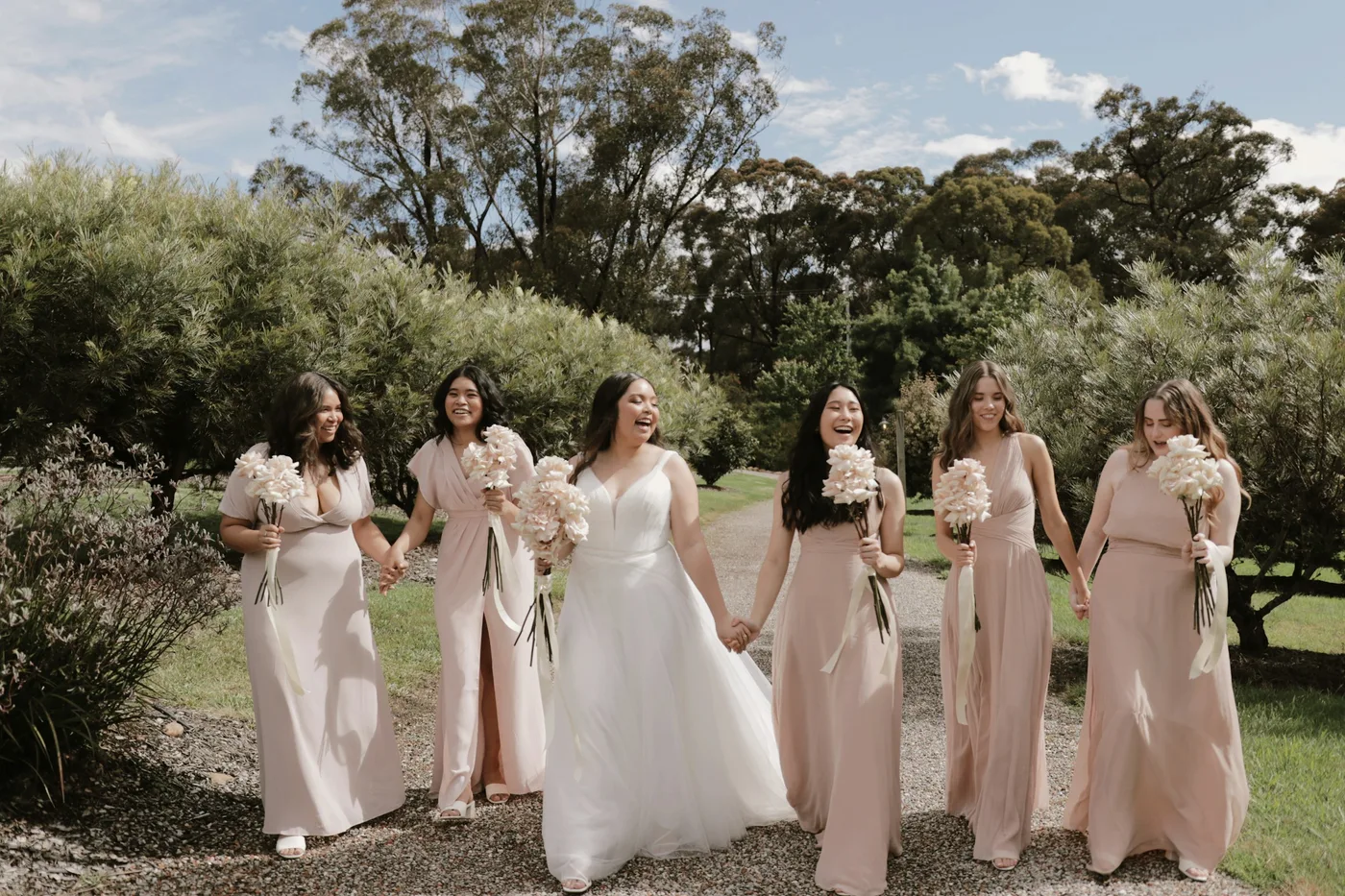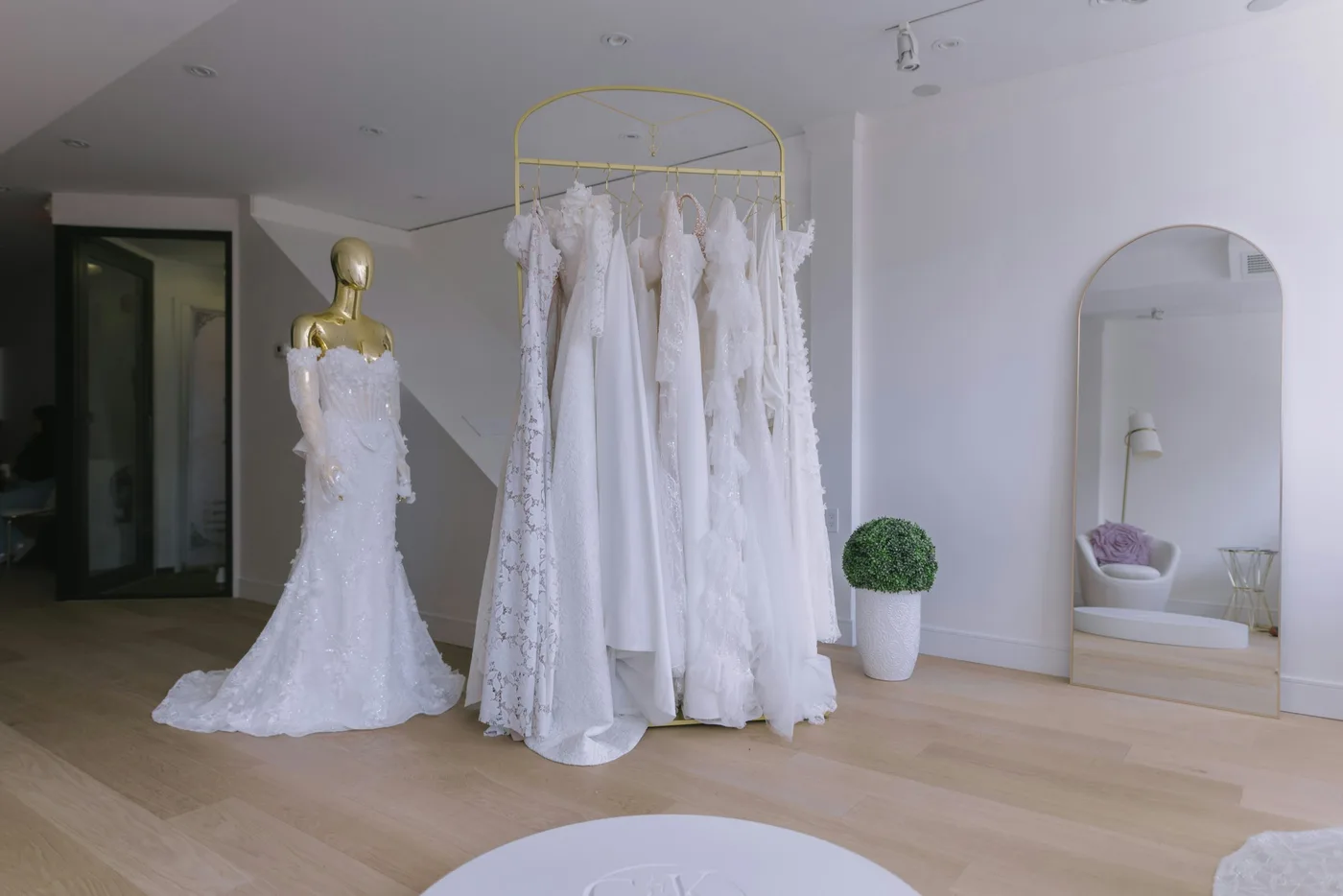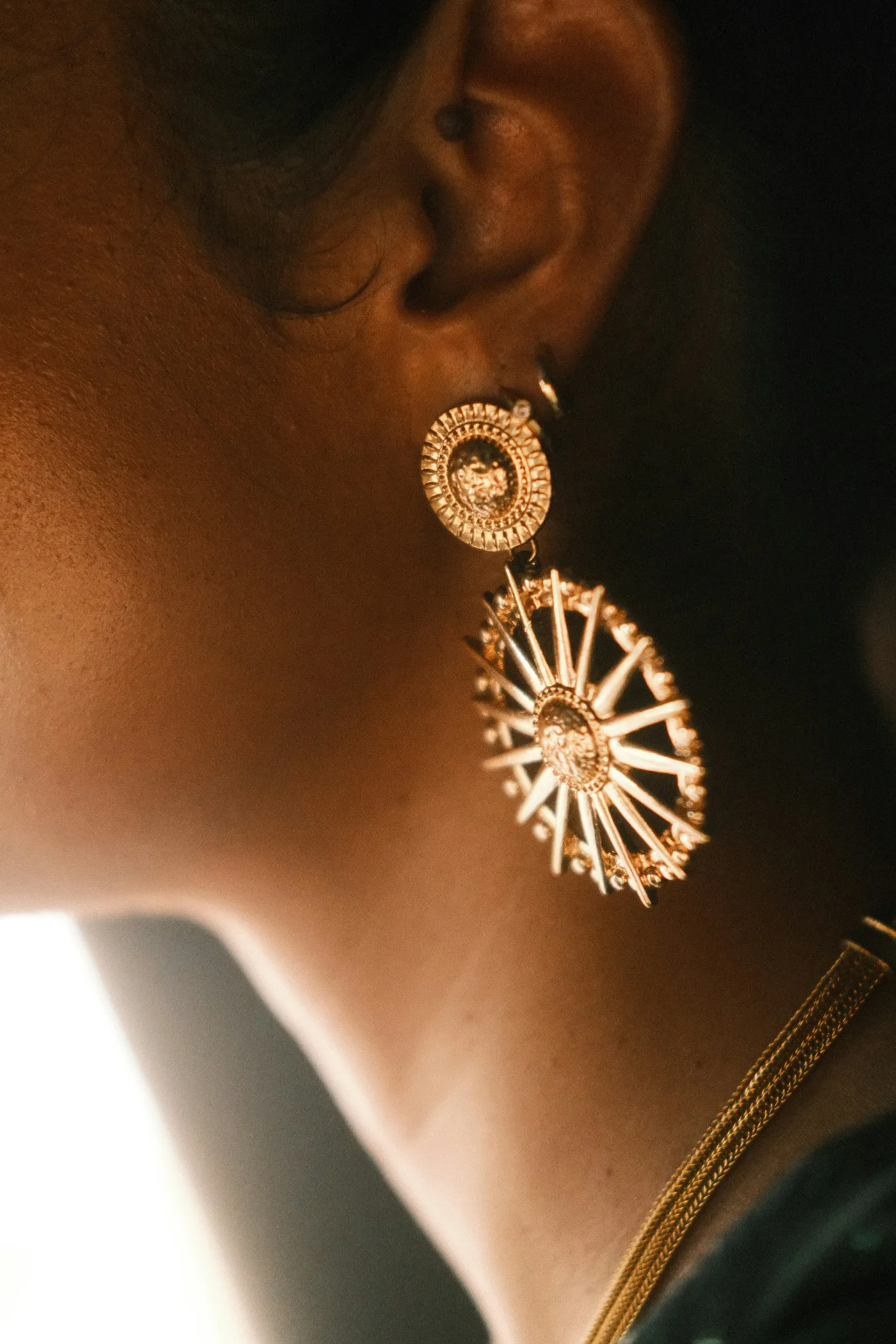
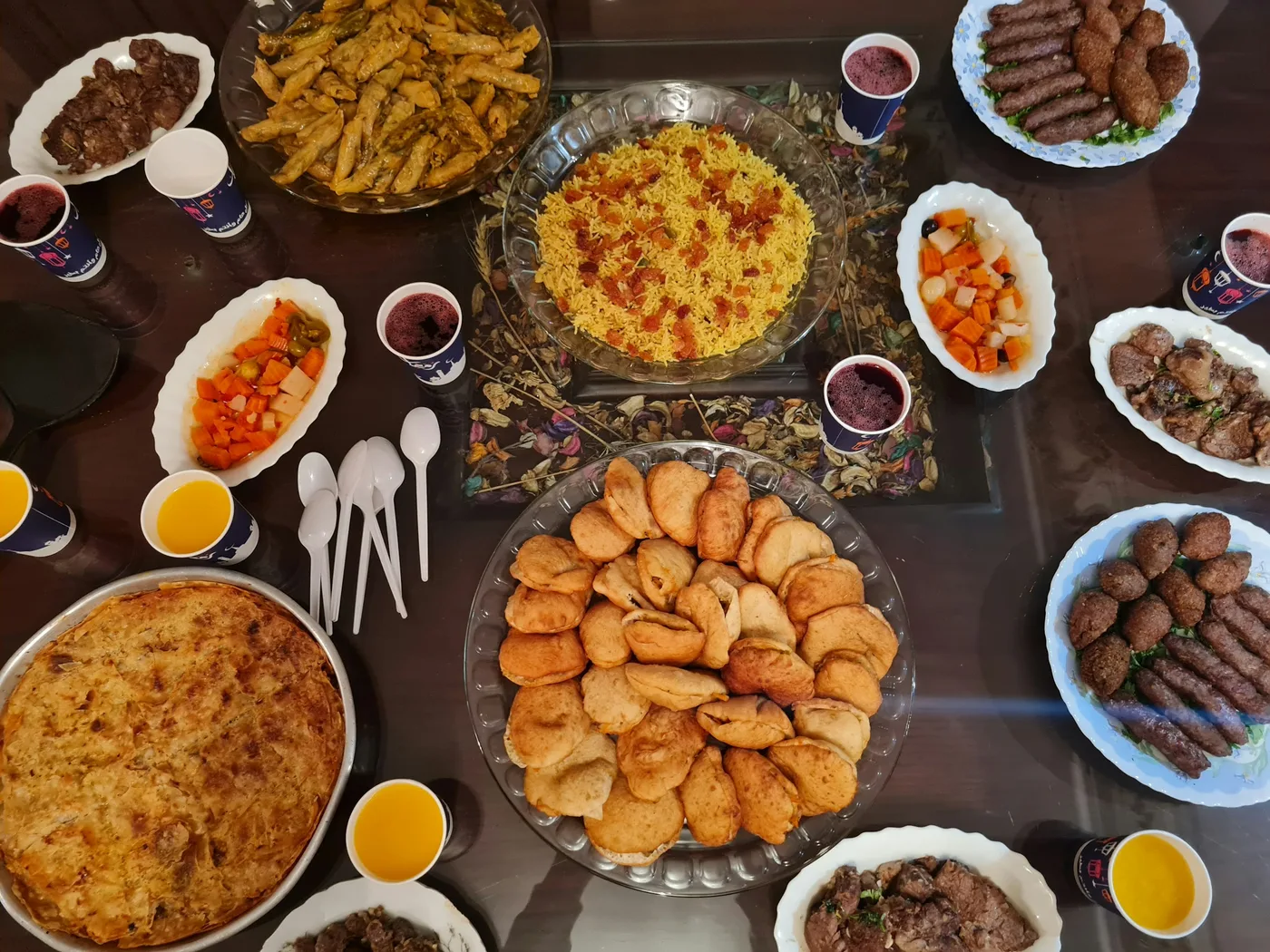
For iftar and suhoor, choose loose, long pieces in an opaque fabric that cover your shoulders, upper arms and knees, then dress up or down with the setting: a soft jalabiya or kaftan for a family iftar, an embellished kaftan or a modest evening dress for a hotel Ramadan tent, and quieter, polished pieces for a corporate iftar. The UAE has no formal Ramadan dress code, but modest dress is widely expected, and at someone's table it is simply good manners. Ramadan 2027 is expected to begin on or around Monday 8 February, subject to the sighting of the moon. This guide goes through each kind of gathering, explains the difference between a kaftan, a jalabiya and an abaya, and ends with the dates to order by.
Is there a dress code for Ramadan in the UAE?
Not a formal one. A Khaleej Times guide to Ramadan etiquette notes that no dress code is imposed during the month, while modest clothing that covers the shoulders and knees is generally encouraged, for men and women alike. Gulf News makes the same point about public spaces, cultural sites and historical areas.
An iftar invitation raises the bar a little, because you are a guest at a table where people have fasted all day. A simple rule works for every setting below:
- Shoulders and upper arms: covered, with sleeves to the elbow or longer.
- Length: below the knee at the very least; ankle length is the safe choice.
- Fit: loose enough that the shape of the body isn't the first thing anyone sees.
- Fabric: opaque, or sheer only over a lining.
- Neckline: high or modest; avoid anything low or off the shoulder unless you add a layer.
What should you wear to iftar at a family home?
A family iftar is the most relaxed setting and the most traditional one. Elders are usually at the table, and in many Gulf homes the meal is eaten in a majlis, sometimes on floor cushions. Dress for comfort and respect rather than for a party.
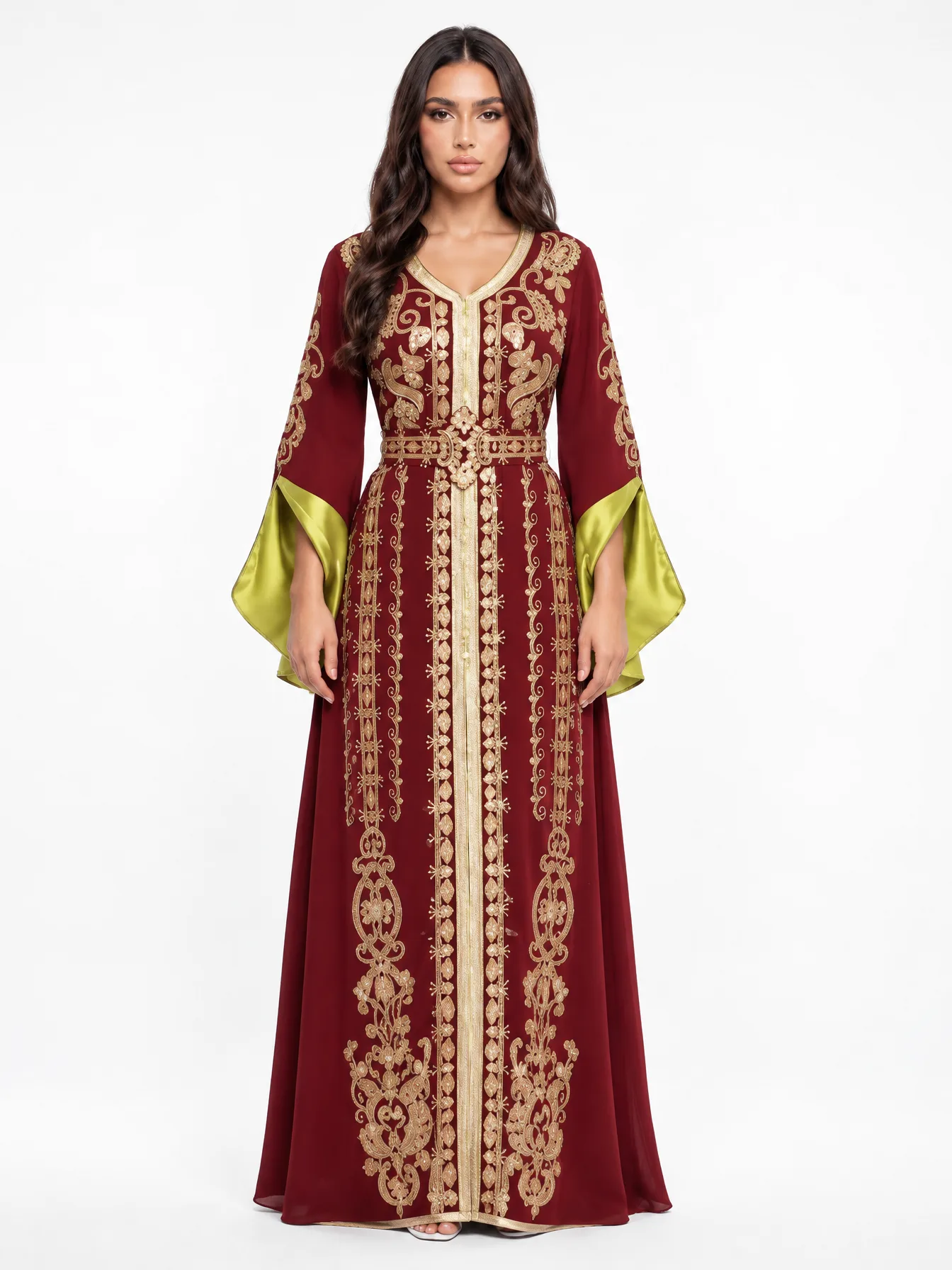
- Best choices: a jalabiya, a simple embroidered kaftan, or a loose maxi dress with long sleeves.
- Sitting on the floor: choose a full skirt or a kaftan cut that lets you sit cross-legged or with your legs tucked to the side without pulling.
- Sleeves: very wide sleeves look lovely but trail near the food. A sleeve that narrows at the wrist, or one you can push back, is easier at a shared table.
- Colour: jewel tones, soft pastels and black with gold embroidery all feel festive without being loud.
- Jewellery and scent: keep both light. You will be close to other people for hours.
Arrive before the sunset call to prayer so the family is not waiting for you. A Khaleej Times etiquette guide lists dates among thoughtful, optional gifts for Muslim friends and colleagues during the month.
What do you wear to a hotel Ramadan tent?
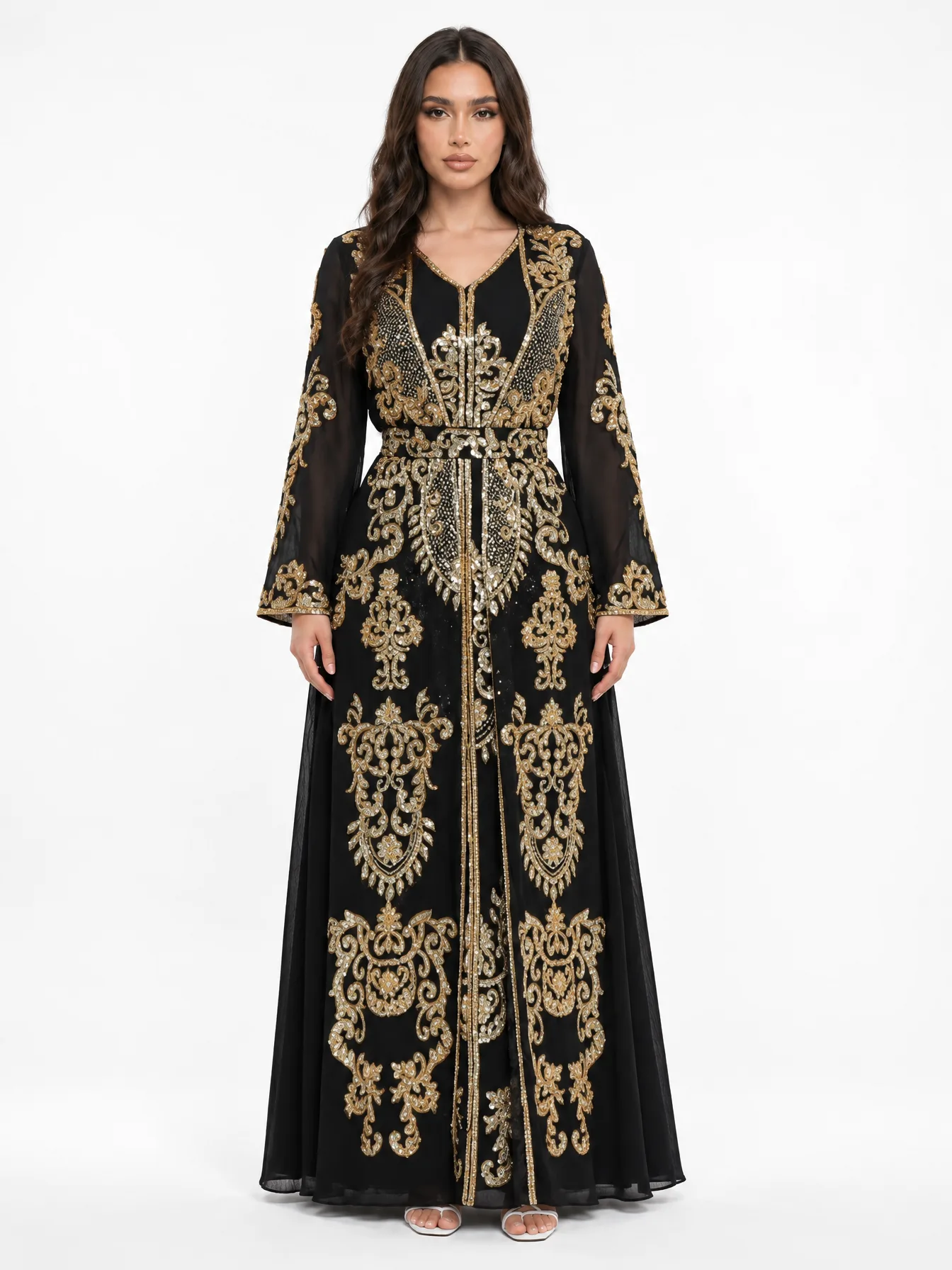
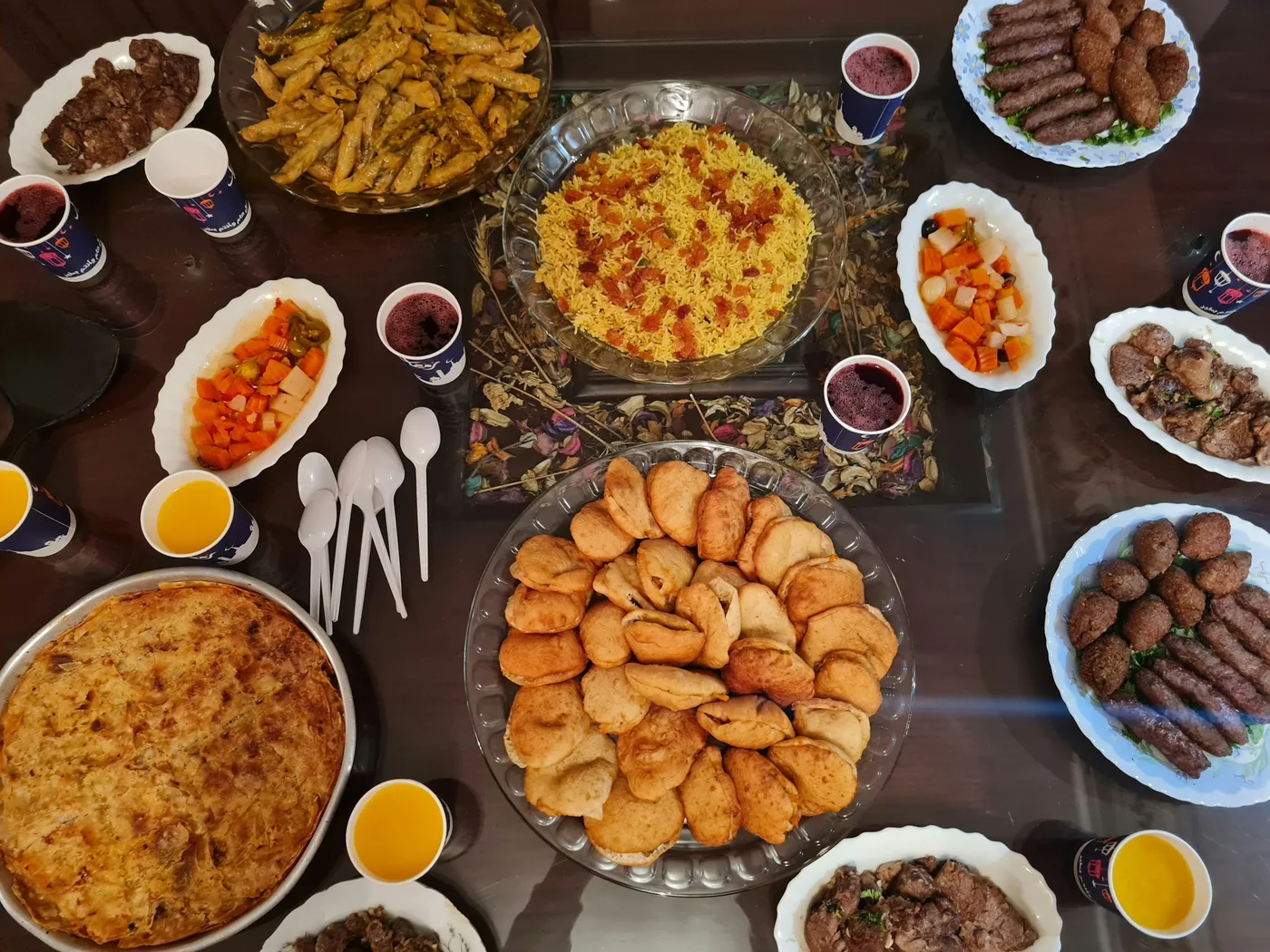
Hotel Ramadan tents and iftar buffets are the dressiest of the month's gatherings. People come in groups, stay late, and take photographs, so this is where a beaded kaftan or a modest evening gown earns its place.
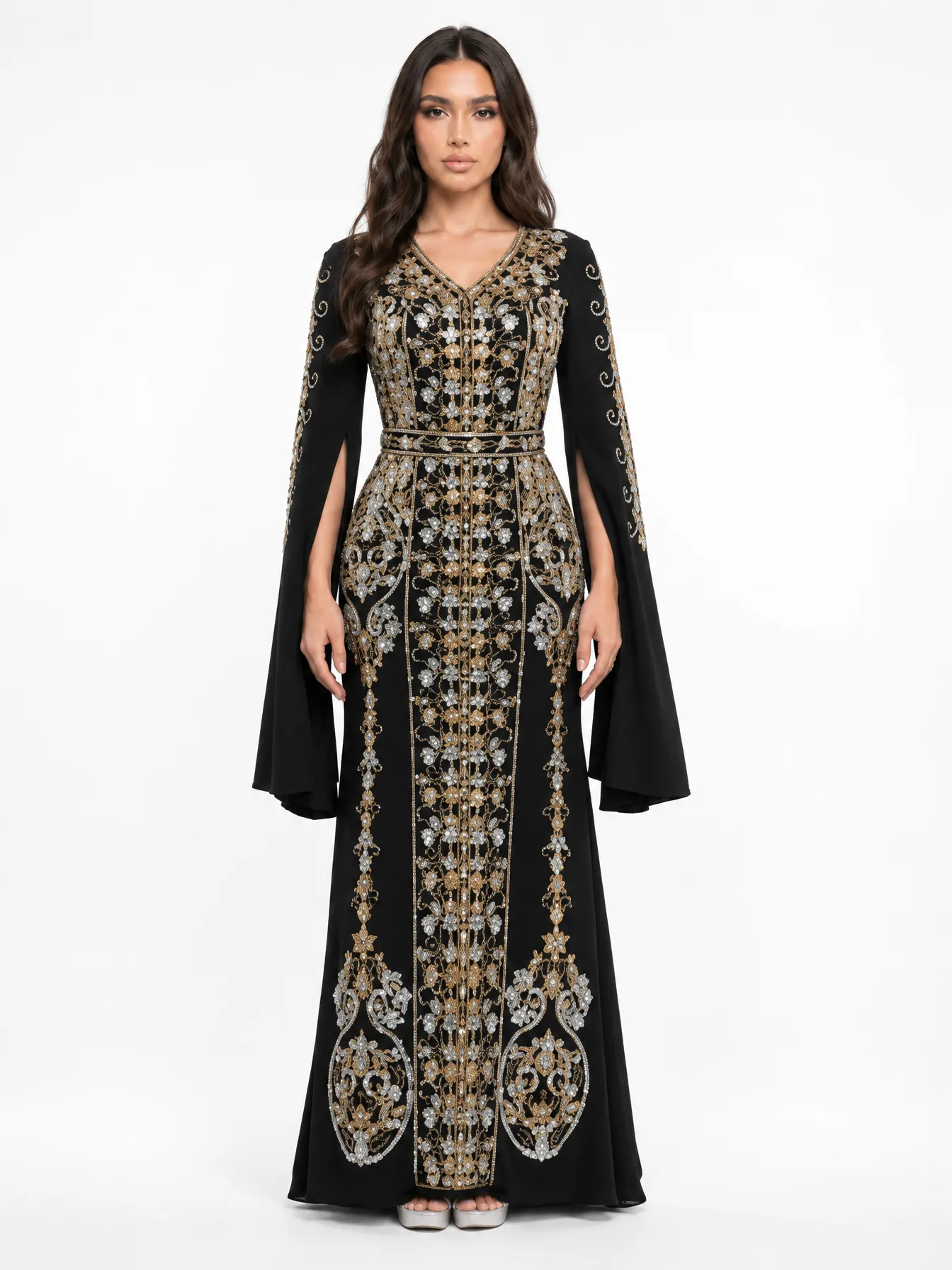
- Kaftans with hand beading or metallic embroidery are the classic choice. A two-piece style, with a sheer embroidered layer over an inner dress, gives you coverage and shine at once; the two-piece hand-beaded kaftan is one example of the look.
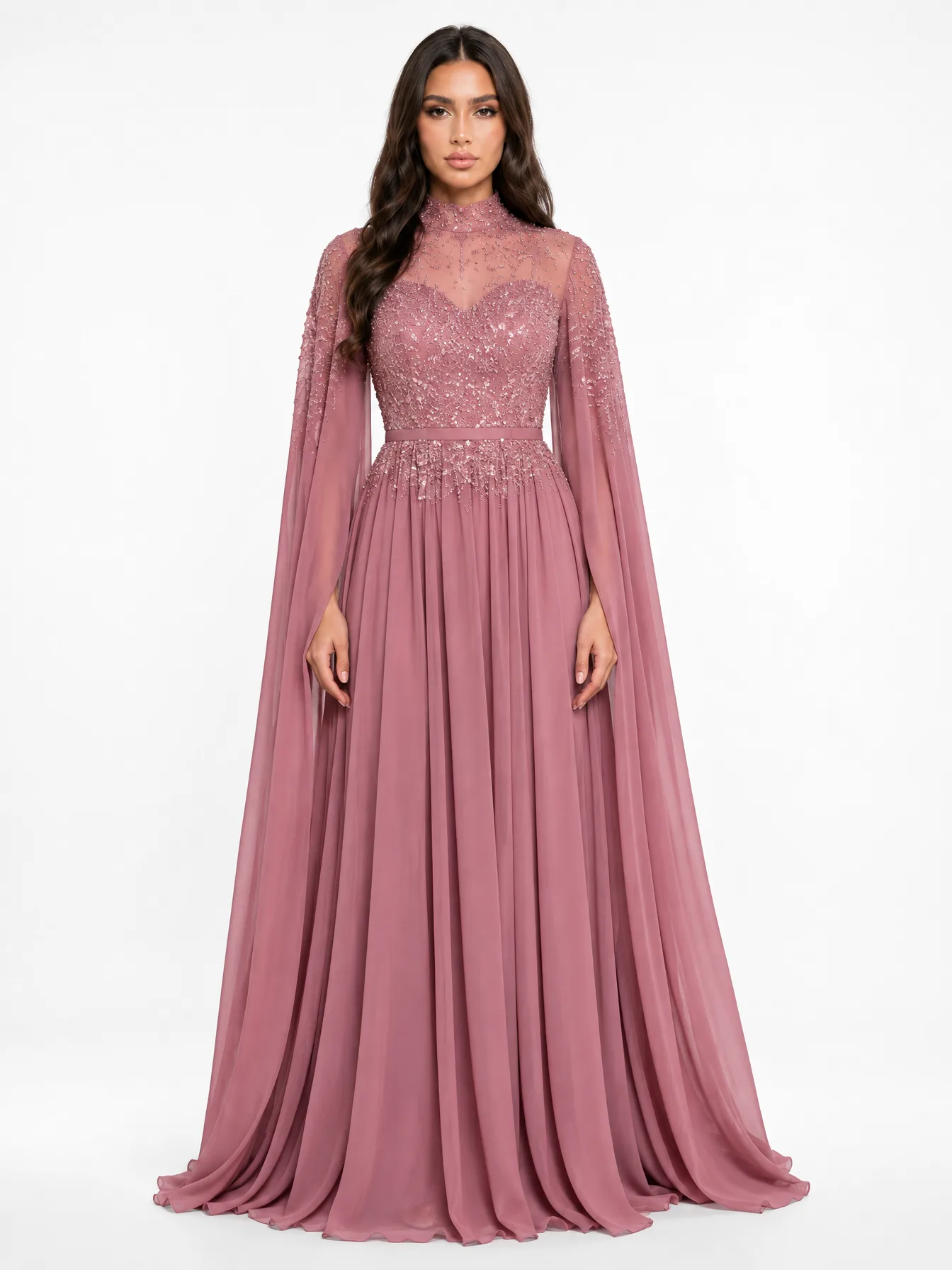
- A modest gown also works: high neck, long sleeves, a full or flowing skirt. Avoid slits above the knee.
- Shoes: block heels or embellished flats. Tents often have carpets or uneven floors.
- A layer: tents are usually air-conditioned, and outdoor majlis seating can feel cool. In a February forecast, the National Centre of Meteorology put the UAE's average for the month at around 20°C, with relatively cold nights, so a light shawl or a kaftan with long sleeves is practical, not just pretty.
If you want more ideas for covered evening styles, see our guide to modest evening dresses.
How should you dress for a corporate iftar?
A corporate iftar sits between the office and an evening out. You will be standing, greeting colleagues and clients, and possibly photographed for the company's channels, so aim for modest and polished rather than glamorous.
- Shape: a long-sleeved maxi or midi dress, a kaftan with clean lines, or wide-leg trousers under a long tunic.
- Fabric: crepe, satin-backed crepe or a heavier chiffon over a lining. These hold their shape through a long evening.
- Embellishment: one focal point, such as an embroidered neckline or cuffs, rather than sequins head to toe.
- Colour: navy, burgundy, emerald, chocolate, soft grey and black all read as smart.
- Shoes: something you can stand in for two or three hours.
If the invitation names a dress code, follow it. "Smart" or "business" means the office version of the above; "formal" lets you move towards the hotel-tent look.
What should you wear to a suhoor gathering?
Suhoor is the meal before dawn, and in the Gulf it has become a social evening in its own right, with friends meeting late at home, in a hotel majlis or at a café. Khaleej Times notes that some restaurants stay open into the early hours to serve it.
Suhoor is a little more relaxed than iftar, but it is still an evening out, so the same modesty rules apply.
- At home or a café: a jersey or crepe kaftan, a long shirt dress, or a co-ord of wide trousers and a tunic.
- At a hotel suhoor: a lightly embellished kaftan, or a simple evening dress with long sleeves.
- Fabric: something soft that won't crease badly over several hours of sitting.
- Layers: late-night air in February can feel cool outdoors, so bring a wrap or choose long sleeves.
- Shoes: flats or low heels; suhoor gatherings tend to run long.
Kaftan, jalabiya or abaya: what is the difference?
The three words are often used loosely, but they describe different garments.
- Jalabiya: a loose, full-length dress, often embroidered at the neck and front, worn at home and at family gatherings in the Gulf.
- Kaftan: a long, loose robe-like garment, usually with wide sleeves. It can be plain for daytime or heavily beaded for the evening, and it is the piece most people mean when they talk about Ramadan and Eid dressing.
- Abaya: an outer cloak worn over clothes, usually open or closed at the front, and often black.
Some women wear an abaya on the way to an iftar and take it off once they are indoors among women, so the jalabiya or kaftan underneath still matters. You can browse kaftan styles in the Arabic section of the shop.
When does Ramadan 2027 start, and when should you order?
The UAE's Astronomy Centre expects Ramadan 2027 to begin on Monday 8 February, as reported by Khaleej Times. These are astronomical forecasts. The official start is announced by the UAE's moon-sighting committee after it looks for the crescent, so the first day could move by a day, and other GCC countries may announce separately.
Work back from the first iftar, not from the first week of the month. Pieces from Lianora take 10–15 days to arrive across the GCC from the moment the order is confirmed, so:
- By about 10 January 2027: order if you think you may need a different size. An exchange is possible within 7 days of delivery for unworn pieces in their original packaging, and the replacement needs shipping time too.
- By about 20 January 2027: the latest sensible date for an outfit you want in hand before 8 February.
- Planning for Eid as well: Eid al-Fitr is expected on 9 or 10 March, again subject to the moon sighting, so order an Eid outfit at the same time if you can.
The full terms are on the delivery and returns page. Whoever you buy from, check the delivery window and the exchange policy before the month begins, because couriers and tailors both get busier as Ramadan approaches.
Questions
Do non-Muslim guests need to cover their hair at an iftar?
Not usually. At a home, hotel or office iftar, non-Muslim guests are generally not expected to cover their hair; covered shoulders, arms and knees matter more. If the evening includes a visit to a mosque, check that mosque's visitor dress code in advance and carry a scarf just in case.
Is it fine to wear black to iftar?
Yes. Black is a staple of Gulf evening dressing, and a black kaftan with gold or silver embroidery is a classic Ramadan choice. If you want something lighter, add colour through embroidery, a shawl or jewellery.
Can you wear trousers to an iftar?
Yes, as long as the look stays loose and covered. Wide-leg trousers under a long tunic or a kaftan top work well at a family or corporate iftar. For a hotel tent, a dressier fabric such as satin or crepe keeps it feeling like evening wear.
What should you bring when invited to iftar?
A small gift such as a box of good dates or sweets is a thoughtful touch, though it is optional. Arrive before sunset, greet your hosts with Ramadan Kareem, and follow their lead on seating.
Sources
- Khaleej Times: When will UAE celebrate Ramadan, Eid Al Fitr, Eid Al Adha in 2027? Likely dates revealed
- Khaleej Times: Ramadan 2026, rules and etiquette to follow in UAE
- Gulf News: Complete guide to Ramadan dos and don'ts in Dubai
- Gulf News: UAE weather in February (National Centre of Meteorology figures)