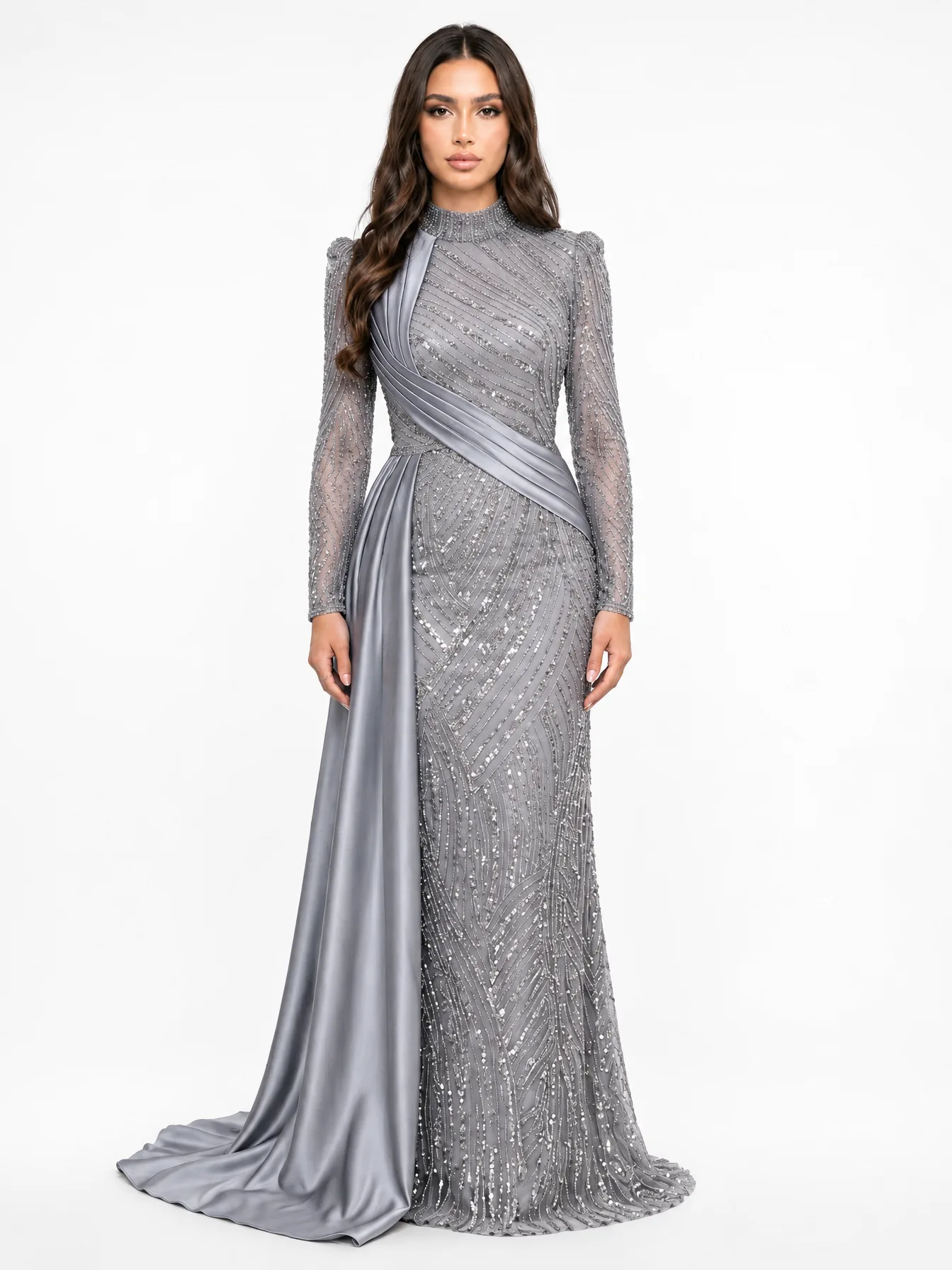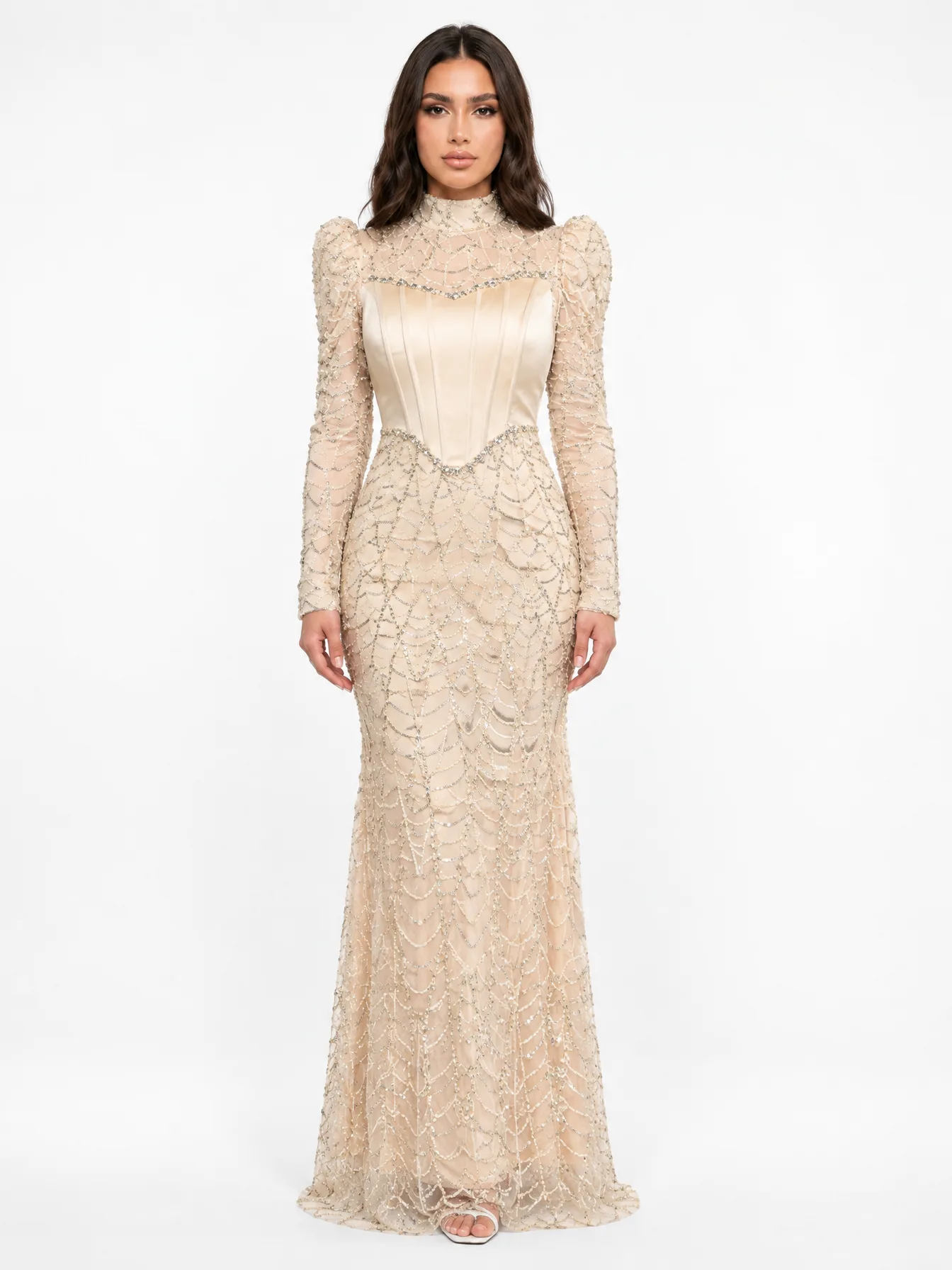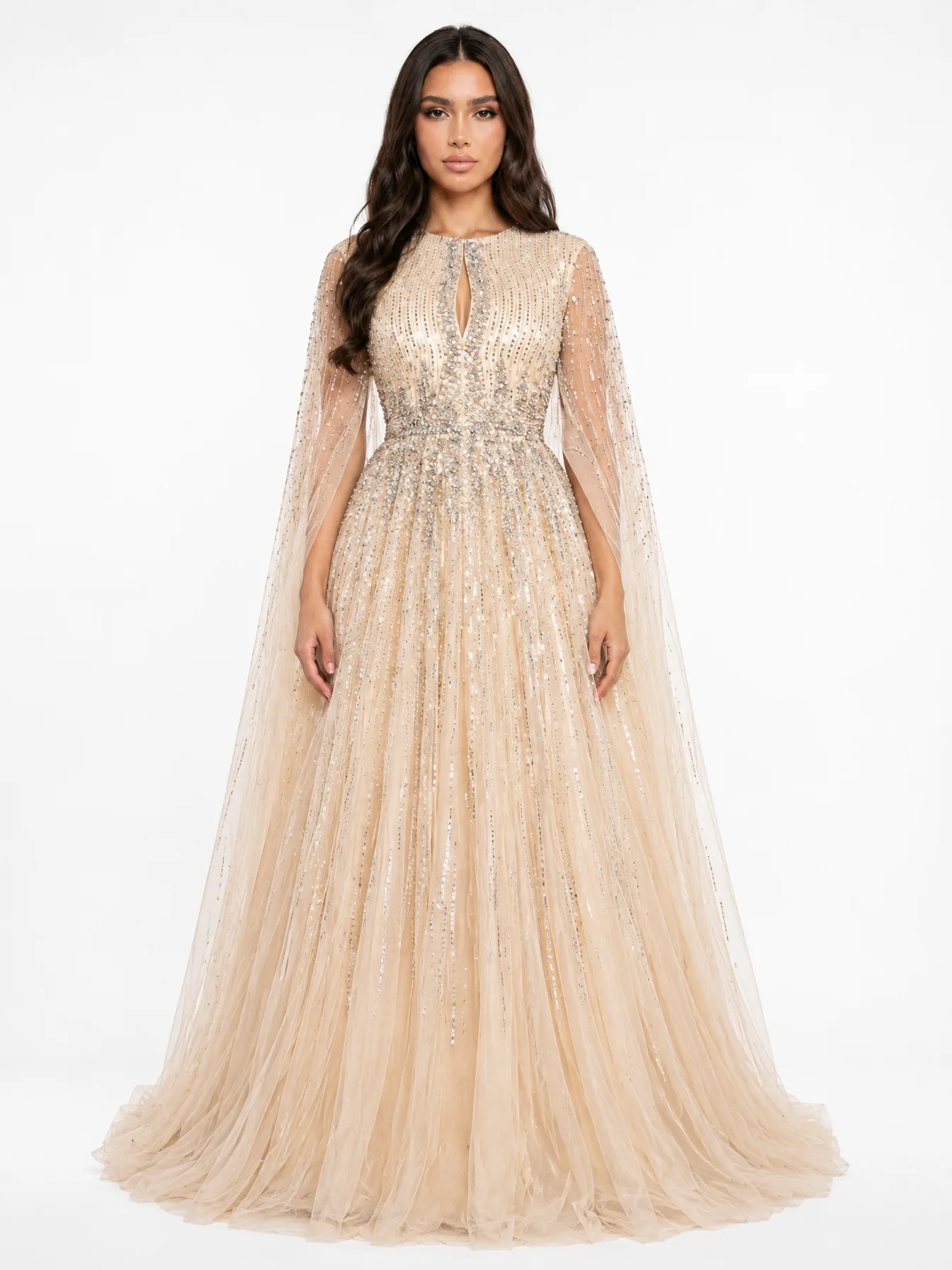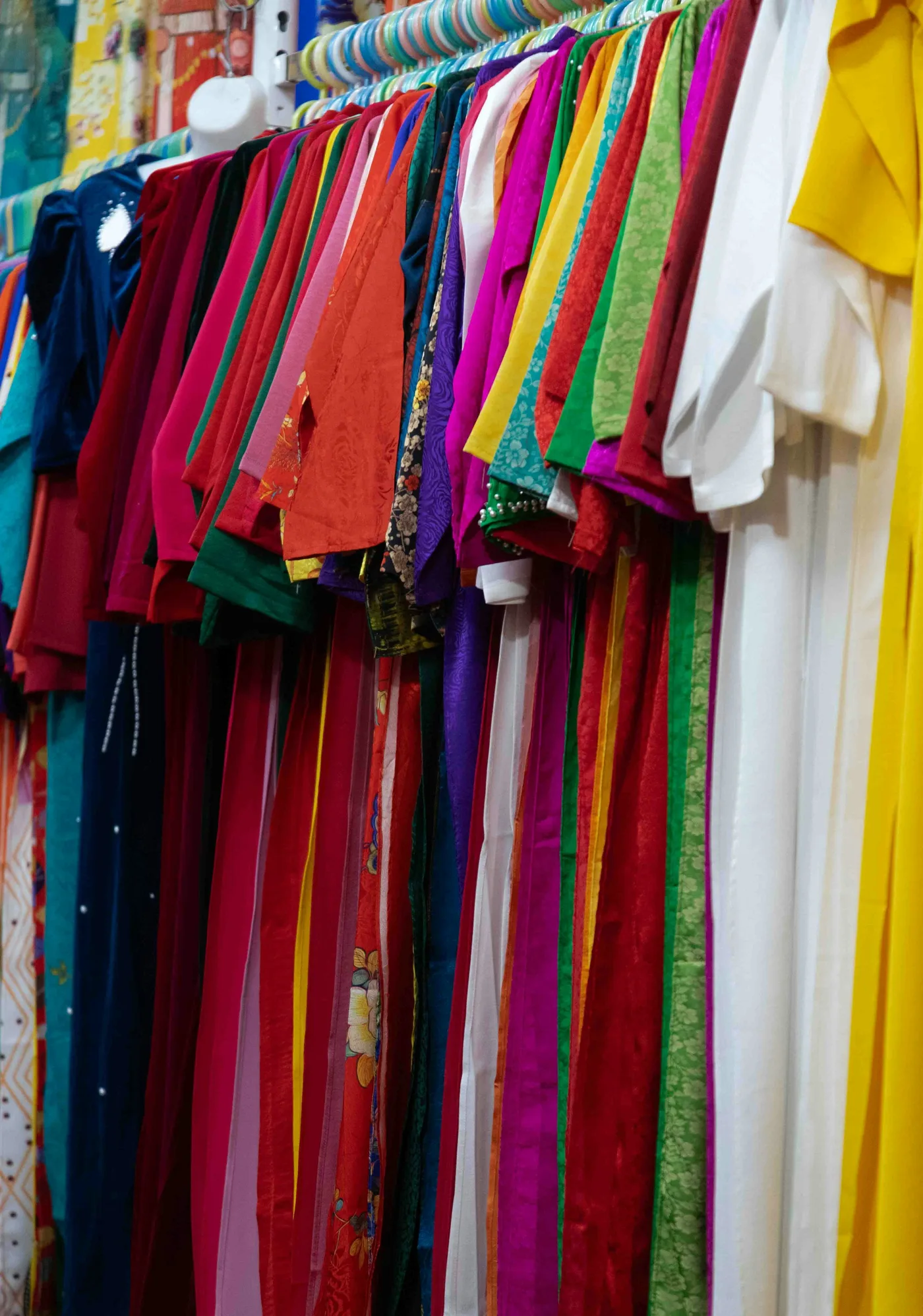

A GCC boutique can buy Turkish evening wear in four ways: at a trade fair such as IF Wedding Fashion İzmir, in Istanbul's wholesale districts (Laleli, Osmanbey and Merter), directly from an atelier, or through a distributor based in the Gulf. The first three usually give you the lowest unit price but leave you to handle minimums, payment risk, shipping and customs yourself. A distributor costs more per piece and takes most of that work off you. This guide walks through each route, then covers what every buyer has to settle whichever one they choose: samples, minimum orders, how to pay safely, what shipping and duty add, and how to check the stock when it arrives.
What are the main ways to buy Turkish evening wear wholesale?
Each route trades price against effort and risk. In short:
- Trade fair: many manufacturers in one place over a few days, and you see the season's lines in person. You still order, pay and ship yourself.
- Istanbul wholesale districts: showrooms and wholesalers you can walk into year-round. Good for seeing and touching stock, but minimums and quality vary from shop to shop.
- Direct from an atelier: the best price and sometimes exclusivity on a design, but usually higher minimums, longer production times and more negotiation, often in Turkish.
- A GCC-based distributor: a higher unit price, but small quantities, delivery and customs handled, and someone in your own time zone to deal with when a piece arrives damaged.
Many boutiques mix them: a distributor for depth in proven designs, and a fair or a trip to Istanbul once a year to find new suppliers.
Is IF Wedding Fashion İzmir worth visiting?
IF Wedding Fashion İzmir is a long-running Turkish trade fair dedicated to bridal wear, evening gowns and suits. It is organised by İZFAŞ under İzmir Metropolitan Municipality and held at Fuar İzmir in Gaziemir. According to the organiser, the 2026 edition opened on 20 January and ran for three days, from Tuesday to Thursday. It was open to trade visitors only and showed more than 200 brands. The organiser says the previous edition drew 14,606 industry visitors, 3,110 of them from abroad, from 79 countries.
It is worth the trip if you want to meet many manufacturers quickly and compare their workmanship side by side. Go with a budget, a list of the silhouettes your customers ask for, and business cards. Most deals are not closed on the stand. You collect line sheets and prices, then order samples once you are home.
Dates and format can change from year to year, so check the official site before you book flights.
Which Istanbul wholesale districts sell evening dresses?
Istanbul's clothing wholesale is spread over a few districts, and guides do not always agree on what each one is best for. The broad picture:
- Laleli (Fatih, around Ordu Caddesi): one of the best-known wholesale areas, with a very wide range of clothing, women's wear included. Istanbul.com notes that shops can deliver purchases to your hotel or send them by cargo.
- Osmanbey (Şişli, along Halaskargazi Caddesi): a 2025 wholesale guide lists smart women's wear, evening dresses and formal wear among its specialities, and describes it as an area dense with upmarket boutiques.
- Merter (Güngören, near Zeytinburnu): a large district with workshops and small factories close by. The same 2025 guide counts more than 2,000 shops and mentions cargo and customs services on site.
Opening hours, specialities and even shop counts differ between sources, so treat any guide as a starting point. Plan at least two days, keep notes and photos of each showroom's design codes, and ask every wholesaler the same questions so you can compare them later.

Should you contact Turkish ateliers directly?
Going direct makes sense once you know which designs sell and can commit to depth. You cut out the middle layer, and some ateliers will hold a design back from other buyers in your city if the order is large enough.
The trade-offs are real. Ateliers often set minimums per design or per colour, production can take weeks once the fabric is ordered, and you will need someone who can negotiate and check details in Turkish. Before you commit, ask for:
- A line sheet with design codes, colours and the size range for each design.
- Fabric composition and lining for each design.
- The minimum per design and per colour, and whether sizes can be mixed within it.
- The production lead time from deposit to dispatch.
- What happens if a colour or fabric runs out mid-order.
How do samples and minimum orders work?
Order a sample before any bulk order from a new supplier, and judge it as your customer would: in daylight, inside out, and on a body if you can. Agree in writing whether the sample cost will be credited against your first order.
Minimums take different forms. Some suppliers count pieces per design, some per colour, and some sell a design as a size pack, one piece in each size. A pack is simple for the supplier but can leave you holding sizes your customers rarely buy, so ask whether a pack can be split or reweighted. Tiered pricing, where the unit price falls as quantity rises, is also common, so ask for the full price ladder before you compare suppliers.
How do you protect your payment?
Most problems in cross-border wholesale come down to unclear terms. Before you pay anything:
- Get a pro forma invoice that lists each design code, colour, size, quantity and unit price.
- Agree an Incoterms rule so it is clear who pays for and carries the risk of each leg. Under EXW you collect from the supplier's door and handle everything after it. Under DAP the supplier delivers to your named place but you clear customs and pay import duty. Under DDP the supplier also clears import and pays the duty. The International Chamber of Commerce warns that some countries do not let foreign sellers handle import formalities, so DDP is not always workable.
- With a new supplier, pay a deposit and release the balance only after you have seen photos or a video of your finished order, packed.
- Use a traceable payment method in the supplier's company name, never a personal account you were given by message.
What do shipping and customs add to the cost?
Your real cost per dress is its landed cost: the supplier's price, plus freight and insurance, plus customs duty and import VAT, plus any clearance or courier fees.
The GCC states share a common external tariff. The UAE's official portal, u.ae, says customs tariffs range from 0 to 5%, and gives Dubai's rate as 5% of the CIF value, meaning cost, insurance and freight. Under the GCC customs union, the UAE's customs authority explains that duty on foreign goods is collected at the first point of entry into the union. Import VAT comes on top: 5% in the UAE, according to the Federal Tax Authority, and 15% in Saudi Arabia, according to ZATCA.
The duty rate for a particular garment depends on its tariff code, so confirm it with the customs authority or your clearing agent before you price the stock.
How do you check quality when the stock arrives?
Check every piece within a day or two of delivery, while you can still raise a claim. Compare each one against your approved sample, not against the supplier's photos. A quick checklist:
- Beading and sequins: pull gently at a few points. Loose threads or gaps in the beadwork get worse with every try-on.
- Seams and lining: look inside for puckering, raw edges and lining that pulls the outer fabric.
- Zips, hooks and corset boning: open and close each one.
- Colour: hold the piece beside the sample in daylight. Dye lots can differ.
- Measurements: measure bust, waist, hip and length against the supplier's size chart for at least one piece per size.
Photograph any fault before you do anything else. If you are new to Turkish workmanship, our guide to Turkish evening dresses explains what sets the best pieces apart.

Where does a GCC-based distributor fit?
A distributor makes most sense when you want Turkish workmanship without the trip, the minimums or the customs paperwork, or when you want to test a design before committing to depth.
As one example, Lianora is a Dubai-based supplier and distributor of evening and bridesmaid dresses produced by established Turkish ateliers, with finished garments checked by a veteran Turkish designer. There is no minimum order: one or two pieces are at full price, with 10% off from 3, 25% off from 6 and 35% off from 10. Orders are delivered across the GCC in 10–15 days from confirmation, and Lianora bears the customs duties and taxes on delivery. You can browse the current designs and read the delivery and returns terms before you order.
Buying direct will usually give you a lower unit price on large quantities. A distributor is the lower-risk option for small and mixed orders.
Questions
Do I need to travel to Turkey to buy evening wear wholesale?
No. Many Turkish wholesalers sell from line sheets and send samples abroad, and a GCC-based distributor removes the need entirely. A visit helps when you are choosing new suppliers, because you can judge workmanship and meet the people you will deal with.
What is the minimum order from Turkish evening wear suppliers?
It varies by supplier and is often set per design or per colour rather than per order. Some wholesalers sell a design as a pack with one piece in each size. Always ask how the minimum is counted and whether sizes can be mixed within it.
How much customs duty is charged on dresses imported from Turkey into the UAE?
The UAE's official portal says tariffs range from 0 to 5%, and gives Dubai's rate as 5% of the CIF value under the GCC common tariff. Import VAT of 5% is charged on top. The exact rate for a garment depends on its tariff code, so confirm it with the customs authority or your clearing agent.
When is IF Wedding Fashion İzmir held?
The 2026 edition opened on 20 January 2026 at Fuar İzmir and ran for three days. The organiser, İZFAŞ, publishes each edition's dates on the fair's official website, so check there before planning a trip.
Sources
- İZFAŞ: IF Wedding Fashion İzmir will carry Türkiye's production power to global fashion
- Istanbul.com: Istanbul wholesale markets
- Deal-TR: Where to find the cheapest wholesale clothing in Istanbul (2025 guide)
- ICC Academy: DAP and DDP Incoterms 2020 explained
- u.ae: Customs duty and tariff
- ICP: Customs union for GCC states
- Federal Tax Authority: E-commerce VAT guide
- ZATCA: Guideline on imports and exports under VAT provisions