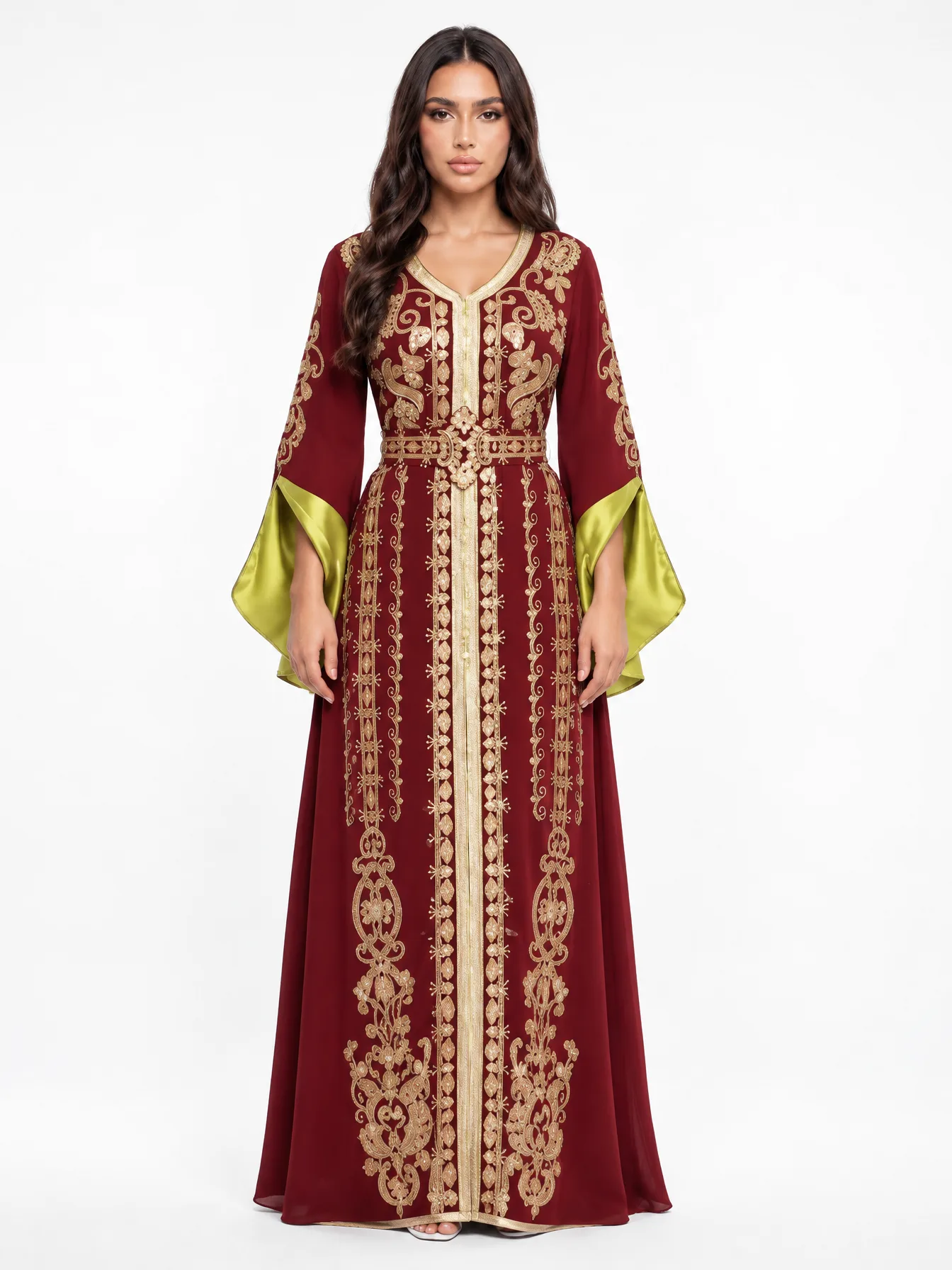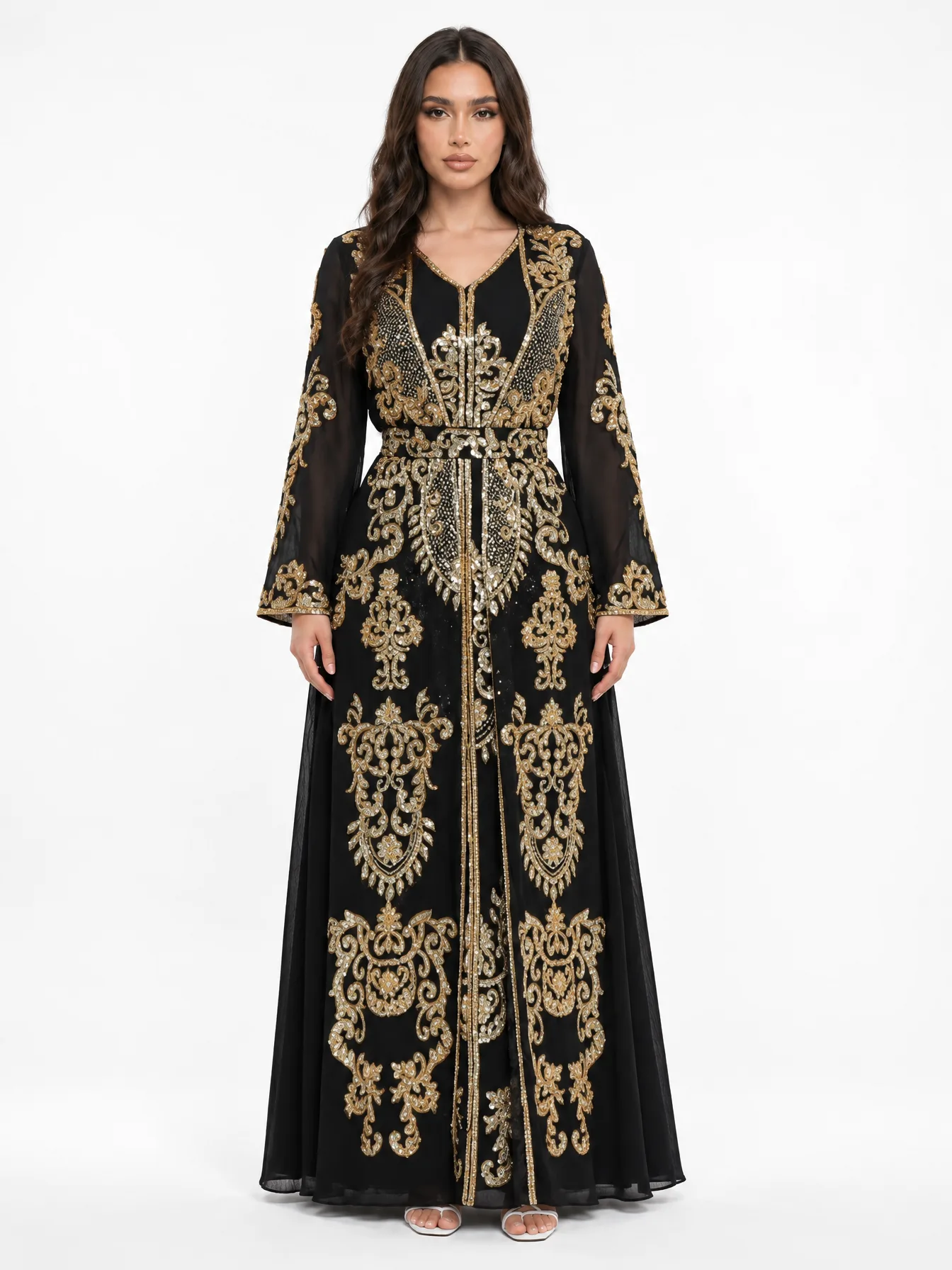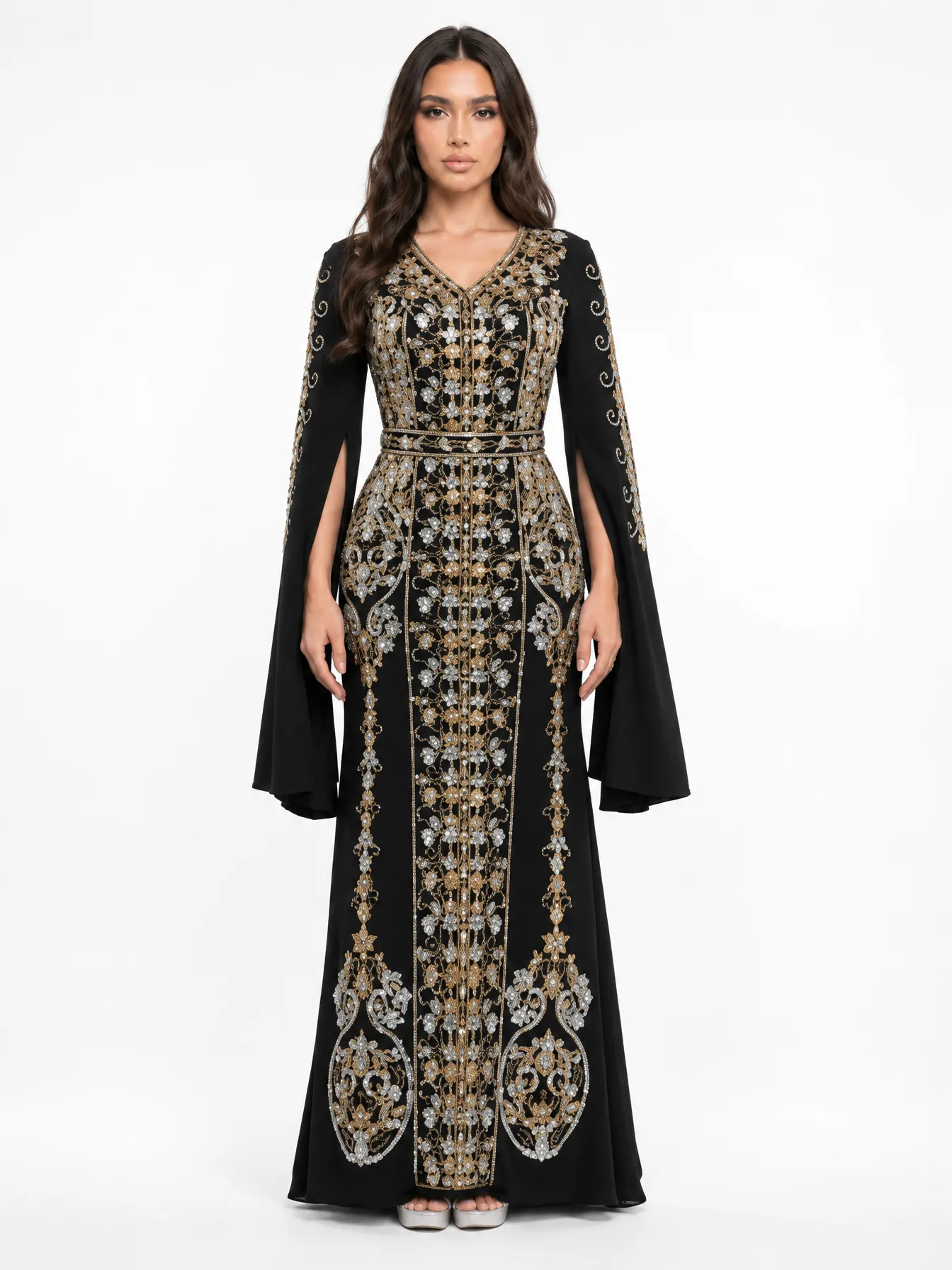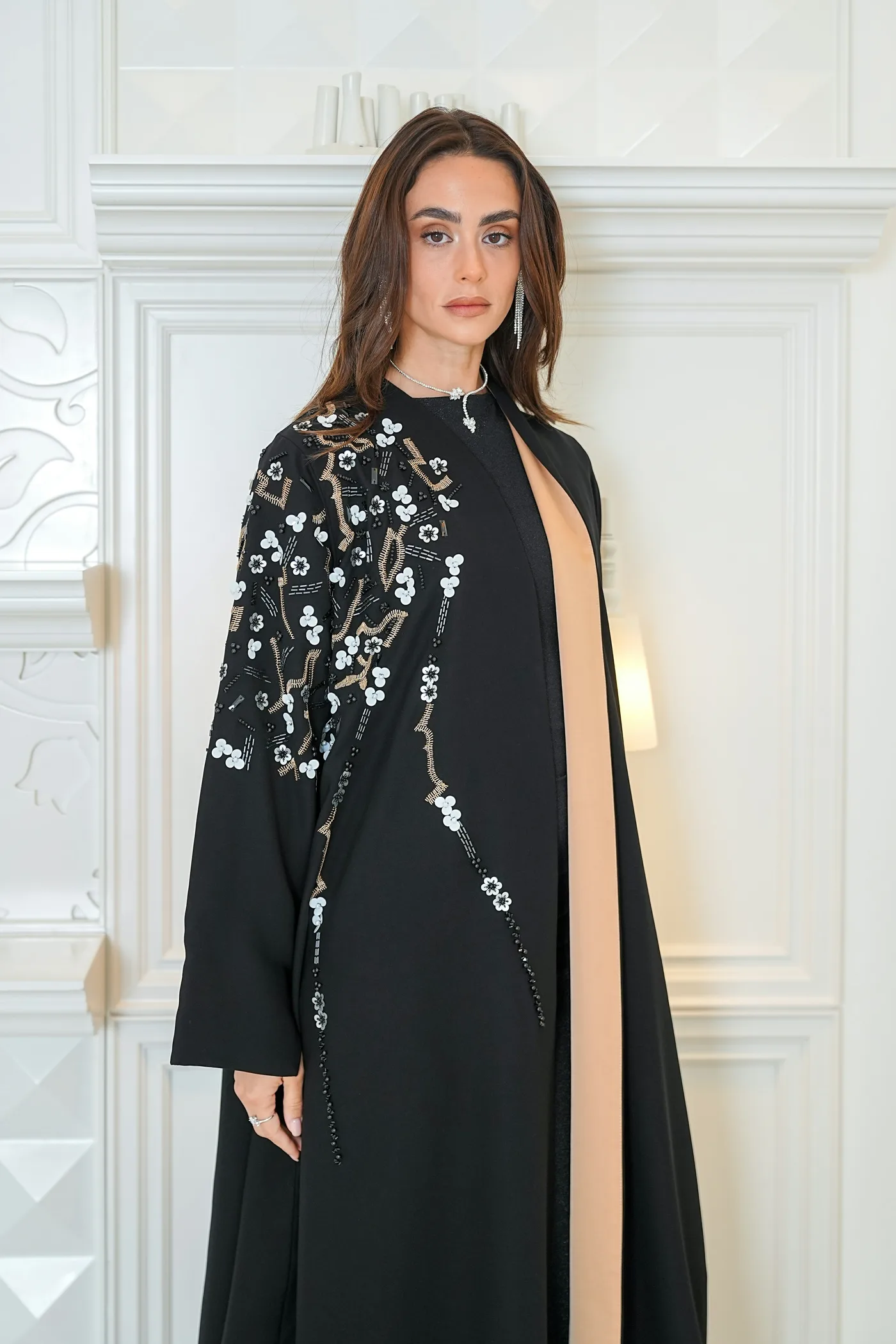
The Khaleeji thobe is a wide, almost square women's robe worn over a fitted dress, and its grandest form, the thobe nashal, has a front panel embroidered in gold or silver from neckline to hem. It is worn across Kuwait, Bahrain, Qatar and eastern Saudi Arabia, with relatives in Najd and the Emirates, for weddings, henna nights, Ramadan gatherings and national celebrations. This guide explains what it is, how it is worn and how to wear it now.
What does a thobe nashal look like?
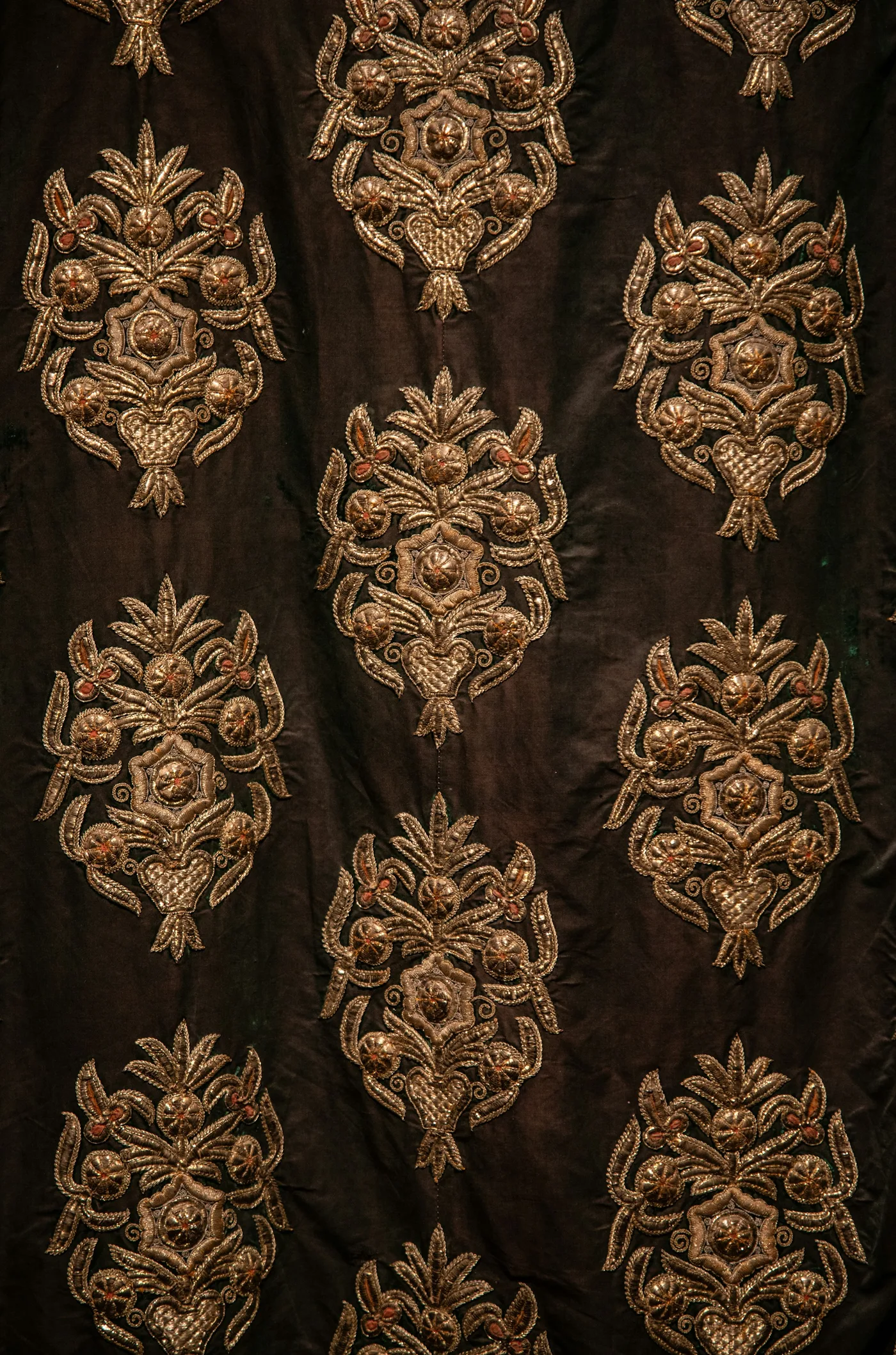
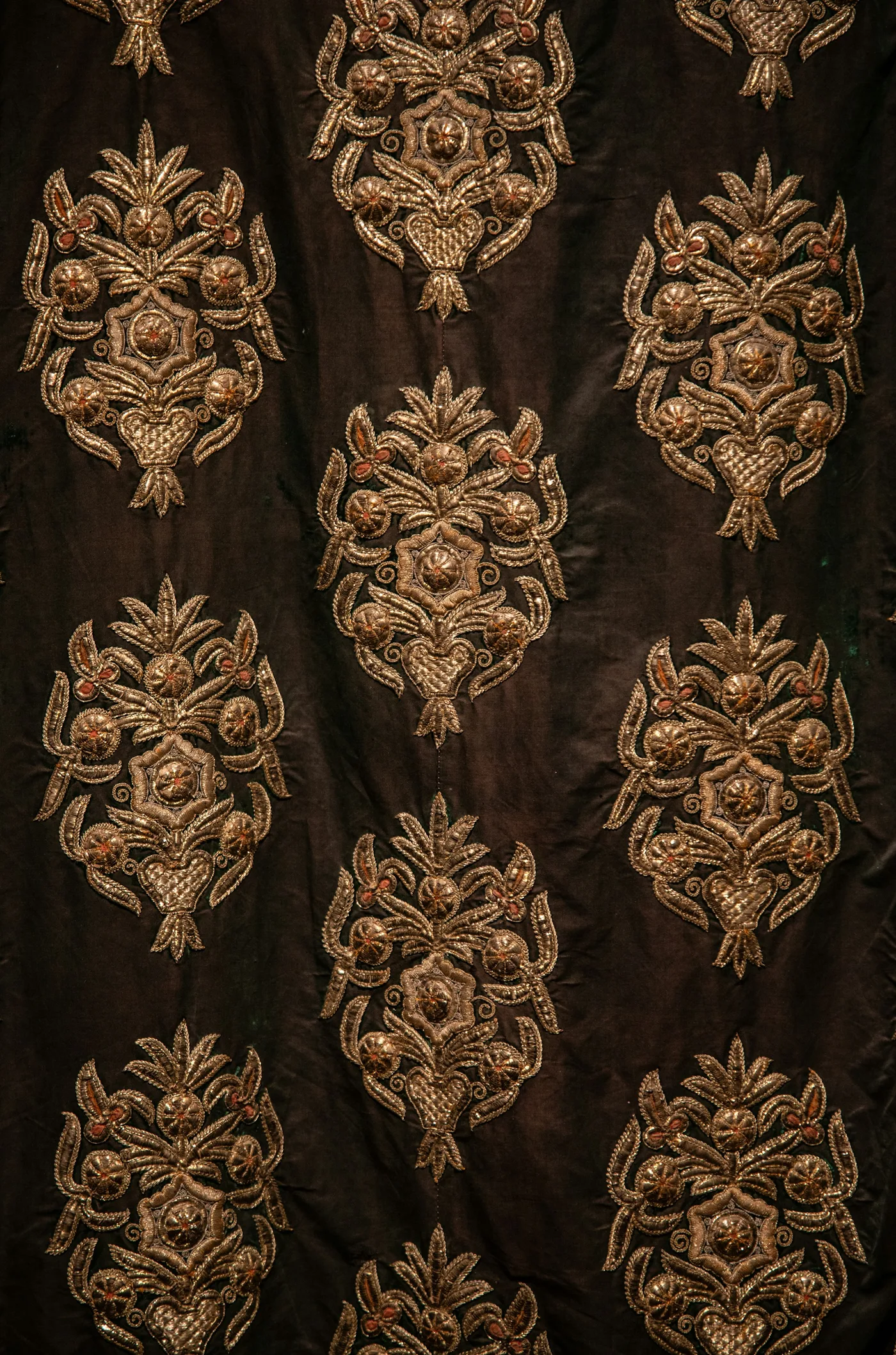
In a 2016 AramcoWorld feature on Gulf women's thobes, the writer Kay Hardy Campbell describes the basic shape: large and nearly square, with side panels that open into billowing sleeves, and often long enough at the back to trail on the floor. The thobe nashal is the most splendid version, with a full-length front panel of dense gold or silver embroidery, typically on brilliantly coloured fabric such as royal purple, bright red or lapis blue. A Bahraini maker quoted in the piece calls it the queen of thobes, for its splendour and the density of its embroidery.
A Bahrain Authority for Culture and Antiquities worksheet on traditional dress adds that the thobe nashal is usually made of plain silk fabric embroidered with metallic gold or silver thread. Arabic heritage sources note that black was one of its most popular colours, and that the embroidery was traditionally done by hand by women and craftsmen in the villages of the region, with fabric brought through markets in Bahrain and India.
Where is it worn, and what are its regional cousins?
AramcoWorld describes the thobe nashal as the signature women's thobe from Kuwait into eastern Saudi Arabia, across to Bahrain and down to Qatar. Around it is a family of related styles:
- Thobe manthur: common in Bahrain, Kuwait and Qatar, with scattered embroidered motifs and a smaller front panel. The finest use real gold thread.
- Thobe mukhattam: the Najdi version, cut wider with longer sleeves that can be folded back to show their embroidery.
- Thobe thuraya: a style once sewn with gold coins and, according to AramcoWorld, worn by the wives of ship captains when pearl divers returned from the sea.
In July 2026, Asharq Al-Awsat reported on a small display called "Threads of Gold" at the Victoria and Albert Museum in London, showing Najdi robes including a black silk organza robe with gold-thread roses about 140 cm wide, with sleeves over a metre long, and a pink "Indian thobe", made in India for sale in Najd, among the oldest bridal garments of Najd and the Eastern Province.
How is a thobe nashal worn?
Always over something. AramcoWorld explains that women wore thobes over layers, typically loose trousers called sirwal and a fitted, long-sleeved gown, the dira'a, known in different places as a dishdasha, miqta' or kandura. In the Emirates, the kandura worn under the thobe has tight, embroidered sleeves.
- The under-dress shows through. Because the thobe is often sheer, the colour and embroidery of the gown beneath become part of the look.
- The neck opening can be lifted to cover the head, or the sleeves draped over the head, which made the thobe a quick, graceful way to cover.
- The wide sleeves are part of the performance. At weddings and folk dances, women hold and swing them to show off the embroidery.
Today, many women wear a modern thobe over a simple long slip dress in a matching or contrasting colour, which keeps the traditional layering without the weight.
When do women wear a thobe nashal?
It has always been a dress for big occasions. The Bahraini heritage worksheet says women wore it at feasts and weddings, and Arabic heritage sources add Eid. AramcoWorld lists the moments it still appears:
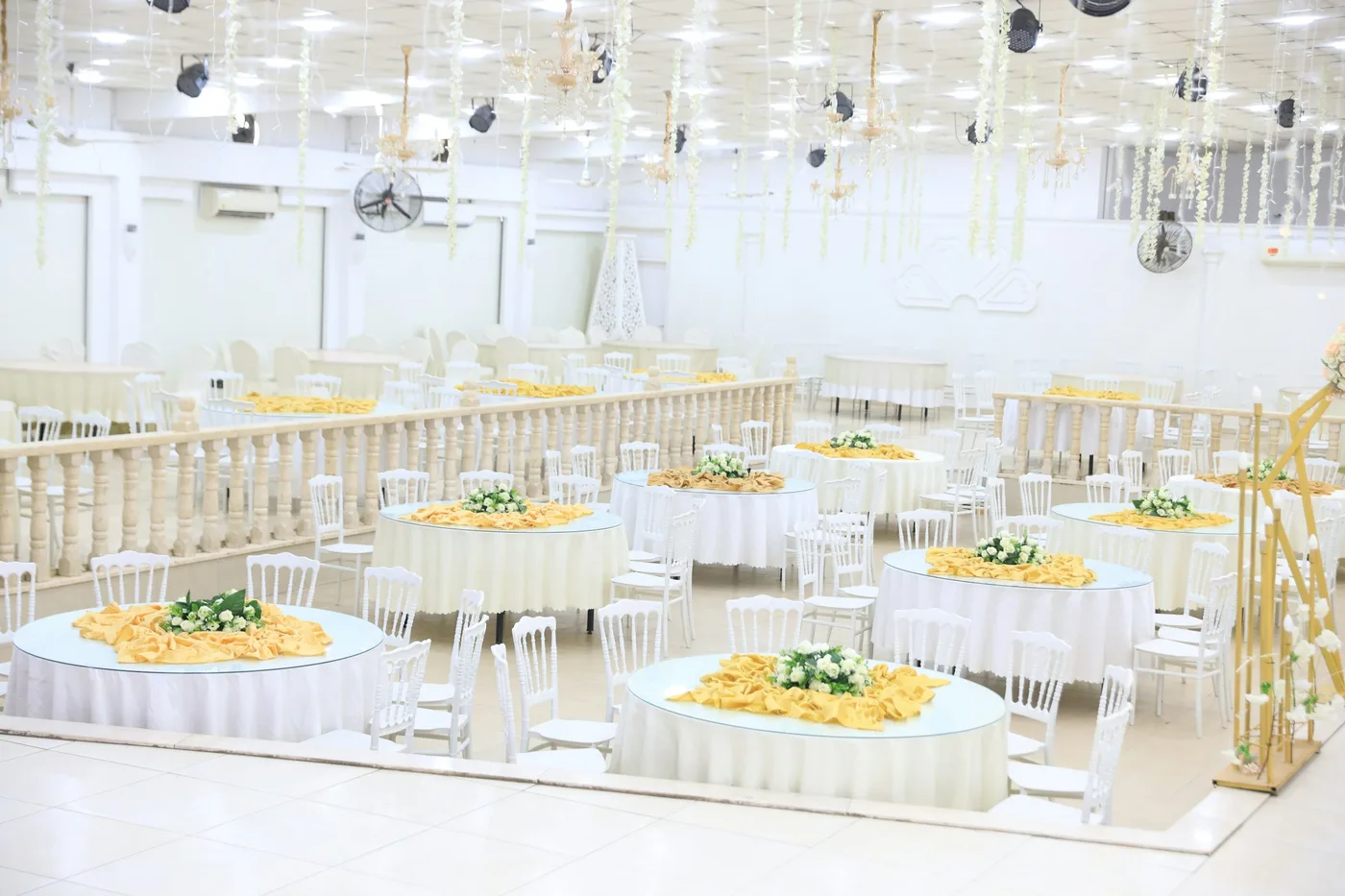
- Weddings, especially the henna night and the women's wedding party.
- Ramadan nights, for visits and gatherings after iftar.
- National days, when groups of women perform folk dances in thobes.
Many families also dress young girls in small, light thobes for Gergean, the mid-Ramadan children's celebration.
For a henna night in particular, a coloured thobe is one of the most traditional choices a guest can make. Our guide to what to wear to a henna night has more ideas.
Is the thobe coming back into fashion?
Yes. AramcoWorld described a revival from Iraq and Kuwait down to eastern and central Saudi Arabia and the Gulf coast, with sales moving to Instagram and WhatsApp, and prices from one well-known Bahraini maker starting around $500 and reaching $10,000 for the most customised pieces. Bahrain's women athletes wore thobes in the opening parade of the 2012 London Olympics, and museums including the British Museum and the Metropolitan Museum of Art hold examples.
The craft around Gulf dress is also being protected. In 2022, UNESCO inscribed Al Talli, the traditional Emirati braided embroidery of cotton and silver thread used on cuffs and necklines, on its list of intangible cultural heritage, noting that demand peaks before Eid and in the wedding season.
Designers now play with the form: shorter thobes over trousers, thobes in printed chiffon, and kaftans and gowns that borrow the gold-embroidered front panel.
Can you wear a thobe if you are not from the Gulf?
Yes, at the right occasion and with respect. A friend's henna night, a Ramadan gathering or a national-day celebration are natural moments, and hosts usually take it as a compliment. A few pointers:
- Buy a real one from a maker or boutique that sells to Gulf women, rather than a costume version.
- Wear it properly, over a long under-dress, never on its own over bare skin.
- Ask the host if you are unsure whether it suits the event.
If you want the spirit without the full garment, an embroidered kaftan is the easiest bridge. Our guide to the difference between an abaya, kaftan, jalabiya and thobe explains how they compare.
Where Lianora fits
Lianora does not sell traditional thobes, but its Arabic collection includes embroidered and hand-beaded kaftans from established Turkish ateliers that share the thobe's love of a rich front panel and work well for henna nights and Ramadan evenings. Delivery across the UAE and the GCC takes 10–15 days from the confirmed order, with customs duties and taxes paid by Lianora. Browse the Arabic collection, or the embroidered Arabic kaftan in particular.
Questions
What is the difference between a thobe and a thobe nashal?
Thobe is the general name for the wide Gulf women's robe. The thobe nashal is its most formal form, with a full-length front panel densely embroidered in gold or silver thread.
What do you wear under a Khaleeji thobe?
Traditionally a fitted long-sleeved gown, the dira'a or kandura, often over loose sirwal trousers. Today, a long slip dress in a matching or contrasting colour is common.
Is the thobe nashal worn in the UAE?
Related thobes are worn in the Emirates, over a kandura with tight embroidered sleeves, though AramcoWorld places the thobe nashal's heartland in Kuwait, Bahrain, Qatar and eastern Saudi Arabia.
Sources
- AramcoWorld: The gown that steals your heart (Kay Hardy Campbell, March 2016)
- Bahrain Authority for Culture and Antiquities: Traditional dress worksheet
- Asharq Al-Awsat: 'Threads of Gold' — Najdi dresses at the Victoria and Albert Museum (July 2026, Arabic)
- UNESCO: Al Talli, traditional embroidery skills in the United Arab Emirates (inscribed 2022)
- Areq: Thobe al-nashal (Arabic encyclopedia entry)