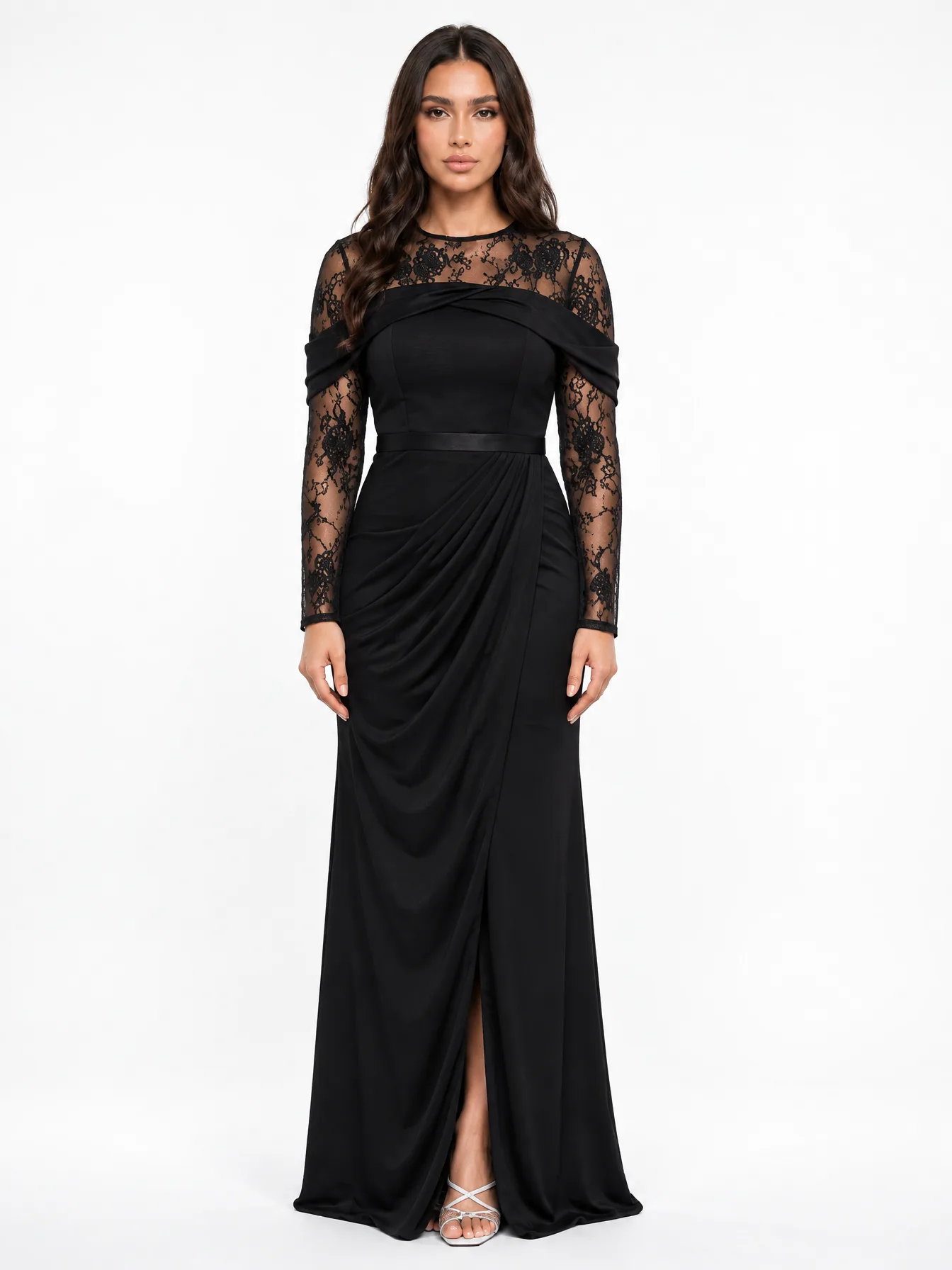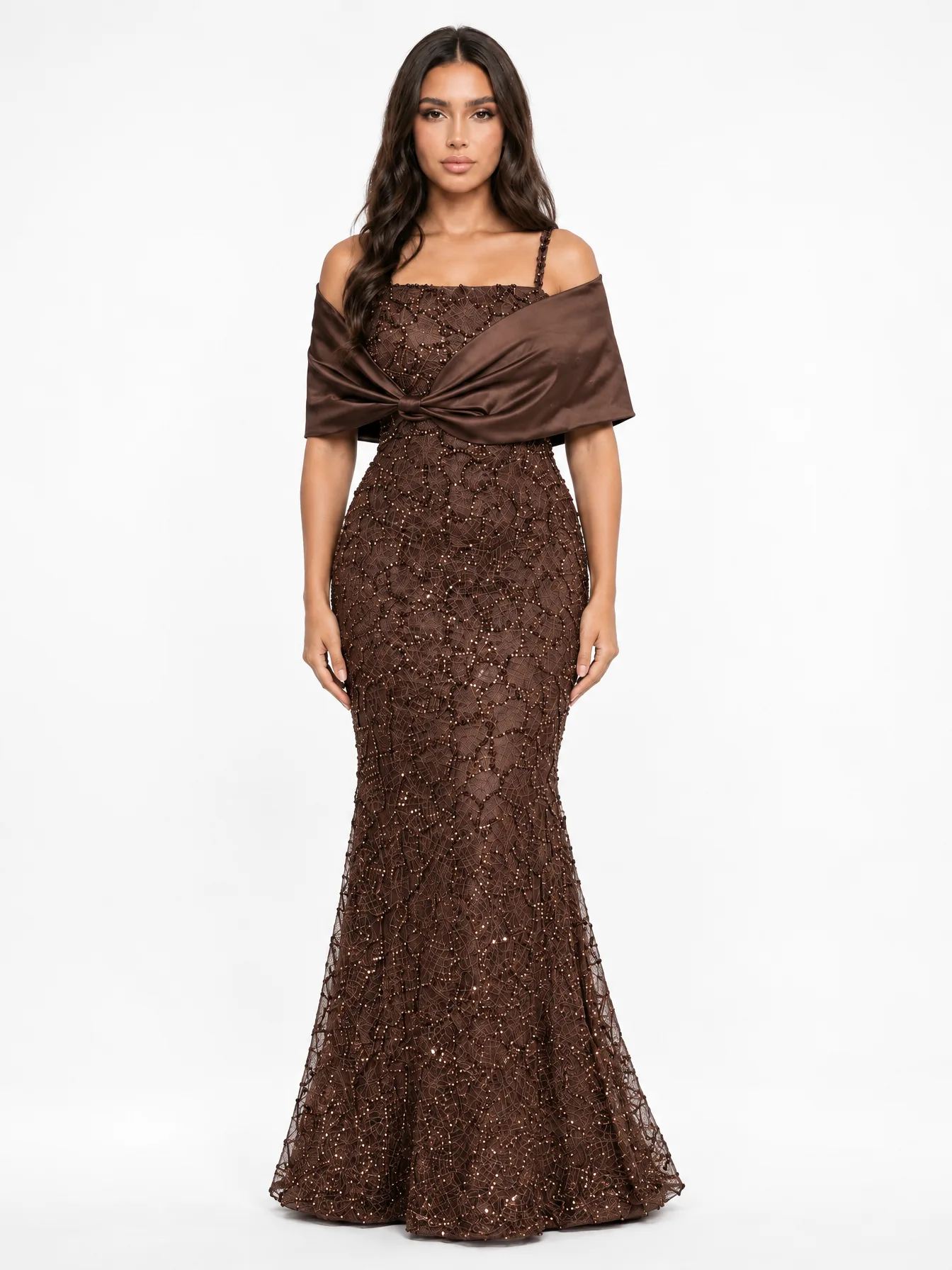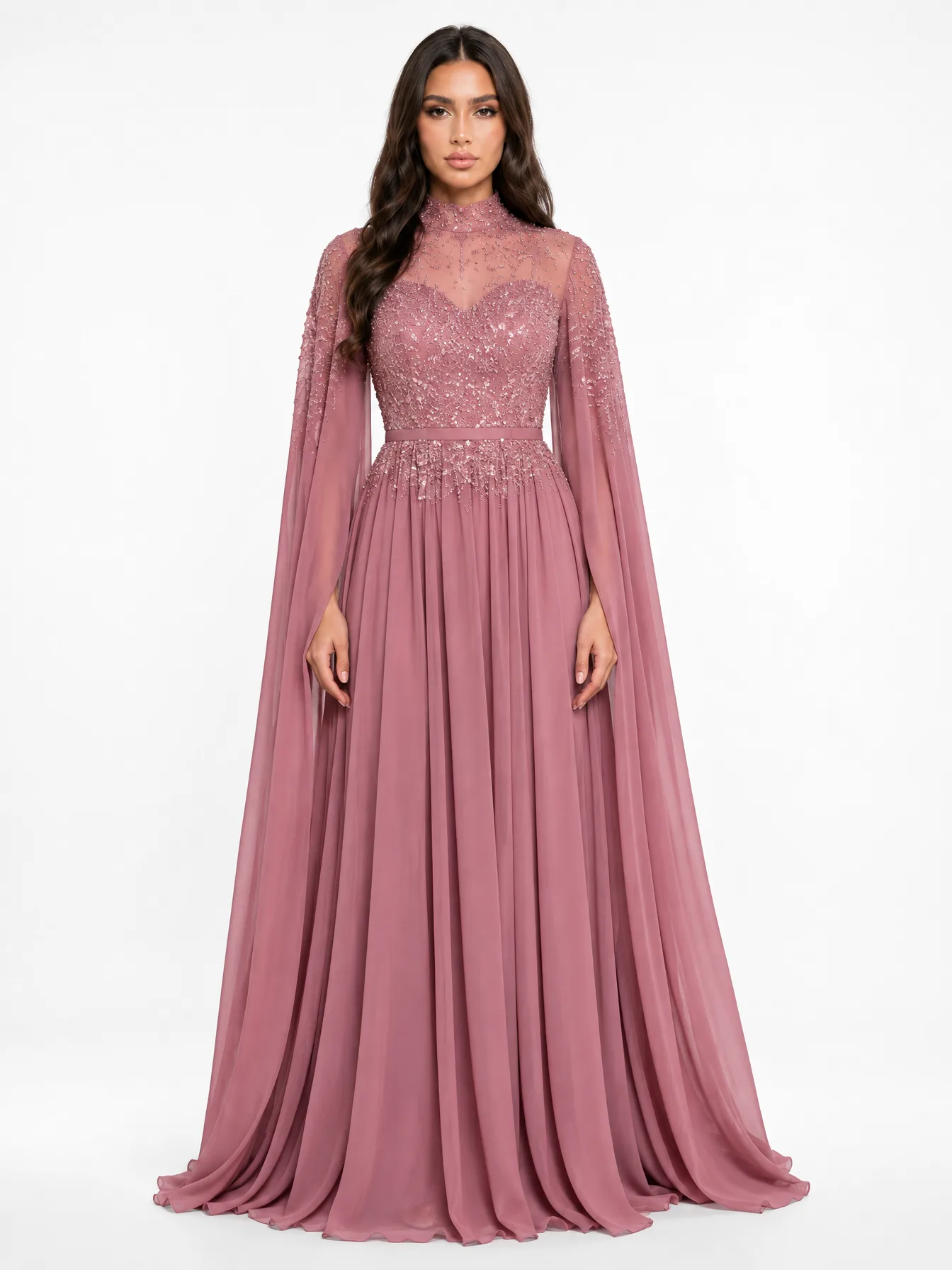
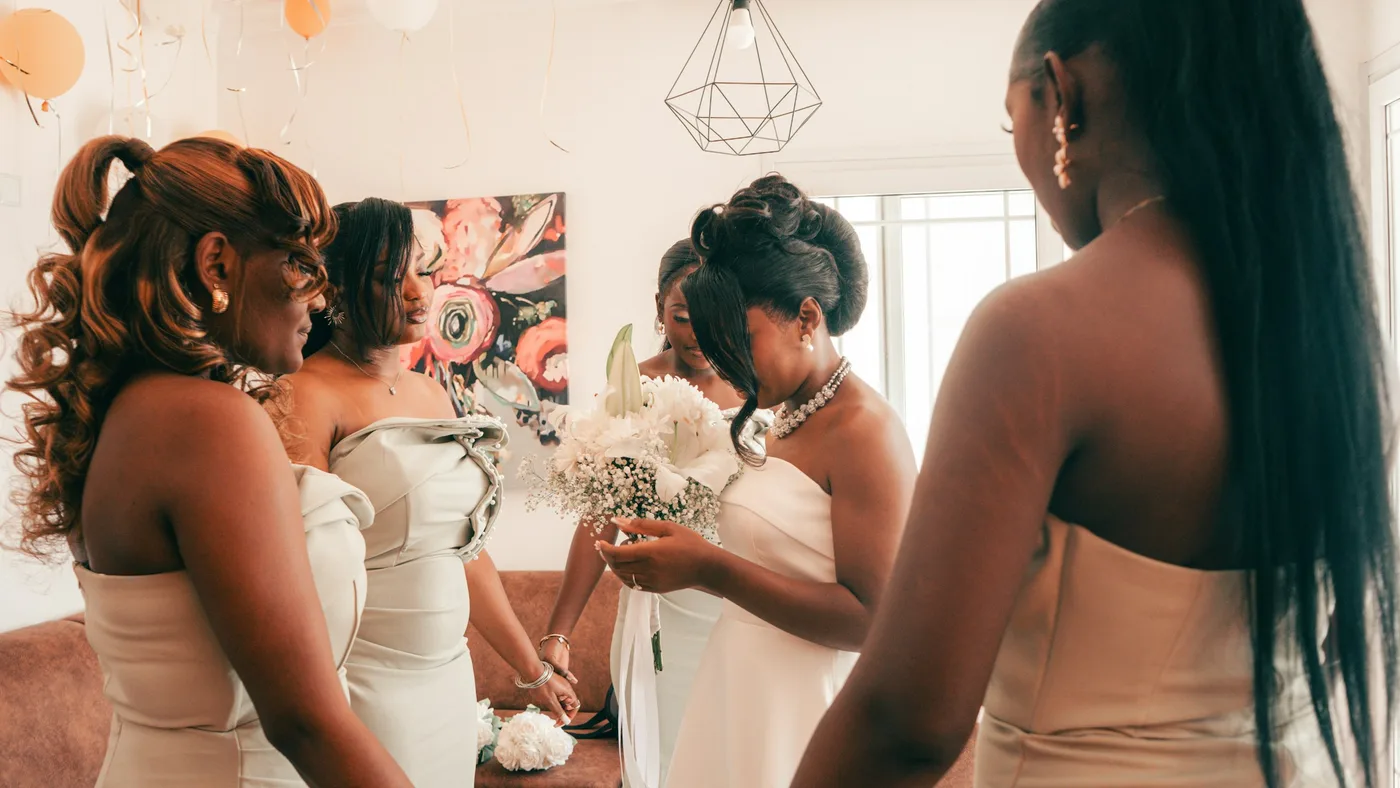
In Western wedding etiquette, bridesmaids usually pay for their own dresses, but the bride is expected to help when she chooses something expensive or insists on a specific look. In the Gulf, where bridesmaids are a newer custom, there is no settled rule at all. The fair answer is whatever you agree early, in plain numbers, before anyone has fallen for a dress.
What does traditional etiquette say?
Most American and British etiquette guides agree on a default. The wedding magazine The Wed sums it up: bridesmaids traditionally pay for their own dress, alterations, shoes, accessories, travel and accommodation, while the bride pays for bouquets and anything that is part of her overall vision. Wedding Journal, an Irish publication, notes that older etiquette in Ireland worked the other way, with the bride covering the bridal party's dresses and accessories.
Both guides add the same condition: the more the bride decides, the more she should contribute. If she picks a designer, a price point or a dress nobody can wear again, splitting or covering the cost is the gracious thing to do.
Who pays for what, item by item?
This is the usual split in etiquette guides, with the common exceptions.
- The dress: the bridesmaid, unless the bride chose an expensive or one-off design.
- Alterations: the bridesmaid, though a bride who chose the style may help.
- Shoes and accessories: the bridesmaid. If the bride asks for a particular style, she should keep it affordable or give them as a gift.
- Hair and make-up: if the bride requires professional styling or books one artist for everyone, she pays or contributes. If it is optional, the bridesmaid decides.
- Travel and accommodation: the bridesmaid, though brides planning an expensive destination wedding sometimes help.
- Bouquets and flowers: the bride.
The principle behind the list is simple: whoever makes something compulsory should help pay for it.
Is it different at Gulf weddings?
Yes, mainly because there is less of a script. A January 2026 report in the Saudi newspaper Al Watan described bridesmaids as a Western custom spreading through Saudi weddings, helped by social media and more elaborate celebrations. It quoted a bride's mother who objected precisely on cost: she did not want the bride to be burdened with paying for the bridesmaids' dresses, or friends to be pressured into buying a particular look. A bride in the same report said the role should stay simple and not become a costly obligation.
In practice you will see three arrangements in the UAE and Saudi Arabia: the bride or her family gives the dresses as a gift, each bridesmaid buys her own within an agreed colour, or the cost is shared. Families also differ on whether sisters and cousins count as bridesmaids or simply as close family dressing up. None of these is wrong; what causes friction is assuming.
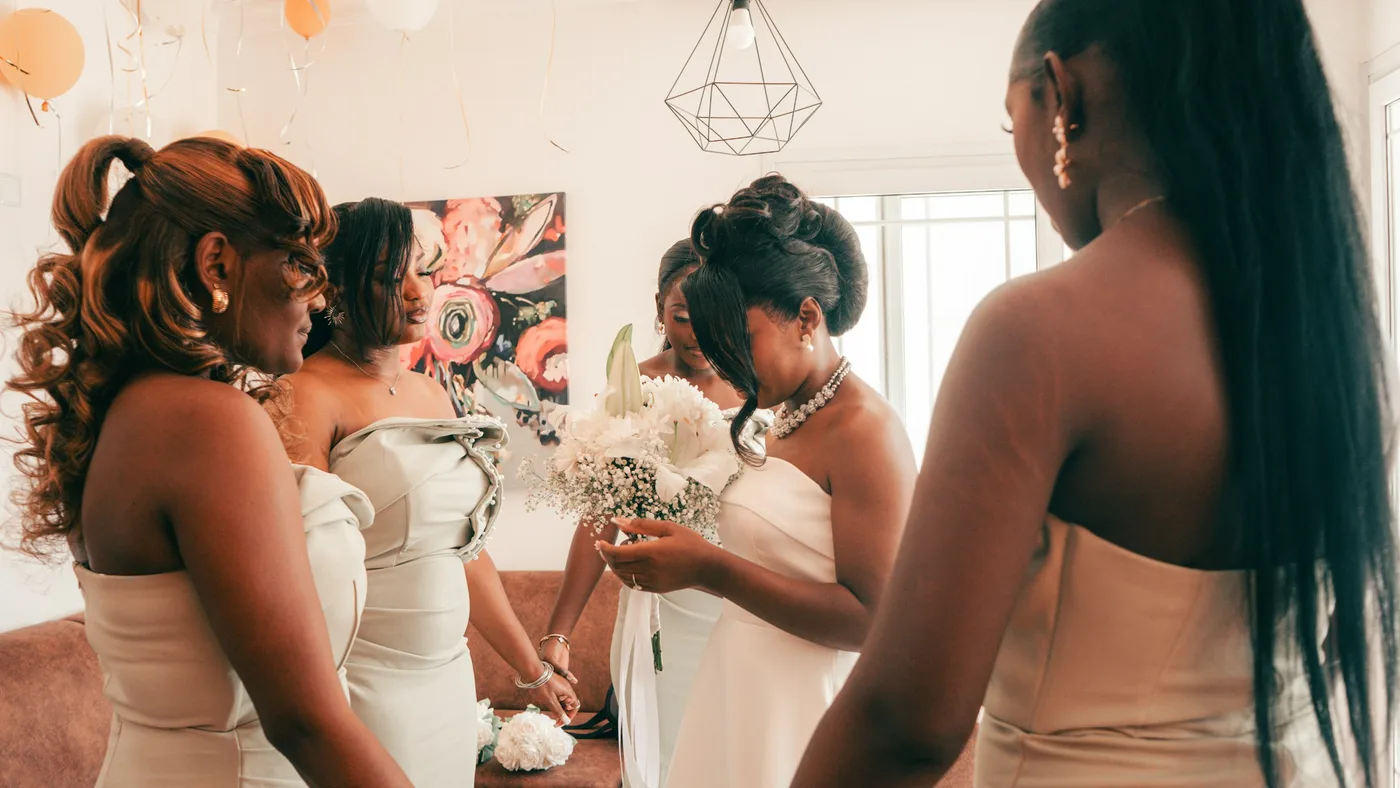
How do you talk about money with your bridesmaids?
Have the conversation once, early, and in writing afterwards.
- Before choosing anything, tell everyone what you are thinking: the colour, roughly how formal, and whether you plan to pay, share or leave it to them.
- Name a number. A ceiling in dirhams or riyals is kinder than "something not too expensive", which means different things to different people.
- Ask privately. Give each bridesmaid a way to say a budget is too high without saying it in the group chat.
- List the extras alongside the dress: shoes, alterations, hair, make-up, the henna-night outfit and any travel.
- Confirm in a message what was agreed, so nobody remembers it differently six weeks later.
If one bridesmaid cannot afford the agreed dress, quietly covering the difference, or switching to a shared colour with free choice of cut, keeps the friendship intact.
What if the bride wants a very specific look?
Then the bride carries more of the cost, or more of the flexibility. A few ways to have both a clear vision and a fair budget:
- Fix the colour, free the cut. Our guide on whether bridesmaids can wear different dresses shows how to make a mixed group look deliberate.
- Pay for the statement piece. If you want everyone in hand-beaded gowns, consider paying for the dresses and letting bridesmaids cover shoes and styling.
- Choose rewearable designs. A dress that works for an engagement, Eid or a gala later is easier to justify for the person paying.
- Order together. Ordering all the dresses at once keeps the colour consistent, and one person handling the order makes splitting the bill easier.
For a full picture of the costs involved, see how much bridesmaid dresses cost in Dubai.
What does the bride usually give her bridesmaids?
Whoever pays for the dress, most etiquette guides expect the bride to thank her bridesmaids with something. It does not have to be expensive, and in a group where each woman paid for her own dress, a thoughtful gift goes a long way.
- Something for the day: earrings, a bracelet or a hair piece that matches the dress, given in time to wear at the wedding.
- Something for getting ready: matching robes or pyjamas for the morning photographs, a custom that has spread to Gulf weddings through social media.
- Covering one cost: paying for hair and make-up, or for the henna-night outfit, is a practical gift that bridesmaids appreciate.
- A note: a handwritten card naming what each woman did is often remembered longer than the present.
If the bride's family is giving the dresses themselves, that is usually the gift, and nothing more is expected. What matters is that everyone knows in advance which way it is. And whoever paid, a quiet thank-you to each bridesmaid's family, who often help with the henna night and the wedding preparations too, is always appreciated.
Where Lianora fits
Lianora supplies evening and bridesmaid dresses from established Turkish ateliers and delivers across the UAE and the GCC in 10–15 days from the confirmed order, with customs duties and taxes already paid. That makes a group order easier to split fairly: the price in the shop is the full price, with nothing added at the door. Browse the bridesmaid dresses, and check delivery and returns before you agree who pays: unworn pieces can be exchanged within 7 days of delivery, and altered pieces cannot.
Questions
Is the bride supposed to pay for the bridesmaid dresses?
Not by default in Western etiquette, where bridesmaids usually pay. But if the bride chooses an expensive or specific dress, etiquette guides suggest she contributes. In the Gulf there is no fixed rule, so agree it early.
Who pays for bridesmaids' hair and make-up?
If the bride requires it or books one artist for everyone, she usually pays or contributes. If it is optional, each bridesmaid decides and pays for her own.
Can I say no to being a bridesmaid because of the cost?
Yes, and it is kinder to say so early. Many brides would rather adjust the dress or cover part of it than lose a friend from the bridal party, so explain your budget before declining.