The most reliable way to offer alterations is to partner with one or two licensed tailors who already work on evening wear, agree prices and turnaround times in writing, check every altered piece before it goes back to the customer, and tell customers before any work starts that altered pieces cannot be exchanged. Done well, a tailor partnership saves sales that would otherwise be lost to a hem that is too long or a sleeve that is missing.
Why does an evening-wear boutique need an alterations partner?
Ready-to-wear evening gowns are cut to standard sizes, and very few customers are a perfect standard size from shoulder to hem. Length depends on the heel she will wear, a bodice may need taking in, and some customers want more coverage than the design offers, such as sleeves or a fuller lining.
If you cannot point a customer to someone you trust, she may walk away from a dress she loves. A tailor partnership turns that objection into a sale. It also matters if you buy from suppliers that sell standard international sizes and do not alter. Lianora is one of these: it supplies finished pieces in standard sizing, set out on its sizes and fit page, and leaves fitting to the boutique.
Which alterations do evening dresses usually need?
Most requests fall into a handful of jobs. Knowing them helps you set prices and judge a tailor's skill.
- Hemming for heels: the customer should always bring the exact shoes. A floor-length gown is usually hemmed to just clear the floor in those shoes.
- Taking in: side seams, the bodice or the waist. Letting out is limited by how much seam allowance the maker left.
- Shoulders and straps: shortening straps or raising the shoulder line so the neckline sits correctly.
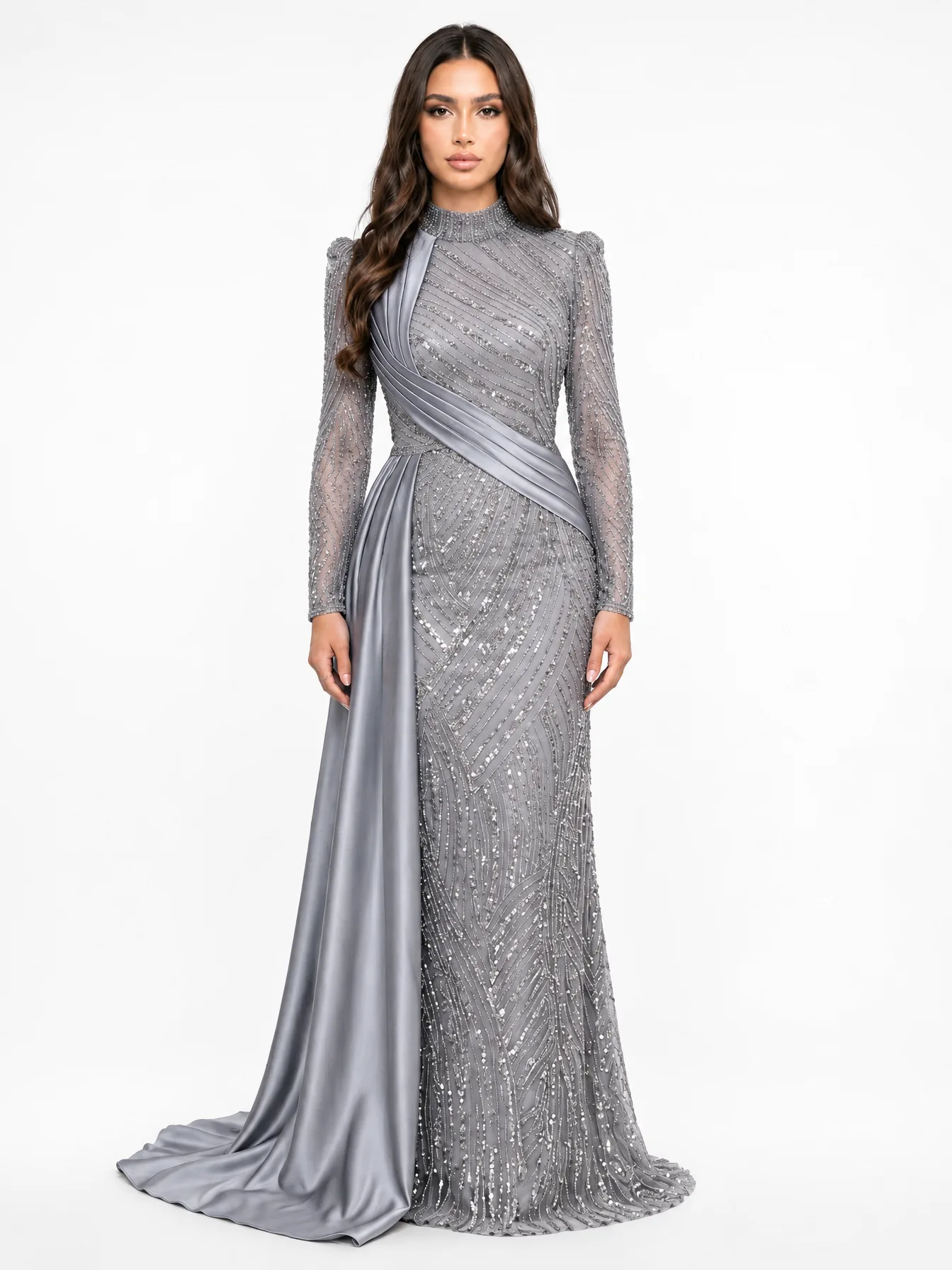
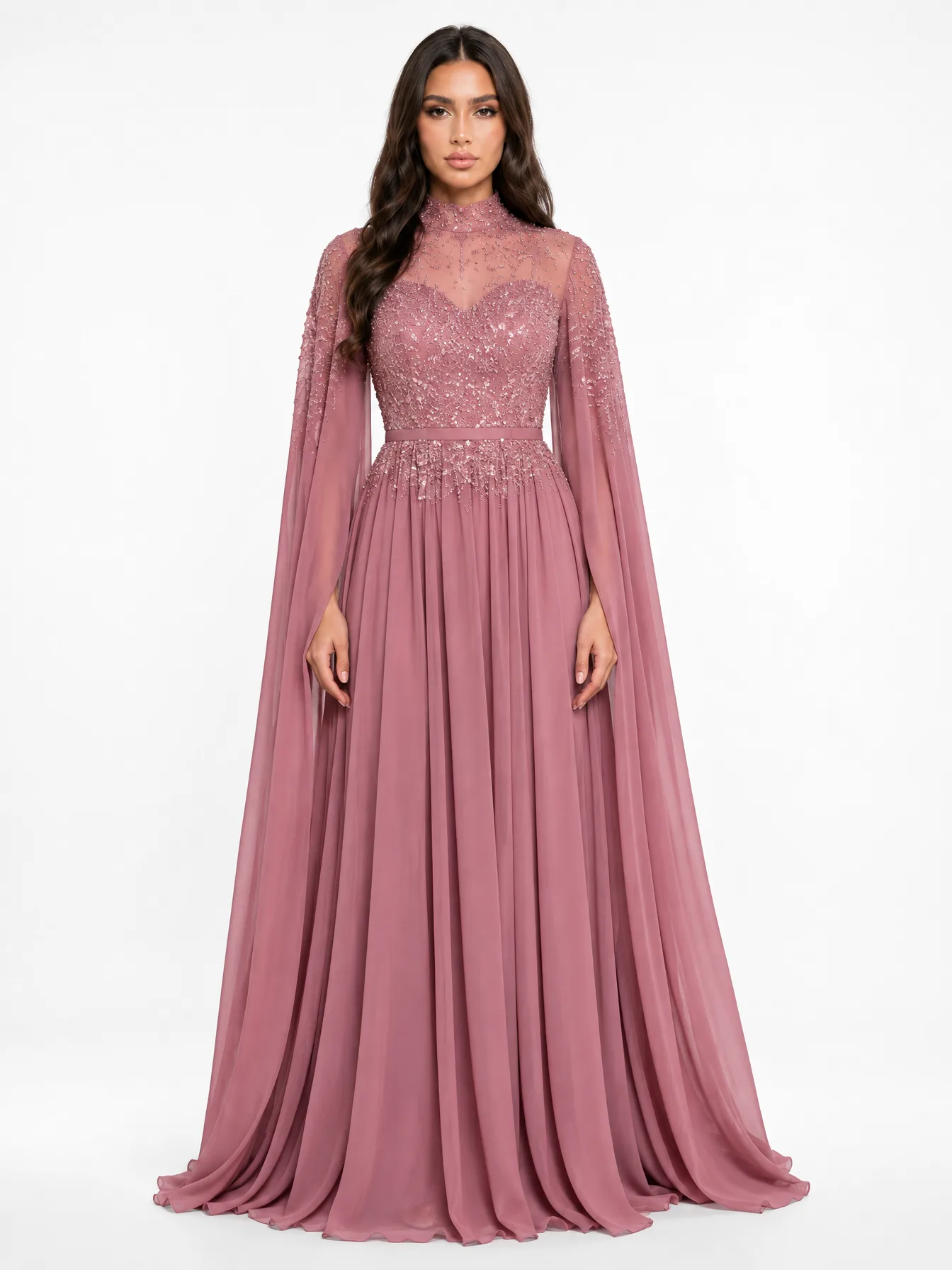
- Adding sleeves or a yoke: a common modesty request, usually in matching chiffon or tulle.
- Linings: extending or adding a lining under sheer layers.
- Bustles: hooks or loops that lift a train for dancing.
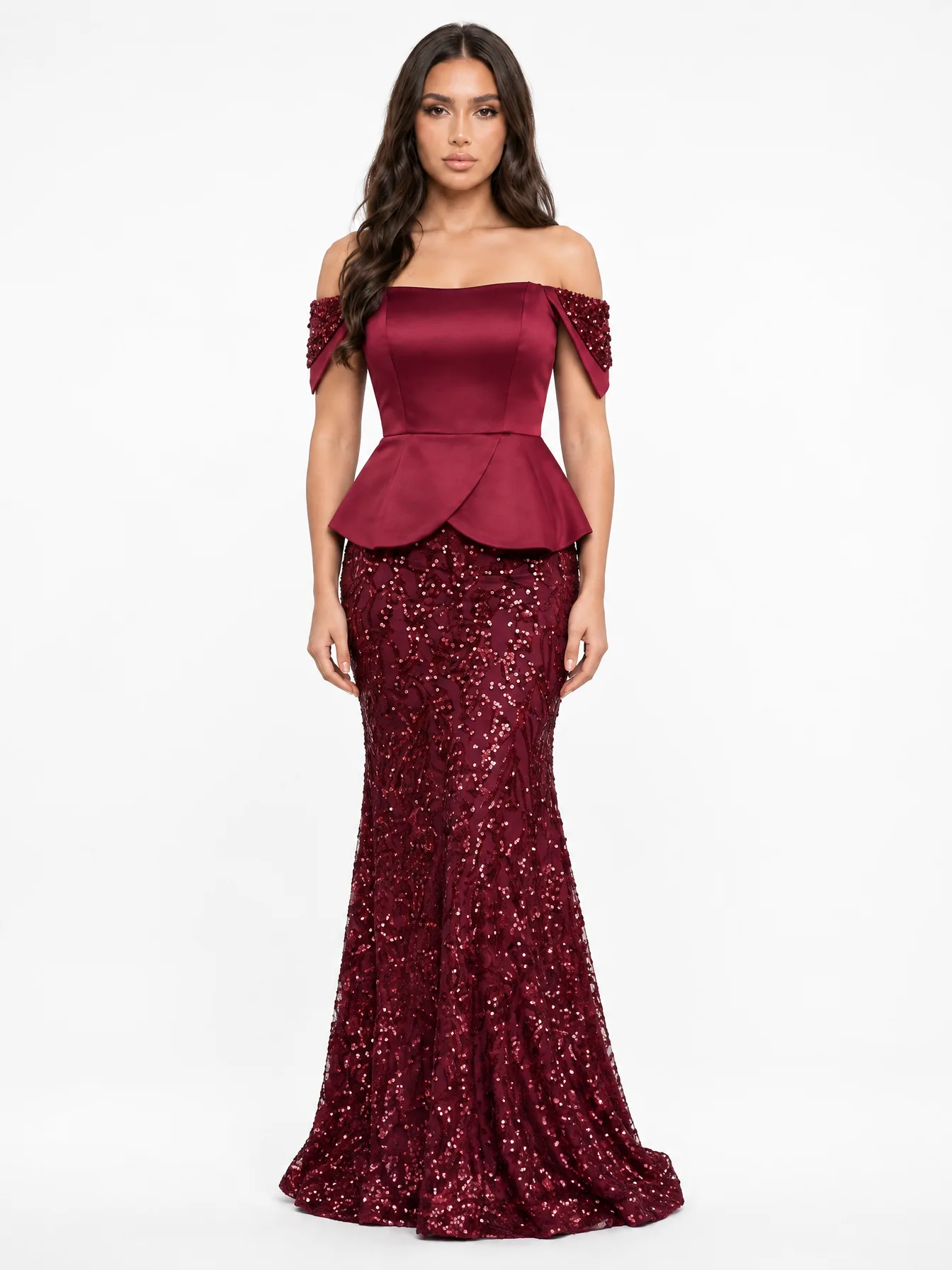
Embellishment changes everything. Hemming a beaded or sequinned skirt means removing the embellishment along the line, cutting, finishing and stitching it back by hand, so it costs more and takes longer than a plain chiffon hem. Pieces such as the peplum sequin gown, with its sequinned mermaid skirt, need a tailor who has done this before.
How do you choose the right tailor for evening wear?
Test before you trust. Give a candidate one real job, ideally a beaded hem, and judge the result yourself before you send customers.
- Evening-wear experience: ask to see finished work on chiffon, tulle, satin and sequins, not only abayas or daywear.
- A valid licence: check that the tailor's trade licence covers alterations. In Dubai, for example, Meydan Free Zone's ladies' gowns tailoring activity explicitly lists alterations and restyling.
- Peak-season capacity: ask how many pieces they can turn around in the weeks before Eid and in wedding season.
- Fitting arrangements: some customers will prefer to be fitted by a woman, so ask whether a female fitter is available.
- Responsibility for damage: agree up front who pays if a dress is damaged or lost.
Two partners are safer than one. A second tailor covers holidays, illness and peak weeks.
How should a boutique price alterations?
There is no published standard rate for evening-wear alterations in the Gulf, and prices vary widely with the fabric, the embellishment and the tailor. Ask each partner for a written price list by job type, with a separate line for beaded or sequinned work, so that you can quote customers with confidence.
Boutiques usually choose one of three models:
- Pass-through: the customer pays the tailor's price, and you simply coordinate.
- Handling margin: you add a modest fee for collection, quality control and the risk you carry.
- Included: you absorb a basic hem on higher-priced gowns as part of the service.
Whichever you choose, put the price on the alteration ticket before the work starts. Tax matters too. In the UAE, VAT is 5%, and registration becomes mandatory once taxable supplies and imports exceed AED 375,000 a year. If your tailor is VAT-registered, the invoice to you will include VAT, and alteration fees you charge customers form part of your own supplies. Confirm how this applies to your business with the Federal Tax Authority or a tax adviser.
What lead times should you plan for alterations?
Turnaround depends on the job and the season, so ask each tailor for written times rather than assuming. As a general pattern, a plain hem is quicker than a beaded one, and adding sleeves or a lining takes longer still because it needs fabric and often a second fitting. In the weeks before Eid and at the height of wedding season, every tailor slows down.
Build alteration time into what you promise. If you order a gown from a supplier that delivers in 10 to 15 days, add the tailor's turnaround and time for a fitting, then a few days' buffer. For a customer with a fixed event date, that often means buying four to six weeks ahead.
What should an alterations agreement with a tailor cover?
A one-page written agreement prevents most disputes. It should cover:
- Prices by job type, including embellished work.
- Turnaround by job type, and the peak-season exceptions.
- Responsibility for damage or loss, and the value limit.
- How pieces are collected, stored and returned, with a ticket for each.
- How measurements and fitting notes are recorded, so nothing depends on memory.
- Re-work: what happens if the result is wrong, and who pays.
- Customer data: UAE consumer protection law requires suppliers to protect consumers' data and not use it for marketing, so agree that the tailor will not contact your customers for their own business.
- Payment terms and invoicing.
Remember that the customer's invoice comes from you. Under UAE consumer law, the invoice you give a customer must be dated and in Arabic, with any other language added as you choose.
How do you check quality before a dress goes back?
Never let an altered piece go straight from the tailor to the customer. Check it yourself against the ticket:
- The hem is level all the way round, measured with the customer's shoes or the recorded heel height.
- Thread colour matches, and stitches do not show on the right side.
- Beads and sequins along any new seam or hem are secure, with no loose threads.
- Seams lie flat, with no puckering on chiffon or satin.
- Linings sit smoothly and do not drop below the outer layer.
- The piece is steamed, clean and free of chalk marks.
Photograph the dress before it goes to the tailor and again when it comes back. If there is ever a question about damage, those photos settle it quickly.
Can a customer exchange an altered evening dress?
Usually not, and your policy should say so clearly. Once a dress has been cut, taken in or re-hemmed, it cannot be sold to someone else as new. Lianora's own terms work this way: exchanges are accepted within seven days of delivery for unworn pieces in their original packaging, but altered and special-offer pieces cannot be exchanged.
Two cautions apply. First, tell the customer before the work starts, and have her agree on the alteration ticket. Second, a no-exchange rule covers a change of mind, not a fault. UAE consumer protection law voids contract terms that exempt a supplier from its legal obligations, and it penalises suppliers who fail to repair or replace a defective product free of charge. A 2014 Gulf News report also quoted Dubai's economic department warning that printing a blanket clause on invoices saying sold goods can be neither returned nor exchanged is against the law. So inspect each dress with the customer before alteration, and record any fault then. Before you finalise your policy wording, check it with the Department of Economy and Tourism in Dubai, your emirate's economic department or a legal adviser. For more on wording, see returns and exchanges for UAE boutiques and our delivery and returns page.
Questions
Should a boutique do alterations in-house or use a partner?
Most small boutiques start with an outside partner, because an in-house tailor is a fixed cost that only pays off with steady volume. A partner lets you offer the service from day one. Some boutiques move work in-house later, once alterations are frequent enough to fill a working week.
Who pays if a tailor damages a customer's dress?
Agree this in writing before the first job. In practice the customer will look to the boutique, because she bought the dress and the service from you, so make sure your agreement lets you recover the cost from the tailor. Before-and-after photos make any claim much easier.
How much should you charge to hem an evening gown?
There is no standard published rate in the Gulf, and prices depend heavily on fabric and embellishment. A beaded or sequinned hem costs noticeably more than plain chiffon because the embellishment must be removed and re-sewn. Get written quotes from two or three tailors and set your price list from those.
Does Lianora alter dresses before delivery?
No. Lianora supplies finished evening and bridesmaid dresses in standard international sizing and does not offer alterations, fittings or custom sizes. Boutiques arrange any alterations with their own tailor after delivery.