
There are three main ways to bring stock from Turkey to the Gulf: express courier for small, urgent orders, air cargo for medium shipments, and sea freight for large or regular ones. The right choice depends on weight, urgency and how much handling your gowns can take. Whatever the route, customs will expect a commercial invoice, a packing list and, if you want the UAE–Türkiye trade agreement's lower duties, a valid proof of origin. This guide walks through each step.
Courier, air cargo or sea freight: which should you choose?
Each has a place in a boutique's year.
- Express courier (the big international couriers and regional carriers): door to door, usually the fastest and simplest, with customs clearance handled by the courier. Best for samples, top-ups and a few dozen pieces. The most expensive per kilo.
- Air cargo through a freight forwarder: cheaper per kilo for larger shipments, but you or your agent handle clearance and collection at the airport. A good middle option for seasonal orders before Eid or the wedding season.
- Sea freight: the cheapest per kilo, but slow. The Saudi logistics group Alsharqi lists a sea transit of about 12–14 days between Istanbul and Jebel Ali, before port handling, clearance and delivery. Shared containers (LCL) suit boutiques; a full container (FCL) only makes sense for very large volumes.
A rule of thumb: if the stock must be on your rail within two weeks, use a courier or air; if you are building stock for a season a month or more away, sea can save a great deal.
Which documents does customs need?
Get these from your supplier before the goods leave Turkey:
- Commercial invoice: seller and buyer details, a clear description of each item (for example, "women's evening dress, polyester, hand-beaded"), quantity, unit price, total value and currency.
- Packing list: what is in each carton, with weights and dimensions.
- HS codes: women's dresses fall under chapter 61 (knitted) or 62 (woven) of the Harmonised System. The right code decides the duty rate, so agree it with your supplier and broker.
- Proof of origin: a certificate of origin, or an origin declaration from an approved exporter, if you want to claim the UAE–Türkiye trade agreement's preferential rates.
- Air waybill or bill of lading, issued by the carrier.
On your side, you need a trade licence that allows importing and a customs client code. The UAE Government portal explains how to register and clear goods, and Dubai's e-Trader licence, for example, includes a customs client code. Our guide on whether you need a licence to sell clothes on Instagram in the UAE covers the licence options.

What duty and VAT will you pay?
Under the GCC common customs tariff, most clothing is charged 5% duty on its CIF value, meaning the cost of the goods plus insurance and freight. Import VAT is then charged on top: 5% in the UAE and 15% in Saudi Arabia. Registered businesses can usually recover import VAT through their VAT return.
For example, a shipment of gowns worth AED 20,000 with AED 2,000 of freight and insurance would carry about AED 1,100 of duty at 5%, and UAE import VAT of about AED 1,155 on the duty-inclusive value, before any broker fees.
Also budget for clearance and broker fees, port or airport handling, and local delivery. Our detailed guide to customs duty on garments into the GCC cites the official sources and covers Saudi Arabia's rules, and our UAE VAT basics for boutiques explains recovery.
Can the UAE–Türkiye trade agreement lower your duty?
Possibly, for imports into the UAE. The UAE–Türkiye Comprehensive Economic Partnership Agreement (CEPA) was signed in March 2023 and entered into force on 1 September 2023, according to the International Energy Agency's policy database and legal summaries. One legal overview says it eliminated or reduced duties on about 82% of product lines.
Abu Dhabi Customs sets out the conditions for claiming the benefit:
- Proof of origin: a certificate of origin, or an origin declaration by an approved exporter on a commercial document such as the invoice.
- Direct shipment: goods must travel directly from Türkiye to the UAE; transit through a third country is allowed only if they stay under customs control.
- Claim at import: preferential treatment must be requested at the time of importation, using a special code in the customs declaration.
- Keep the originals and produce them if customs asks.
Whether your particular garments qualify depends on their HS code and on the agreement's rules of origin, so ask your broker before you rely on it. The agreement does not apply to Saudi Arabia.
How should evening gowns be packed?
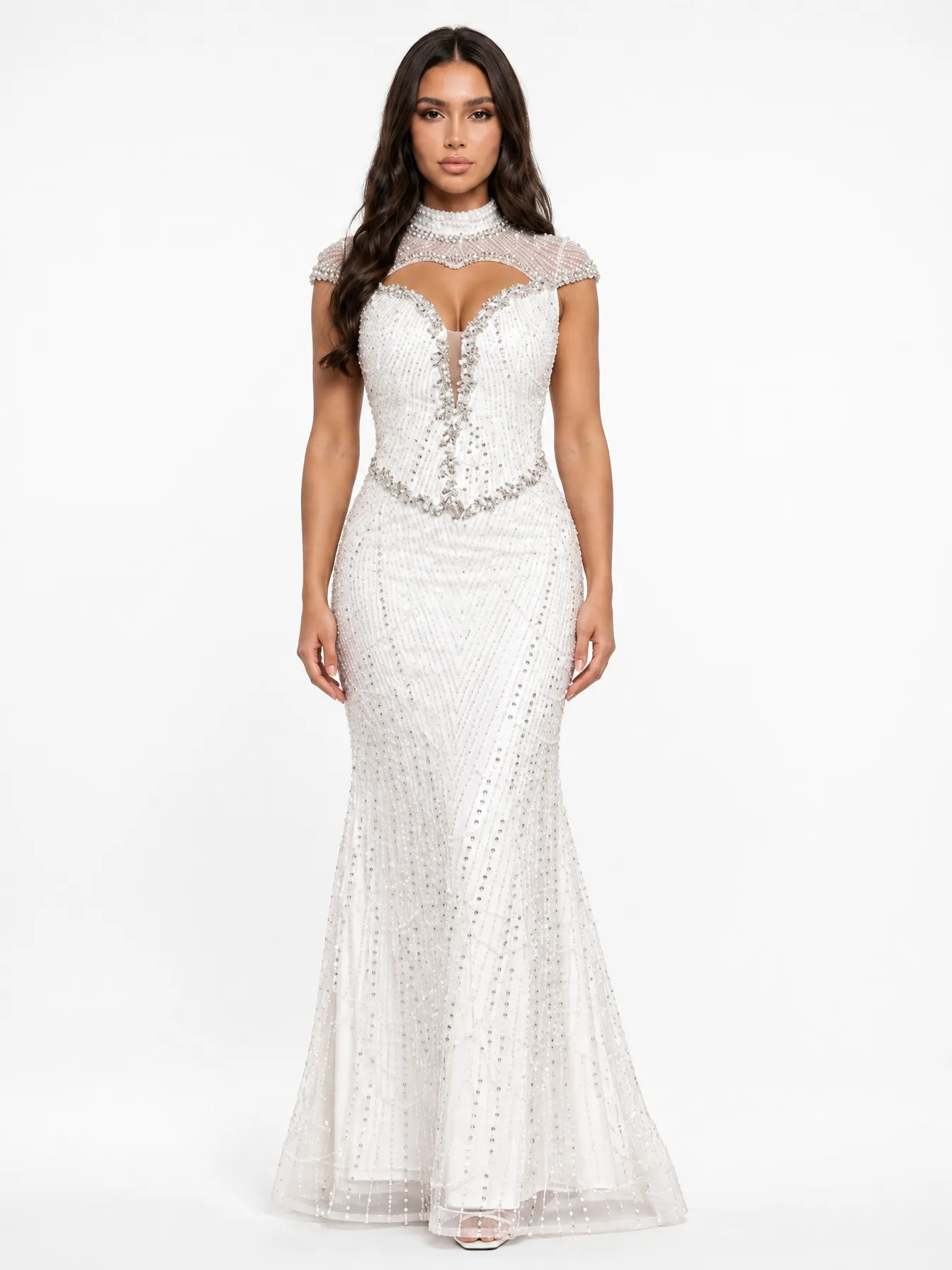
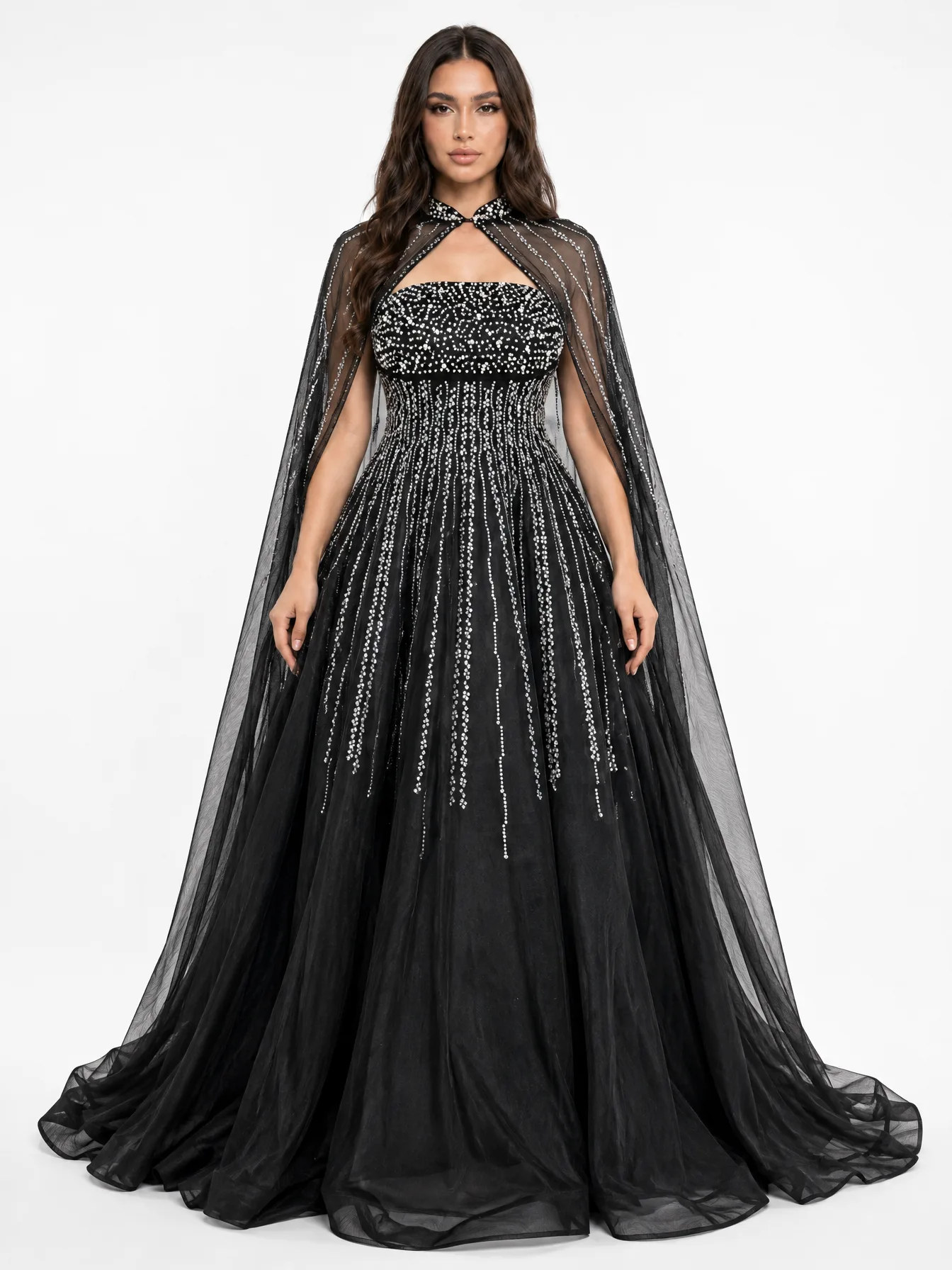
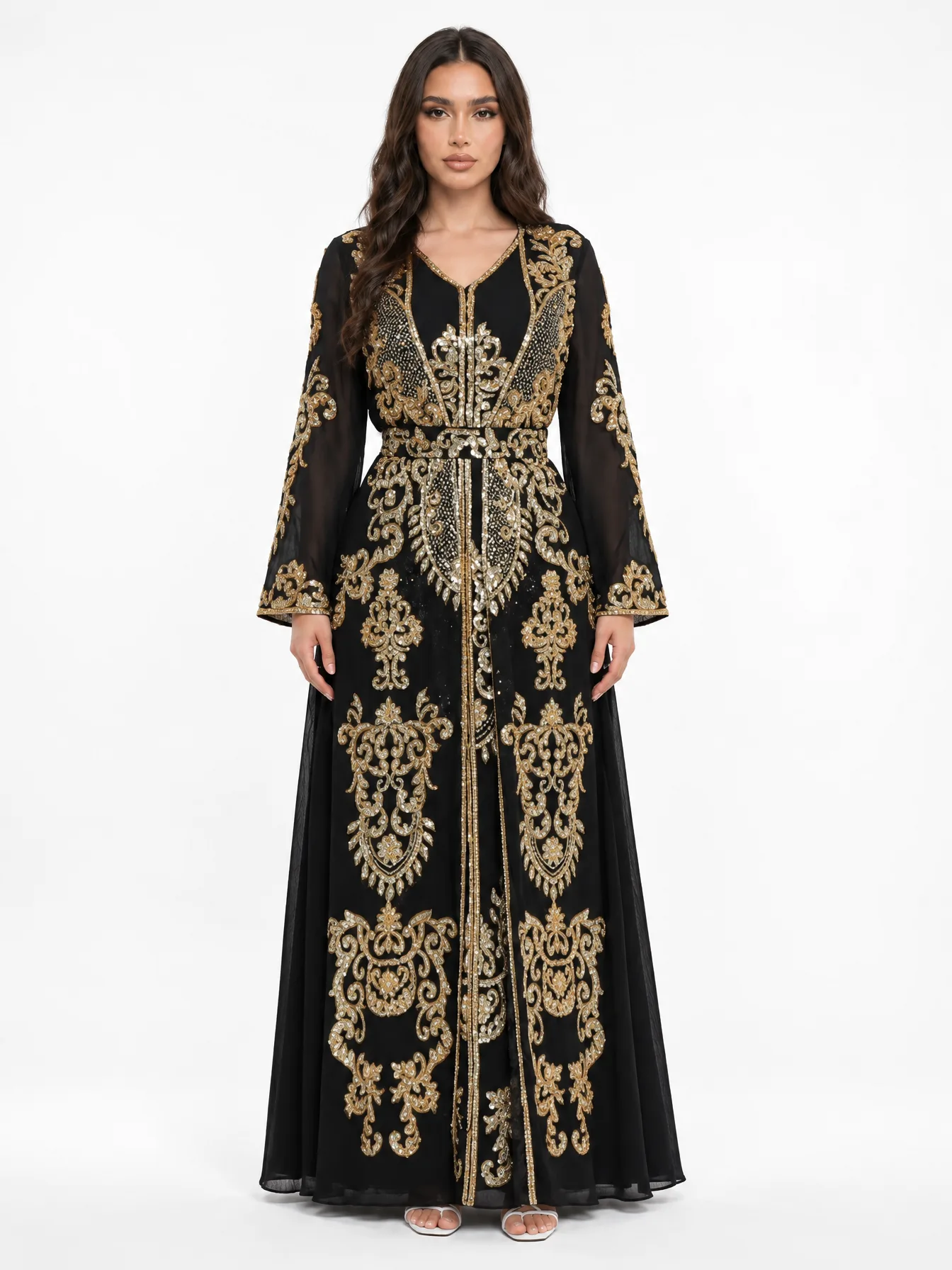
Beaded and embellished gowns are heavy and easily damaged, and a crushed or snagged dress is a lost sale.
- Fold with tissue between layers, beading facing inwards and protected, rather than pressing beads against beads.
- Bag each gown individually so loose beads or sequins stay with their dress.
- Use strong, double-walled cartons, not overfilled, so heavy gowns do not crush the ones beneath.
- Hanging garment boxes suit the most structured or expensive pieces when shipping by air.
- Avoid moisture: add silica sachets for sea freight, since containers can be humid.
- Label each carton with its contents and match it to the packing list.
- Insure the shipment for its full value, and photograph cartons on arrival before opening if anything looks damaged.
Once the stock arrives, steam and hang it promptly. Our guide to photographing evening dresses for online sale covers the next step, so the new stock is online and selling quickly.
Where Lianora fits
If you would rather not handle freight, customs and proofs of origin at all, Lianora takes that on. It supplies boutiques across the Gulf with evening and bridesmaid dresses from established Turkish ateliers, delivers across the UAE and the GCC in 10–15 days from the confirmed order, and pays the customs duties and taxes, so the price you agree is the price you pay. There is no minimum order: the price per piece steps down at 1, 3, 6 and 10 pieces per colour. Read delivery and returns and ordering and payment for the details.
Questions
How long does shipping from Turkey to Dubai take?
Express courier is usually a matter of days; sea freight between Istanbul and Jebel Ali takes about 12–14 days at sea, plus port handling, clearance and delivery. Air cargo falls in between.
Is there a free trade agreement between the UAE and Turkey?
Yes. The UAE–Türkiye CEPA has been in force since 1 September 2023. To claim lower duty, you need a valid proof of origin, direct shipment and a claim at the time of import.
What customs duty applies to dresses imported into Saudi Arabia?
Most clothing carries the GCC common tariff of 5% on the CIF value, plus 15% import VAT. Check the exact rate for your HS code with a licensed broker.
Sources
- Abu Dhabi Customs: Conditions for obtaining the benefits of the UAE–Türkiye CEPA
- International Energy Agency: UAE–Türkiye Comprehensive Economic Partnership Agreement
- ATB Legal: UAE–Turkey Comprehensive Economic Partnership Agreement — an overview
- Alsharqi: Door-to-door shipping, Turkey route
- UAE Government portal: Clearing customs and paying customs duty
- ICP: Customs Union for GCC States