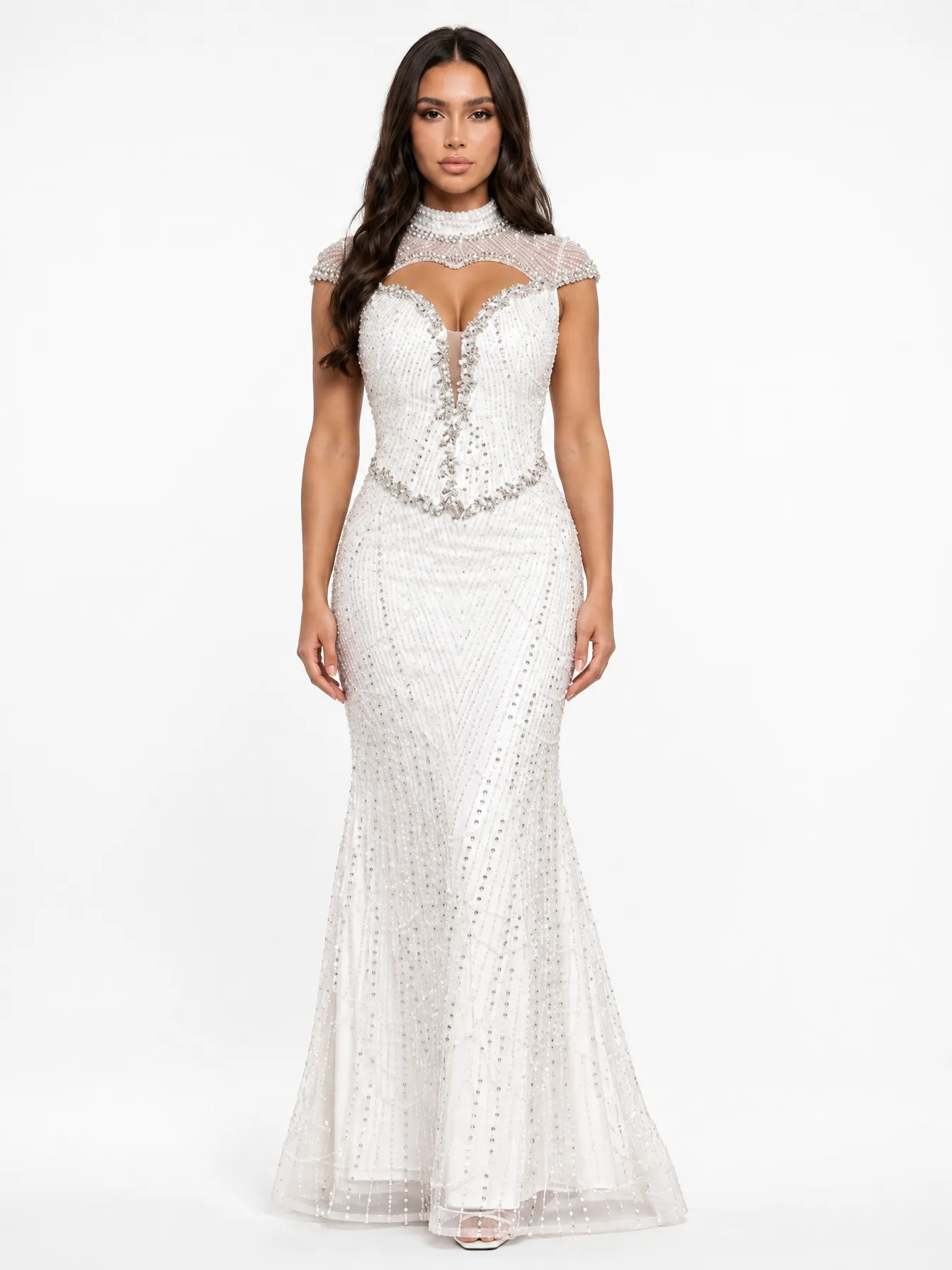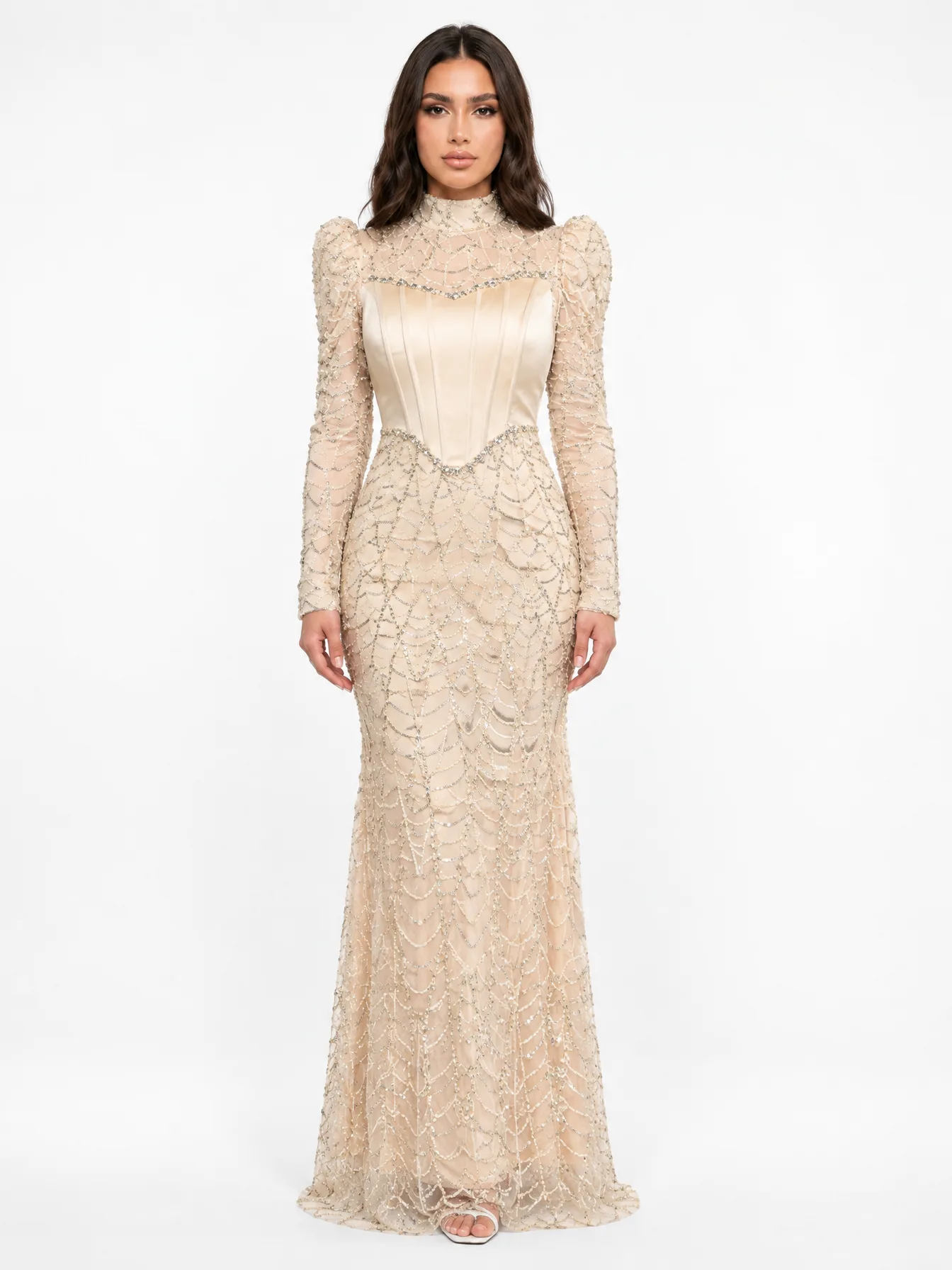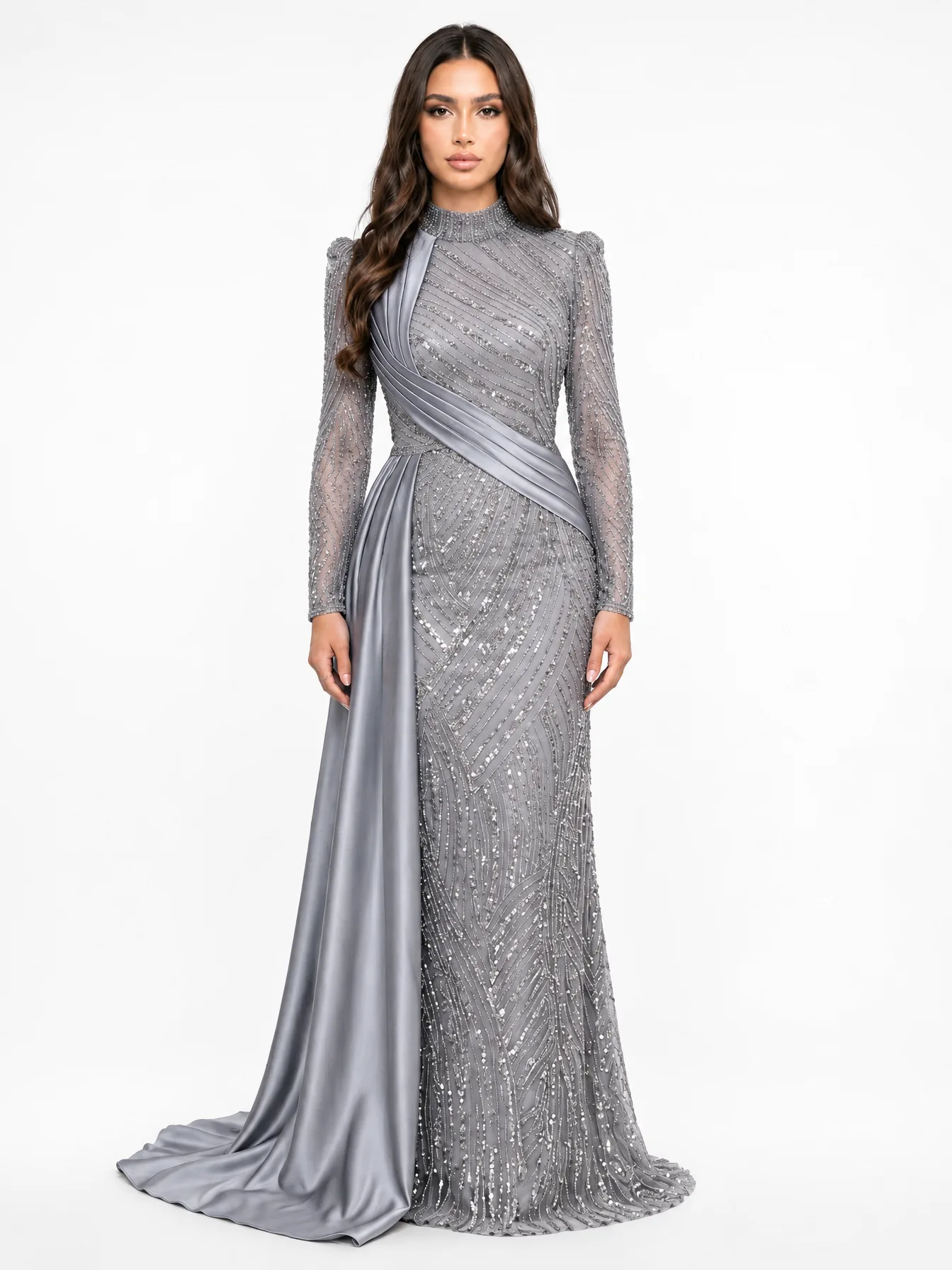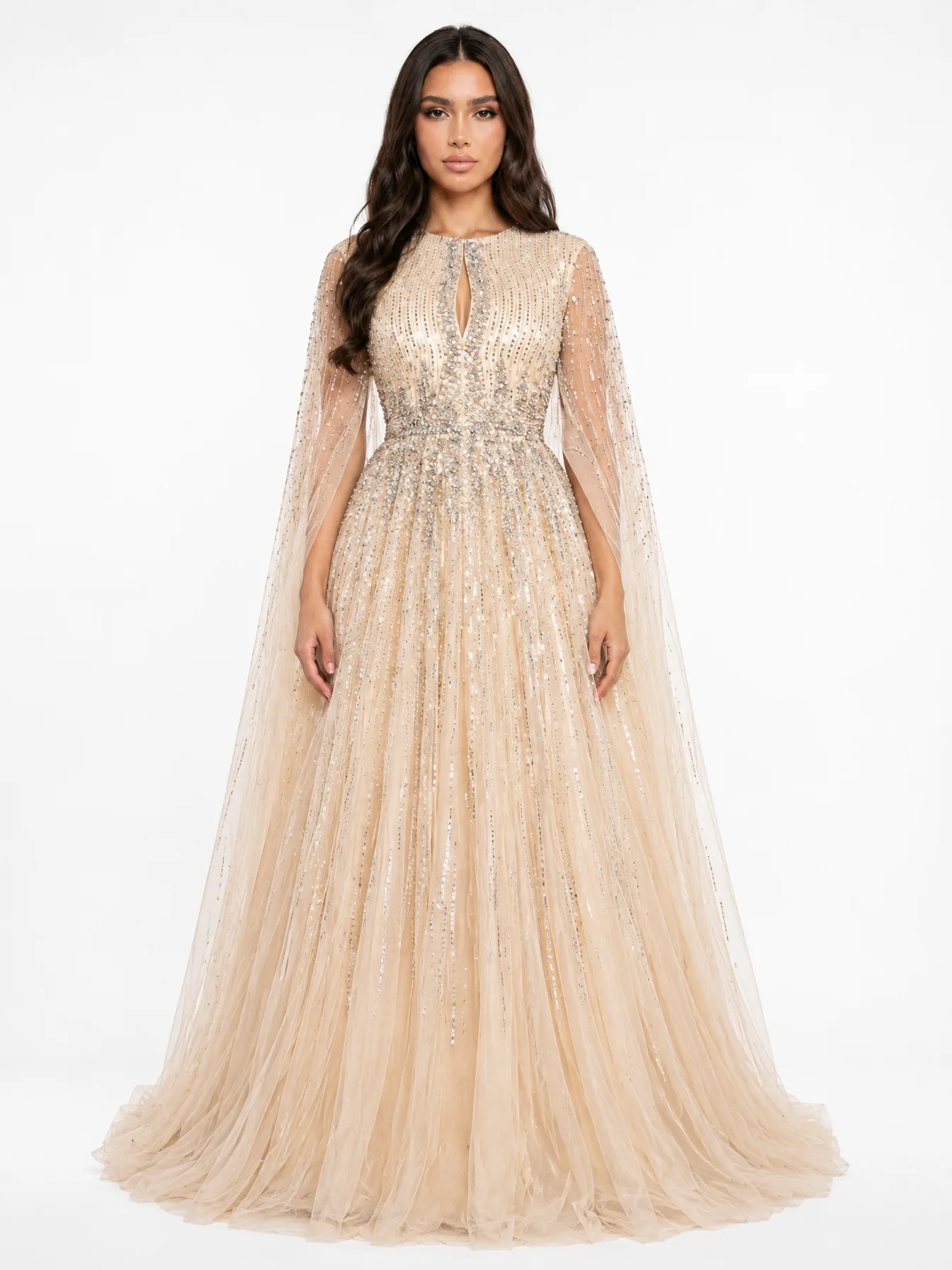
To judge an evening dress sample, inspect it inside out, in daylight, against a written checklist: seams and finishing, lining, boning, the zip, how the beads and sequins are attached, symmetry, fabric, labels, and measurements against the supplier's size chart. Sort each fault into minor, major or critical, and agree in writing that production pieces will match the sample you approved. An hour spent with the dress tells you more than any photo or video.
How should you inspect a sample when it arrives?
Unpack it in good daylight with a mannequin or padded hanger, a tape measure and your phone. Photograph the dress as it comes out of the box: if anything is damaged, those photos are your evidence.
Then work in a fixed order so you never skip a step:
- Step 1: outside, on the mannequin. Overall shape, hem, symmetry and colour.
- Step 2: inside out. Seams, lining, boning channels and the back of the beadwork.
- Step 3: hardware. Zip, hooks, lacing and buttons.
- Step 4: measurements against the size chart.
- Step 5: labels and packaging.
Professional inspectors sort faults into three classes, and the habit is worth borrowing. A critical fault makes the dress unsafe or unsellable. A major fault would make a customer return it: a broken zip, an open seam, a misaligned panel. A minor fault is cosmetic, such as an untrimmed thread. Inspection firms such as QIMA base their sampling on the ISO 2859 standard, and a typical setting described by inspection company HQTS allows no critical defects, with stricter limits for major faults than for minor ones. The classes tell you which faults you can live with and which you cannot.
How do you check the seams and finishing?
Turn the dress inside out. Good seams are straight, with even stitch length, no skipped stitches, and no puckering. Run your fingers along the side seams, bodice seams and waist seam, feeling for lumps or tight spots where the tension changes.
Look at how the raw edges are finished. Overlocking is standard. On sheer fabrics, bound or French seams are better: chiffon frays easily, which is why those seams are the usual treatment for it.
Then do a gentle pull test. Hold the fabric either side of a seam and pull firmly, not violently. The stitches should not open or show gaps. Check too:
- Seam allowance: is there enough at the side seams for a tailor to let the dress out slightly?
- Hems: even all round, with no ripples. A rolled hem on chiffon should be narrow and consistent.
- Threads: trimmed, especially inside sheer panels, where they show through.
- Sheer yokes and sleeves: narrow, neat joins, because every stitch on tulle is visible from outside.
What should the lining and boning be like?
Lining should follow the shape of the dress without twisting, pulling the outer fabric or peeping below the hem. Check that it is secured at the waist and along the zip, and that it feels comfortable against the skin. A scratchy lining is a return waiting to happen in a warm climate.
On boned bodices, ask what the bones are made of. Steel has long been the standard for quality corsetry: flat steel bends in one direction and spiral steel in two, which is why spiral steel suits curved seams. Plastic boning has traditionally been seen as the weaker option, although newer synthetic whalebone is far more supportive. Corset maker Madalynne notes that plastic suits fashion corsets that are not meant to reduce the waist, which describes many evening gowns.
What matters for a boutique is how the bodice behaves:
- Press gently on the bones. They should spring back, not stay bent or kink.
- Check the tips. A bone pushing through its channel will eventually tear the lining or scratch the wearer.
- Put the dress on a mannequin. The bodice should hold its shape without wrinkling at the waist or collapsing at the sides.
How can you tell hand beading from machine beading?
Turn the beaded panel over. Writing about embroidery in general, Mary Corbet of Needle 'n Thread explains that machine work tends to leave a logical path of carried threads on the back, running from one motif to the next, often with a contrasting bobbin thread that never shows on the front. The same back-of-work test helps with beading. Hand beading looks less regular: short individual stitches and knots, beads sitting at slightly varied angles, and motifs that follow curves freely.
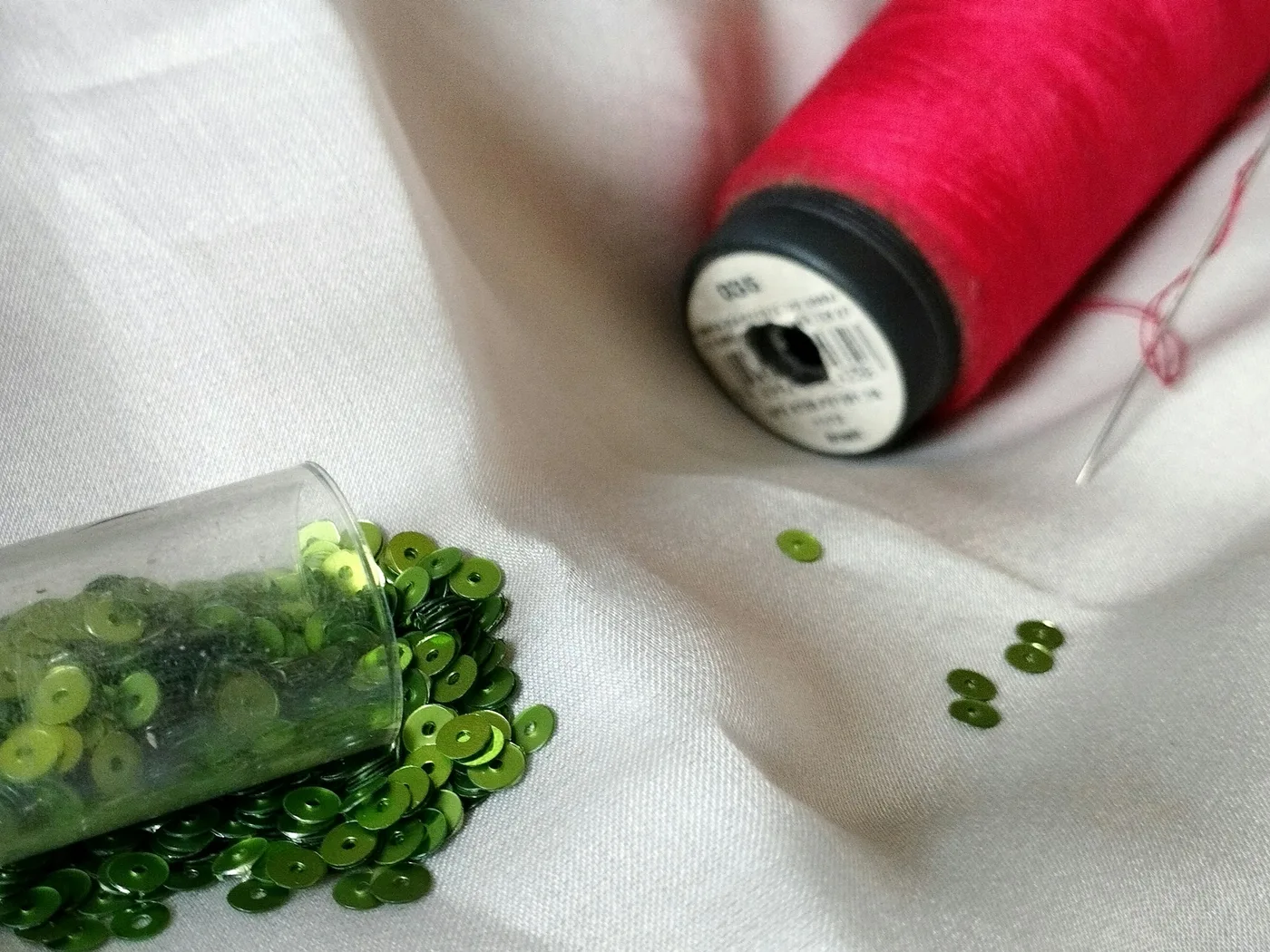
Neither method is a fault in itself. Machine beading is consistent and keeps prices accessible; hand beading allows denser, more dimensional work. What matters is how securely it is attached:
- Pull test: pinch a single bead or sequin and tug gently. It should stay put. If a run of beads loosens or slides along one thread, a single broken stitch could shed a whole line at an event.
- Glued stones: look for shiny marks around crystals and no visible thread. Ask whether any stones are glued rather than sewn, and where.
- Loose beads in the bag: a few are normal after shipping. A handful suggests weak attachment.
- Spares: ask whether pieces come with spare beads or sequins, which make small repairs easy.
If a supplier describes a dress as hand-beaded, ask which parts: many gowns combine hand-finished necklines with machine-beaded bodies.
Are the zip and fastenings strong enough?
A failed zip almost guarantees a complaint. Run the zip up and down several times, including over the waist seam, where the layers are thickest. It should glide without catching on fabric or beads. Then check:
- Invisible zips: the teeth hidden, and the seam lines meeting across the zip at the waist and any horizontal design line.
- A hook and eye or small button above the zip, to take strain off the top.
- A guard or facing behind the zip, so it does not catch skin or beading.
- Corset lacing: loops evenly spaced and firmly stitched, and a cord long enough to close the back comfortably.
- Detachable capes, belts and gloves: secure fastenings that leave no marks where they attach.
Is the dress symmetrical, and does the fabric hang well?
Put the dress on a mannequin and step back. Compare left and right: sleeve length, shoulder height, neckline points and the position of beaded motifs. Beading designed as a mirror image should actually mirror. Then look at:
- Hem: level all round, with any train falling evenly.
- Colour: the same shade across bodice, sleeves and skirt. Hold sheer sleeves against the bodice in daylight, since different fabrics in one dress can take dye differently.
- Sequins: lying in the same direction, so the dress does not flash light and dark in patches.
- Fabric weight: hold the skirt up to the light. Too thin and it clings or shows the lining; too heavy and a beaded gown drags at the shoulders.
- Pressing: creases from shipping are normal and steam out. Shiny marks from a hot iron are not.
Do the measurements match the size chart?
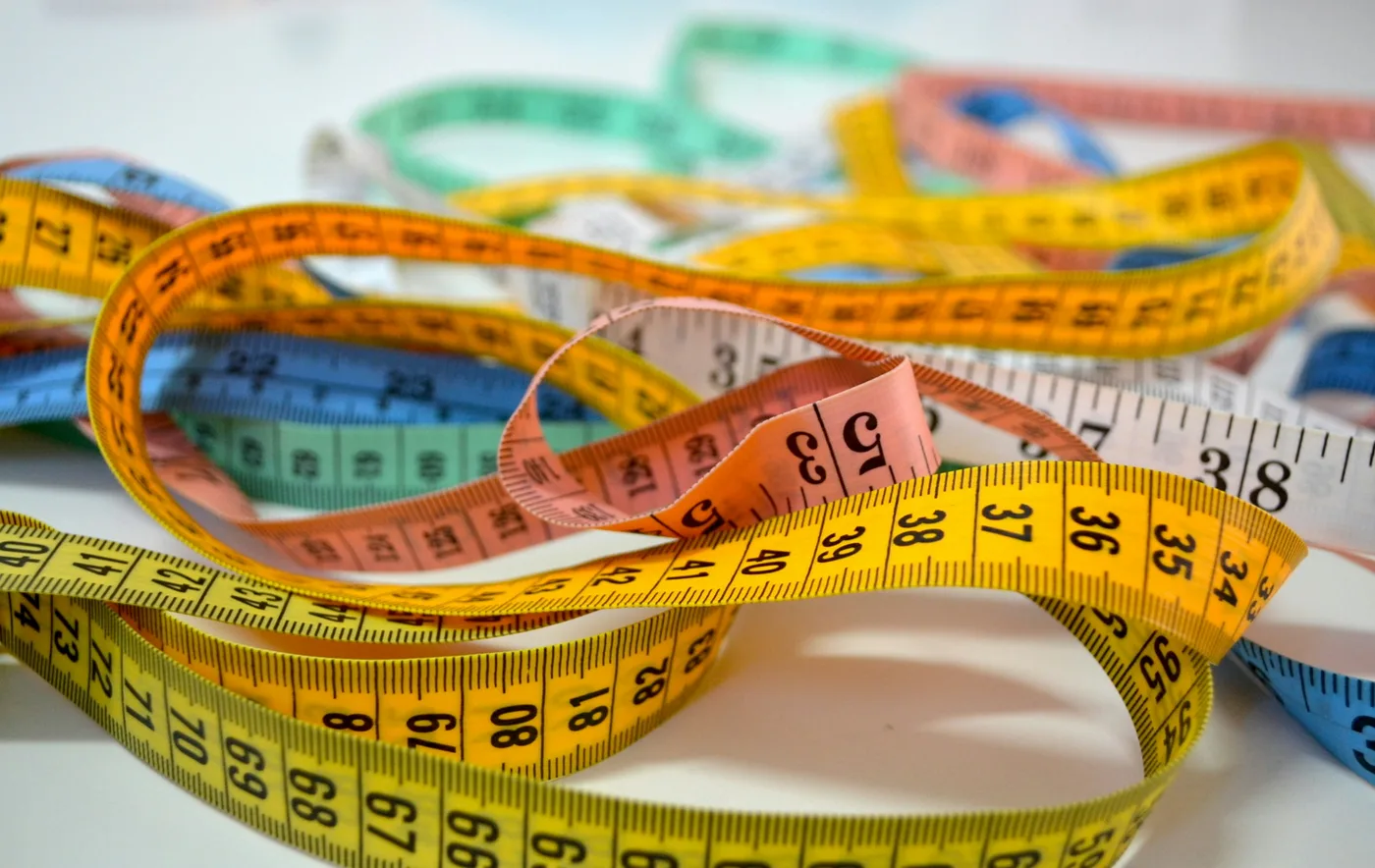
Lay the dress flat and measure it: bust, waist and hip across the front (then double each), shoulder width, sleeve length, and length from the highest point of the shoulder to the hem. Compare every figure with the supplier's size chart. Pay most attention to the waist on boned bodices and the hip on mermaid skirts. They have the least ease, and they decide whether a customer can wear her usual size.
Agree a tolerance with the supplier in writing before you order. If you can, measure two sizes of the same design to check that the step between sizes is consistent. Lianora uses standard international sizing, and its sizes and fit page explains how to measure.
What should the label and packaging tell you?
A finished dress should carry a size label, fibre content, care instructions and the country of manufacture. Fibre content matters because it tells you how to steam and store the dress, and what to tell customers about care.
Labelling rules for clothing differ between GCC countries and change over time, so this article does not try to list them. In the UAE, product standards and conformity certificates are handled by the Ministry of Industry and Advanced Technology. Confirm the current requirements for imported garments with the ministry, a customs broker or an adviser before you import in volume.
Packaging tells you how production pieces will arrive. Look for a breathable garment bag, tissue between beaded layers so beads do not scratch or snag the fabric, and folds placed away from sequinned areas. Note anything that arrived crushed, and ask for better packing before you place the main order.
What should you ask the supplier before ordering more?
A sample is only useful if production matches it. Before a larger order, ask:
- Will production use the same fabric, lining and beading method as this sample?
- Which parts are hand-beaded, and which are machine-beaded or glued?
- What is the boning made of?
- Will each colour in the order come from one dye lot, so pieces match on the rail?
- What happens if a piece arrives damaged, and how quickly must you report it?
- What is the lead time, and when will availability be confirmed?
- Can you mix sizes and colours within one order?
Get the answers in writing. As a worked example, Lianora asks for damage to be reported with photos within 2–3 days and replaces the piece with the same or a finer model at no extra cost (delivery and returns). It also has no minimum order, so a boutique can buy one or two pieces of a design at full price to test it before ordering more at a tiered discount. Other suppliers set different terms, which is exactly why the questions matter. For more on volume pricing, see minimum orders and tiered wholesale pricing.
Questions
How many samples should a boutique order before stocking a design?
One sample per design is usually enough to judge construction, ideally in a size you sell often. If fit is a concern, order two neighbouring sizes to check the grading. Treat samples as part of the cost of buying well, not as a loss.
Is machine beading a sign of a cheap dress?
No. Machine beading is even and keeps prices within reach of more customers, and many good gowns mix machine-beaded bodies with hand-finished details. Judge how securely the beads are attached and how clean the finish is, not the method alone.
What defect rate is acceptable in a wholesale delivery?
Large buyers use AQL sampling under ISO 2859, which sets how many faulty pieces a random sample may contain before the whole lot is rejected, with no tolerance for critical defects. For the small quantities most boutiques order, it is simpler to inspect every piece on arrival against the approved sample.
Should you steam a sample before inspecting it?
Inspect and photograph it first, exactly as it arrived, because the creases show how the supplier packs. Then read the care label and steam it gently from the inside, keeping the steamer away from sequins, so you can judge how the fabric drapes.
Sources
- QIMA: Acceptable Quality Limit (AQL)
- HQTS: Explaining the 3 types of quality defects in manufacturing (AQL classification)
- Needle 'n Thread (Mary Corbet): Hand embroidery vs machine embroidery, what's the difference?
- Wikipedia: Bone (corsetry)
- Madalynne: Types of corset boning
- Wikipedia: Chiffon (fabric)
- UAE Ministry of Industry and Advanced Technology: standards and conformity services