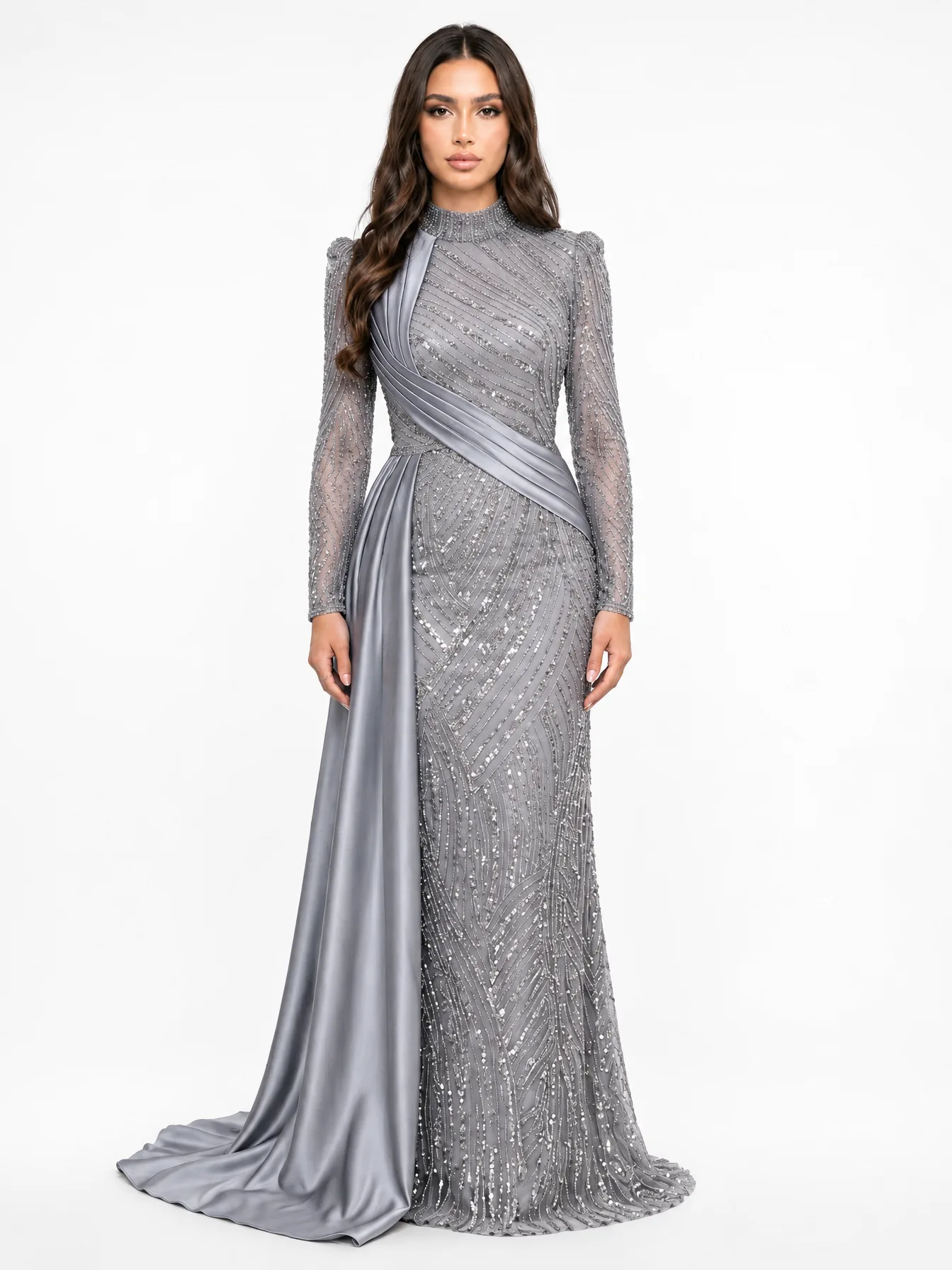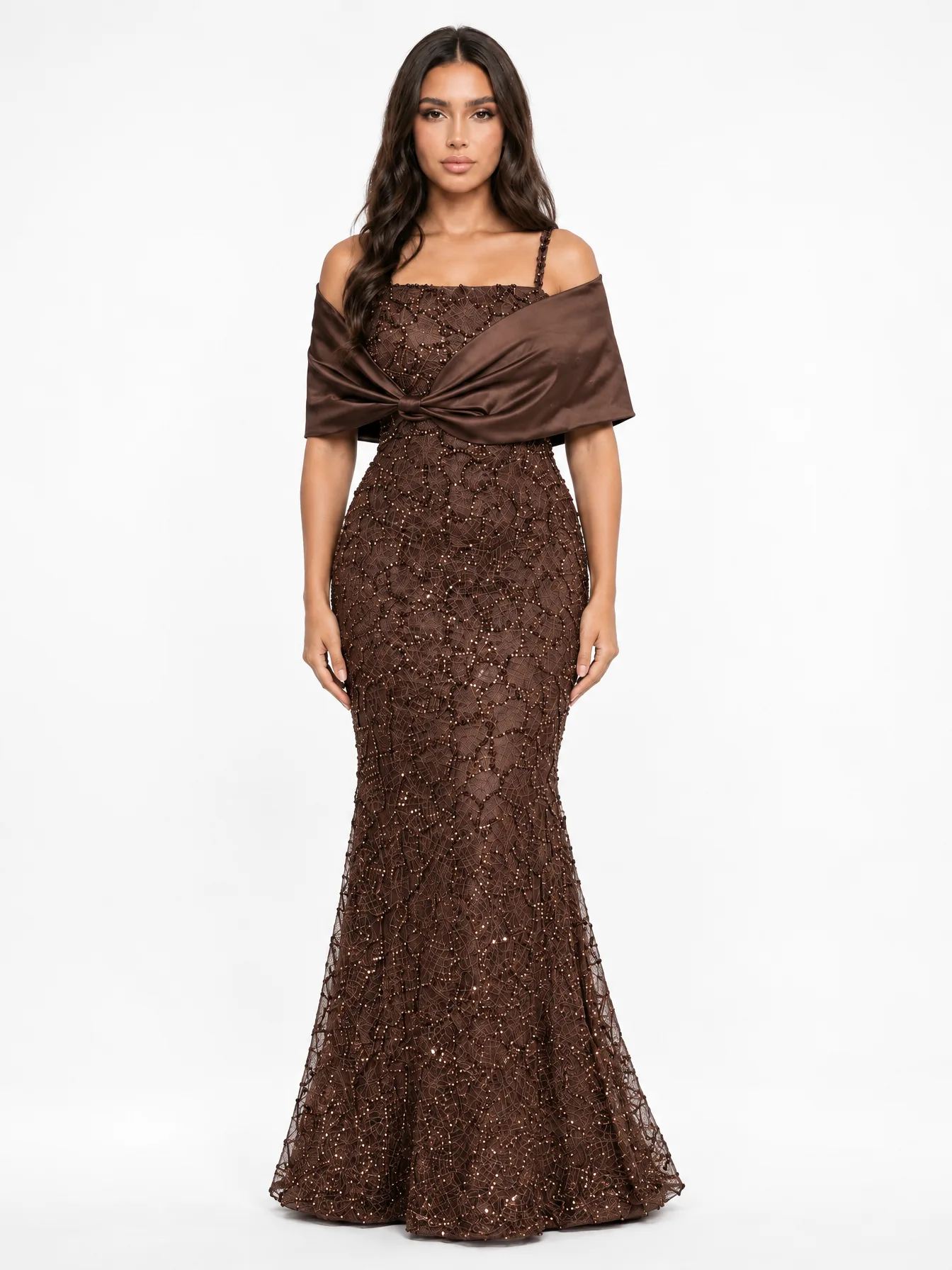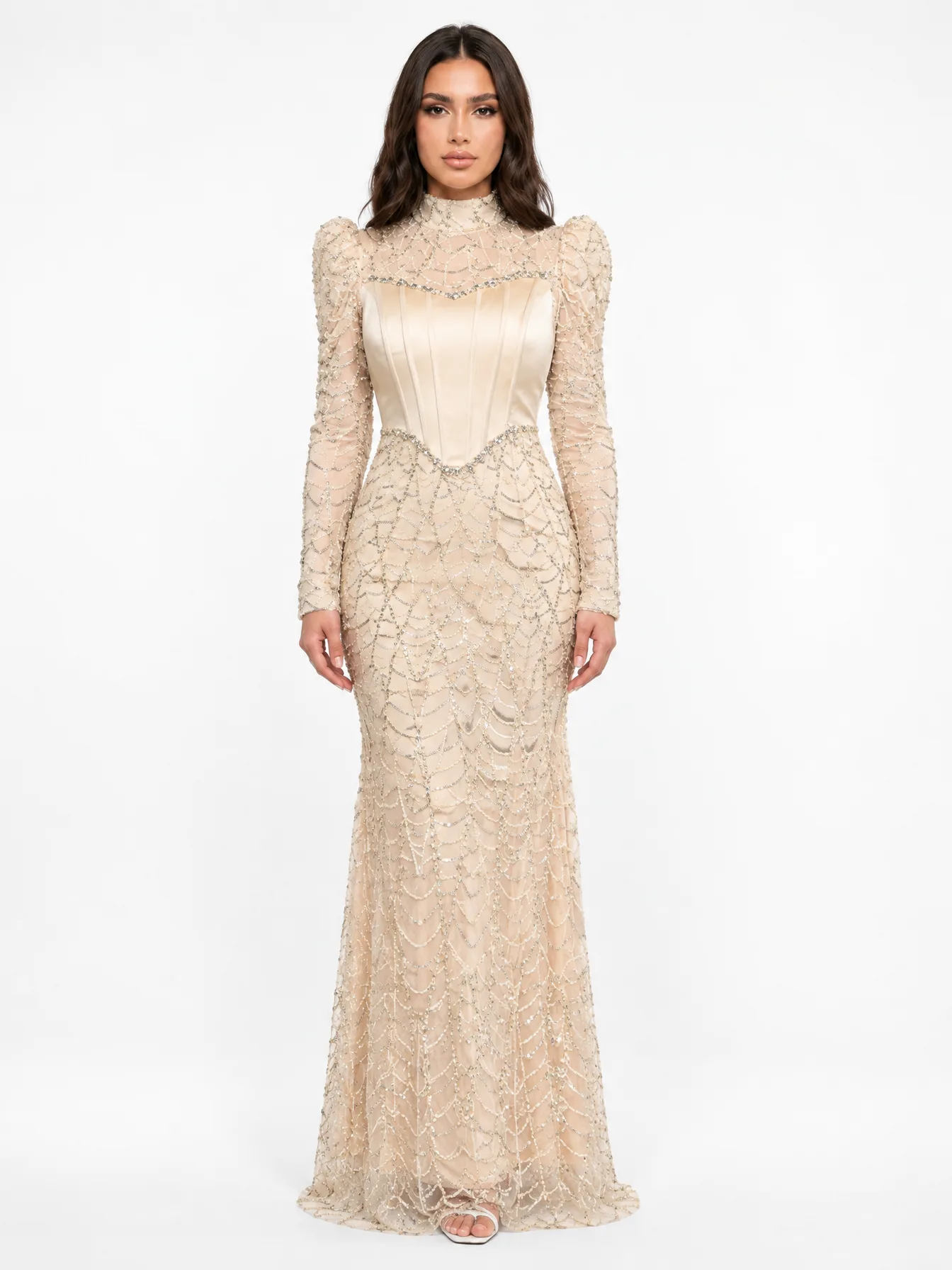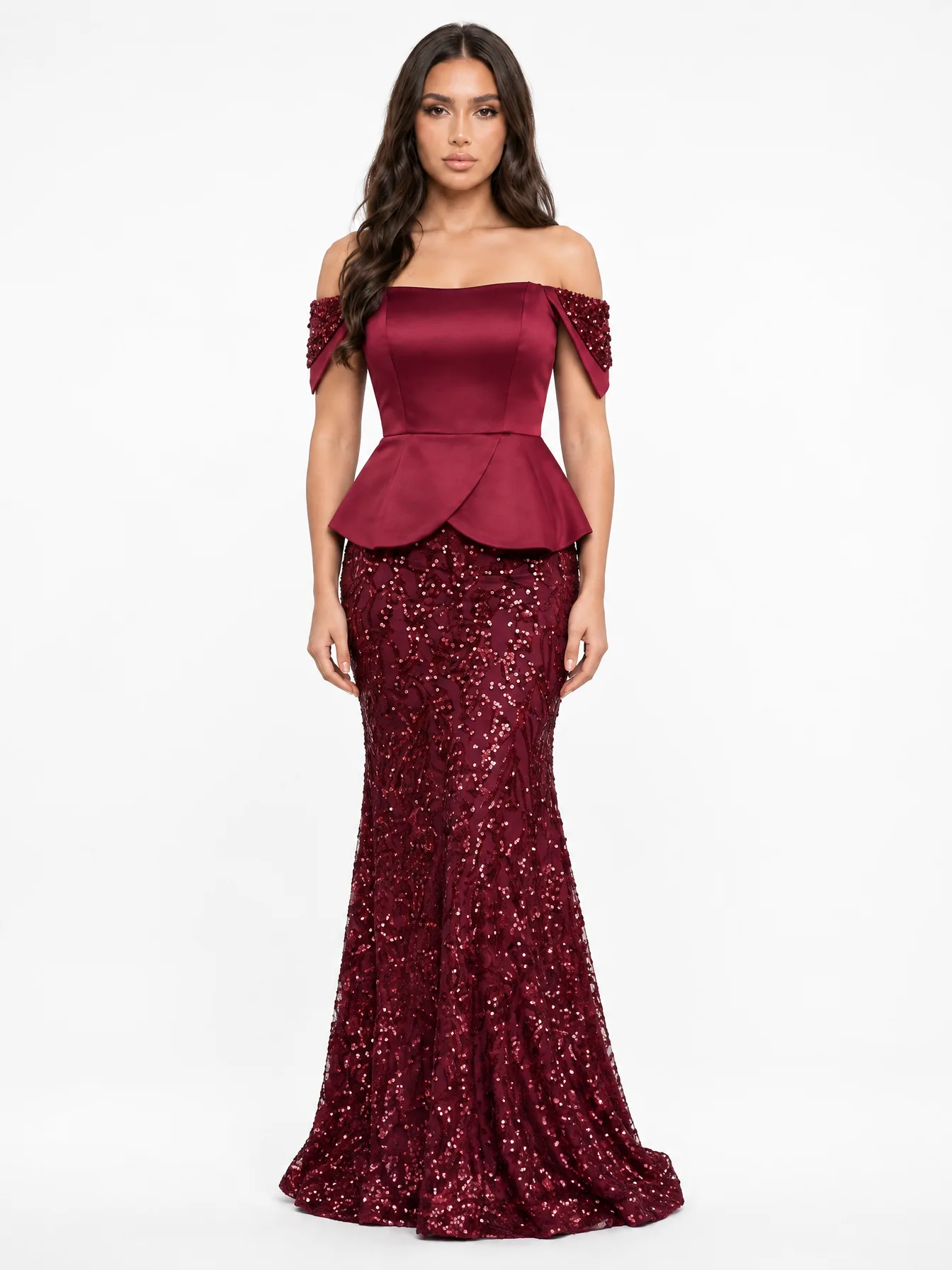
To sell evening dresses well on Instagram and WhatsApp, use Instagram to be discovered and WhatsApp to close the sale: honest photos and short videos on one side, a tidy catalogue, quick answers, a written order confirmation and a safe deposit on the other. Shoppers in the Gulf already buy this way. Deloitte's 2025 Digital Consumer Trends study of 2,000 people in the UAE and Saudi Arabia found that 73% had bought something through social media in the previous year. The rules have also tightened, so this guide covers the UAE Media Council's advertiser permit as well.
How many Gulf shoppers buy through social media?
Enough that a boutique without a social shop front is invisible to a large part of its market. Deloitte's Digital Consumer Trends 2025, which surveyed 2,000 consumers aged 18 to 50 across the UAE and Saudi Arabia, found that 73% had made at least one purchase through social media in the past twelve months. YouGov's Ramadan 2025 consumer report, based on about 1,000 residents in each country, found that 61% of UAE and Saudi respondents were likely or very likely to shop for Ramadan on platforms such as Instagram and TikTok.
Two cautions. These are surveys of all categories, not evening wear alone. And a purchase made "through social media" often means a shopper found the product on Instagram and then finished the conversation in a chat. That is exactly the path an evening dress usually takes: a woman sees a gown, asks about her size and colour, and wants a person to answer.
What should you post on Instagram to sell evening dresses?
Each format has a job. Plan them together rather than posting whatever is new.
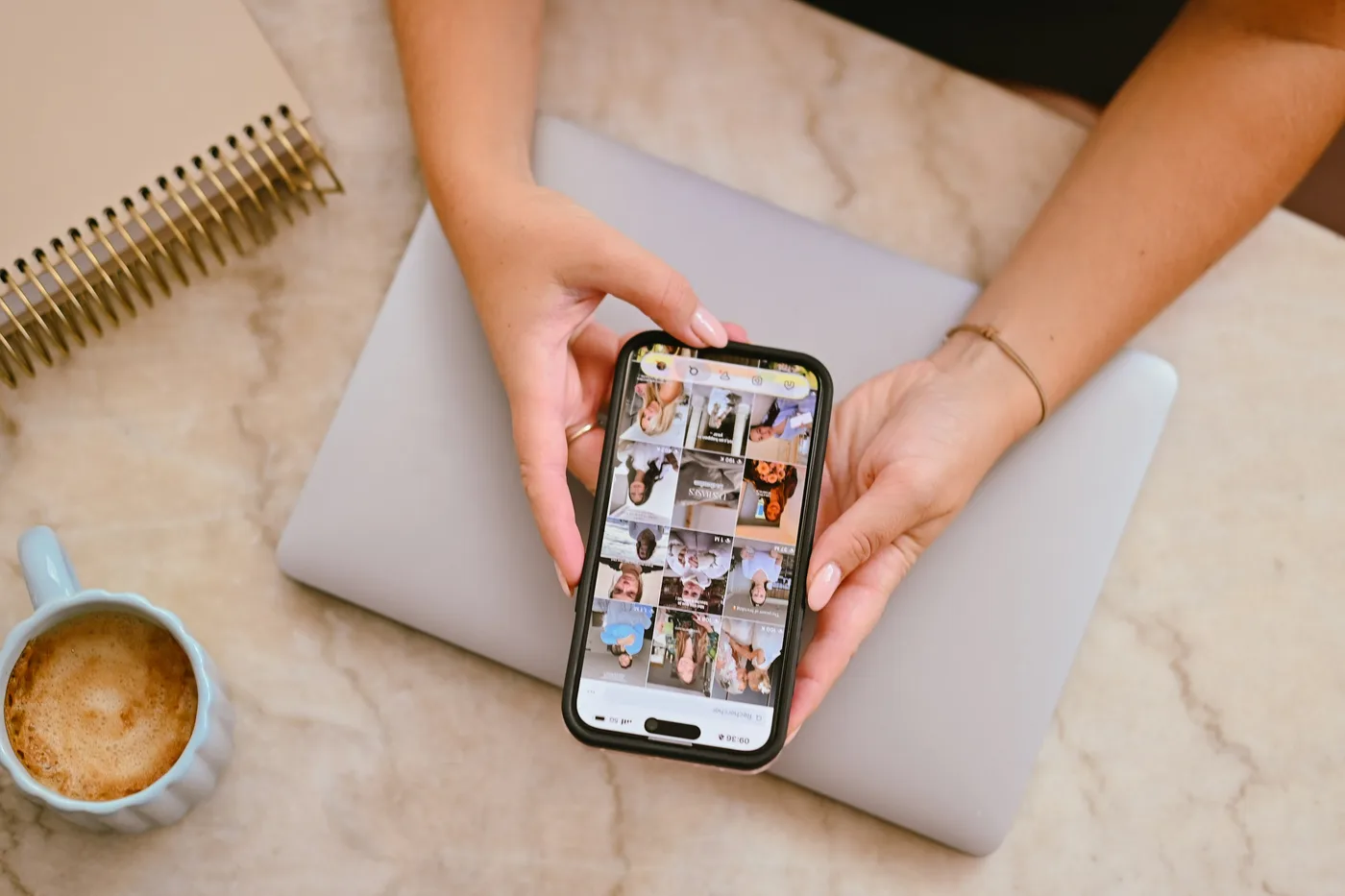
- Feed posts: your catalogue. One design per post, the first image a full-length front view in true colour, then the back, a side view and a close-up of the beading or fabric. Put the name, colours and sizes in the caption so a shopper does not have to ask.
- Reels: movement. A ten to twenty second clip of the skirt turning or sequins catching light sells a gown better than any still. Film in daylight and do not use filters that shift the colour.
- Stories: urgency and trust. New arrivals, "two left in size 38", unboxing a delivery, answering a common question. Save the useful ones into highlights such as Sizes, Delivery and Exchanges.
- Highlights and bio: the shop window. Your WhatsApp link, delivery area, how long orders take and your exchange policy belong here.
Good photos matter more than posting often: soft daylight, a plain background and the same angles for every design make a feed look like a catalogue rather than a scrapbook.
How do you set up WhatsApp Business for a dress boutique?
Use the free WhatsApp Business app on a number that belongs to the business, not a personal phone. Then set up four things before you promote the number.
- Business profile: name, hours, area served and a short line on delivery. WhatsApp describes the profile as the place customers find your key information in one spot.
- Catalogue: one item per design, with its photos, colours, sizes and price, so you can send a gown in a single tap instead of a string of pictures.
- Quick replies: saved answers you insert by typing "/" in a chat. Write them for the questions you hear every day: sizes and how to measure, delivery time, how deposits work, exchanges.
- Greeting and away messages: an automatic hello that tells new contacts what to send (design name, size, event date), and an away message outside your hours that says when you will reply.
Labels, which only you can see, help you sort chats into stages such as New enquiry, Deposit paid, Ordered and Delivered. With several staff answering, agree one set of labels and one tone of voice.
Should you show prices on Instagram, or answer "price in DM"?
Show them. "Price in DM" filters out nobody serious and annoys almost everyone. Shoppers comparing several boutiques skip the ones that make them ask, and a price stated in the caption turns the first message from "how much?" into "is size 40 available?", which is a much warmer lead.
There is a legal reason too. The UAE's consumer protection law, Federal Law No. 15 of 2020, expects prices to be clear and legible, and its executive regulations stop a supplier raising the price because a customer pays by card. It also expects advertising, contracts and invoices to be in Arabic, with other languages allowed alongside. Check the details with the Ministry of Economy or an adviser. In practice:
- Put the price in dirhams in the caption and in the WhatsApp catalogue, and say whether delivery is extra.
- Quote the same price to everyone. If you run an offer, state its end date and whether offer pieces can be exchanged.
- Send an invoice or written confirmation in Arabic as well as English if your customers prefer English.
VAT is a separate question that depends on your registration. See our UAE VAT basics for boutiques.
How do you take orders and deposits safely over WhatsApp?
Most disputes in chat selling come from something that was never written down. Treat every order as a small contract.
- Confirm in writing. One message listing the design, colour, size, total price, deposit, balance and when it is due, the expected delivery window, and your exchange policy. Ask the customer to reply "confirmed".
- Take payment through a channel that leaves a record, such as a payment link from a licensed provider or a bank transfer you check in your own account. A screenshot is not proof of payment.
- Never ask for card numbers or one-time codes in a chat, and tell customers you never will. This protects them from people impersonating your account.
- Agree in advance what happens to a deposit if the customer cancels, and put that in the confirmation.
- Keep the order history in one place, not spread across staff phones.
Be careful with promised dates. If you order from a supplier after the customer pays, add your supplier's lead time to your own handling time, allow a few days' buffer, and promise the later date.
Do you need a UAE advertiser permit to sell on Instagram?
Usually not for your own boutique account, but the rules matter the moment you work with anyone else. The UAE Media Council announced the advertiser permit on 30 July 2025. It covers promotional content on social media, whether paid or unpaid. According to Gulf News, it became mandatory for individuals advertising on social media from 1 February 2026.
- Your own account: as reported by Khaleej Times and The National, people promoting their own products or services, or those of a company they own, through their own account are exempt. You still need your trade licence and must follow the Council's content standards.
- Influencers and creators: if you pay or gift someone to promote your dresses, check that they hold a valid permit. The Council expects companies to work only with licensed advertisers, and holders must display their permit number on their accounts.
- Cost: the permit was announced as free for its first three years.
- Penalties: fines for media violations are set by Cabinet Resolution No. 42 of 2025 and can be substantial.
Rules in this area change, and Abu Dhabi has had its own requirements. Check the Council's site, uaemc.gov.ae, before any campaign. Outside the UAE, each GCC country has its own regime.
How can you keep exchanges low when selling through chat?
Most exchanges come from a dress that fits differently or looks different from the screen. Both can be reduced before the sale.
- Ask for measurements, not just a size. Send your size chart as a quick reply and ask for bust, waist, hips and height. Our sizes and fit page shows the measurements that matter.
- Send one unedited daylight photo or video when a customer is choosing between close shades such as champagne and gold.
- State your exchange policy before payment, in the same message as the order, and repeat it on the delivery note.
- Ask the customer to film or photograph the parcel when she opens it, so any damage can be reported quickly.
Keep the policy short enough to read on a phone. Lianora's own delivery and returns page is one example of a written exchange-only policy.
How does stock work if you sell mainly online?
Many social-first boutiques hold a small core range and order the rest when a customer commits. That only works if your supplier is quick to confirm and has no minimum. As one example, Lianora confirms availability within 24 hours, delivers across the GCC in 10 to 15 days from confirmation, and has no minimum order, with 10% off from 3 pieces, 25% from 6 and 35% from 10. Its evening dresses are a reference point; the same approach applies to any supplier. Whoever you buy from, post only what you can actually deliver in the time you state.
Questions
Is it legal to sell clothes on Instagram in the UAE without a shop?
You need a trade licence that covers the activity, whether or not you have a physical shop. Which licence fits depends on the emirate and on whether you set up on the mainland or in a free zone, so ask the licensing authority before you start. The advertiser permit is a separate matter and mostly concerns people promoting other businesses.
Should a boutique use the WhatsApp Business app or the WhatsApp Business Platform?
A small boutique with one or two people answering is usually well served by the free app, with its catalogue, quick replies and labels. The platform suits larger teams that need many agents, integrations or automated messages, and it is set up through a provider, usually at a cost.
How much deposit should I take on an evening dress order?
There is no legal standard figure, so set one that covers what you lose if the customer walks away, such as a supplier order you cannot return. Whatever you choose, state it before payment along with what happens to the deposit if she cancels.
Do I need permission to repost a customer's photo in her dress?
Ask first, every time, and keep her written yes in the chat. Many Gulf customers prefer not to show their faces, so offer to crop or use a photo from behind. Never post a guest's photo from a private event without permission.
Sources
- Deloitte Middle East, Digital Consumer Trends 2025 (UAE and KSA)
- Campaign Middle East, 61 per cent of KSA and UAE consumers to shop on social media this Ramadan (YouGov, February 2025)
- Khaleej Times, UAE announces 'advertiser permit' for social media influencers (30 July 2025)
- The National, UAE launches 'advertiser permit' for social media users and influencers (30 July 2025)
- Gulf News, Advertiser Permit now mandatory for influencers and creators (1 February 2026)
- Pinsent Masons, UAE consumer protection regime revamped
- WhatsApp Business, WhatsApp Business app
- WhatsApp Help Center, How to use quick replies